


Review of 2,4-dichlorophenoxyacetic acid (2,4-D) biomonitoring and epidemiology
- PMID: 22876750
- PMCID: PMC3483058
- DOI: 10.3109/10408444.2012.710576
Review of 2,4-dichlorophenoxyacetic acid (2,4-D) biomonitoring and epidemiology
Abstract
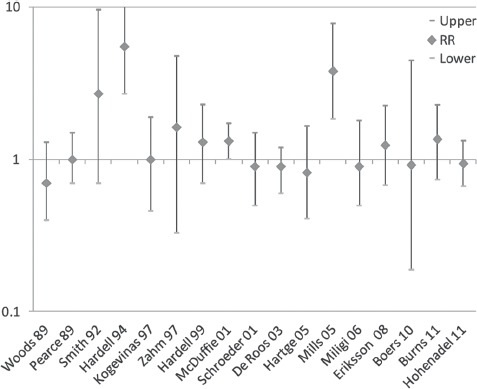
A qualitative review of the epidemiological literature on the herbicide 2,4-dichlorophenoxyacetic acid (2,4-D) and health after 2001 is presented. In order to compare the exposure of the general population, bystanders and occupational groups, their urinary levels were also reviewed. In the general population, 2,4-D exposure is at or near the level of detection (LOD). Among individuals with indirect exposure, i.e. bystanders, the urinary 2,4-D levels were also very low except in individuals with opportunity for direct contact with the herbicide. Occupational exposure, where exposure was highest, was positively correlated with behaviors related to the mixing, loading and applying process and use of personal protection. Information from biomonitoring studies increases our understanding of the validity of the exposure estimates used in epidemiology studies. The 2,4-D epidemiology literature after 2001 is broad and includes studies of cancer, reproductive toxicity, genotoxicity, and neurotoxicity. In general, a few publications have reported statistically significant associations. However, most lack precision and the results are not replicated in other independent studies. In the context of biomonitoring, the epidemiology data give no convincing or consistent evidence for any chronic adverse effect of 2,4-D in humans.
Figures
References
-
- Alavanja MC, Sandler DP, McDonnell CJ, Lynch CF, Pennybacker M, Zahm SH, et al. Characteristics of pesticide use in a pesticide applicator cohort: the Agricultural Health Study. Environ Res. 1999;80:172–179. - PubMed
-
- Alavanja MC, Samanic C, Dosemeci M, Lubin J, Tarone R, Lynch CF, et al. Use of agricultural pesticides and prostate cancer risk in the Agricultural Health Study cohort. Am J Epidemiol. 2003;157:800–814. - PubMed
-
- Arbuckle TE, Schrader SM, Cole D, Hall JC, Bancej CM, Turner LA, et al. 2,4-Dichlorophenoxyacetic acid residues in semen of Ontario farmers. Reprod Toxicol. 1999;13:421–429. - PubMed
-
- Arbuckle TE, Savitz DA, Mery LS, Curtis KM. Exposure to phenoxy herbicides and the risk of spontaneous abortion. Epidemiology. 1999;10:752–760. - PubMed
Publication types
MeSH terms
Substances
LinkOut - more resources
Full Text Sources
Medical
