Extreme water-related weather events and waterborne disease
- PMID: 22877498
- PMCID: PMC3594835
- DOI: 10.1017/S0950268812001653
Extreme water-related weather events and waterborne disease
Abstract
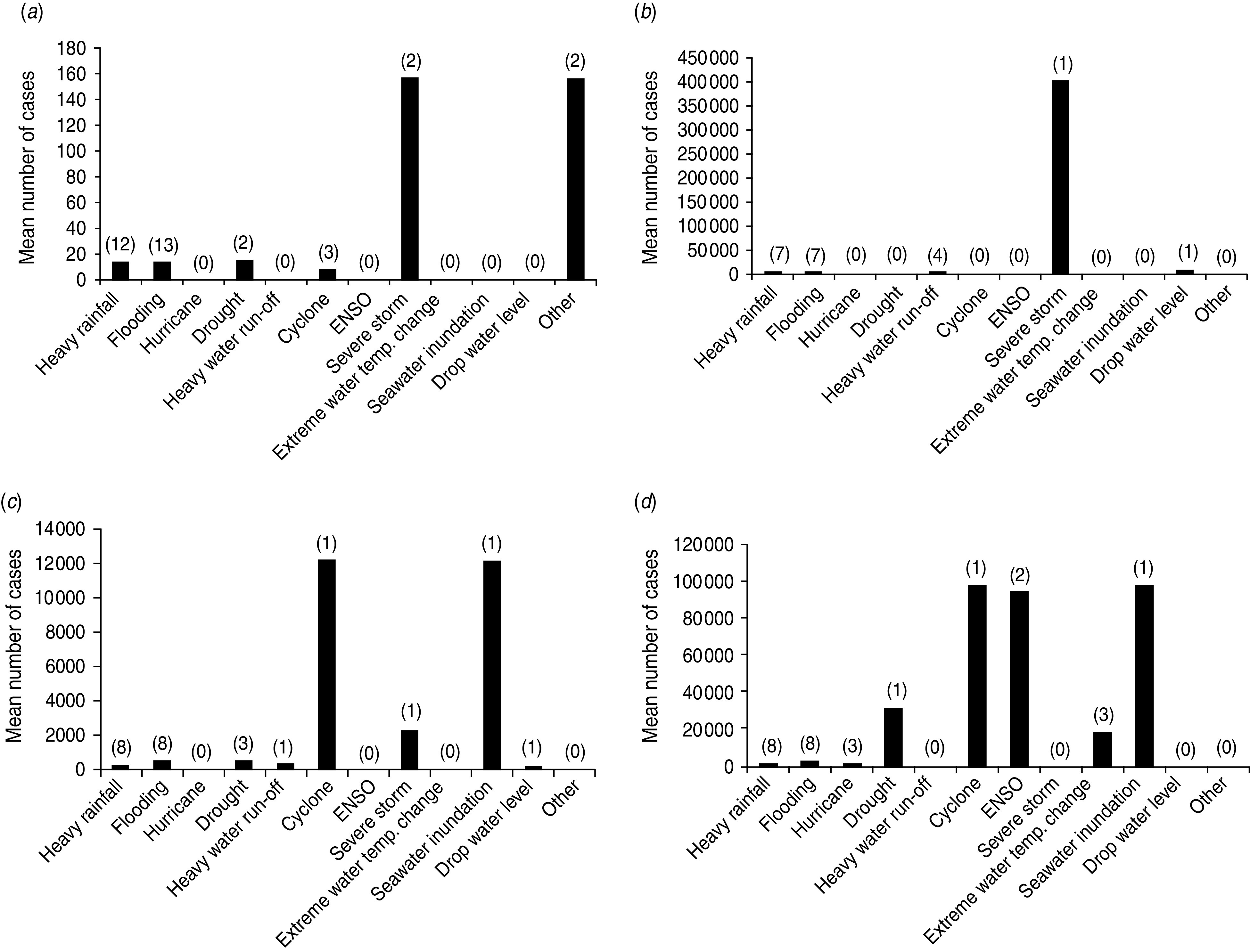
Global climate change is expected to affect the frequency, intensity and duration of extreme water-related weather events such as excessive precipitation, floods, and drought. We conducted a systematic review to examine waterborne outbreaks following such events and explored their distribution between the different types of extreme water-related weather events. Four medical and meteorological databases (Medline, Embase, GeoRef, PubMed) and a global electronic reporting system (ProMED) were searched, from 1910 to 2010. Eighty-seven waterborne outbreaks involving extreme water-related weather events were identified and included, alongside 235 ProMED reports. Heavy rainfall and flooding were the most common events preceding outbreaks associated with extreme weather and were reported in 55·2% and 52·9% of accounts, respectively. The most common pathogens reported in these outbreaks were Vibrio spp. (21·6%) and Leptospira spp. (12·7%). Outbreaks following extreme water-related weather events were often the result of contamination of the drinking-water supply (53·7%). Differences in reporting of outbreaks were seen between the scientific literature and ProMED. Extreme water-related weather events represent a risk to public health in both developed and developing countries, but impact will be disproportionate and likely to compound existing health disparities.
Figures


References
-
- Semenza JC, Menne B. Climate change and infectious diseases in Europe. Lancet Infectious Diseases 2009; 9: 365–375. - PubMed
-
- Pachauri RK, Reisinger A (eds). Contribution of Working Groups I, II and III to the fourth assessment report of the Intergovernmental Panel on Climate Change. IPCC, Geneva, Switzerland: (http://www.ipcc.ch/publications_and_data/ar4/syr/en/contents.html). Accessed 25 June 2012.
-
- Füssel HM. An updated assessment of the risks from climate change based on research published since the IPCC Fourth Assessment Report. Climatic Change 2000; 97: 469–482.
-
- Solomon SD, et al. Contribution of Working Group I to the Fourth Assessment Report of the Intergovernmental Panel on Climate Change. Cambridge: Cambridge University Press, 2007.
Publication types
MeSH terms
Substances
LinkOut - more resources
Full Text Sources
Medical
Miscellaneous