The epidemiology of meningococcal disease in Latin America 1945-2010: an unpredictable and changing landscape
- PMID: 22877581
- PMCID: PMC3566594
- DOI: 10.1017/S0950268812001689
The epidemiology of meningococcal disease in Latin America 1945-2010: an unpredictable and changing landscape
Abstract
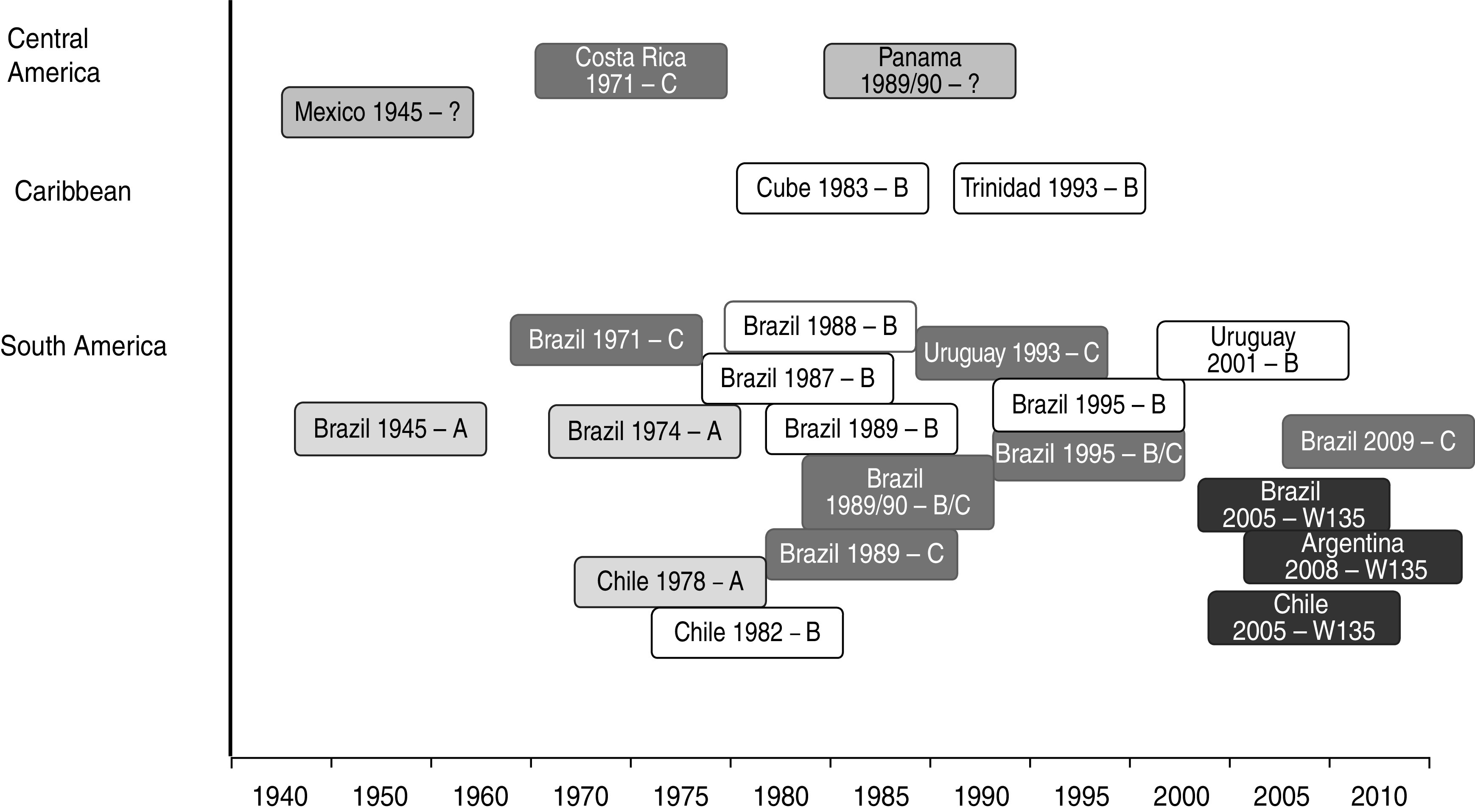
Meningococcal disease is mostly endemic in Latin America, with periodic occurrences of outbreaks and epidemics over the last few decades. This literature review summarizes the available epidemiological data for this region between 1945 and 2010. Incidence rates and serogroup distribution differ from country to country and over time. Serogroups A, B, and C have all been major causes of meningococcal disease since the 1970s. In the last decade serogroups W135 and Y may now be emerging in certain countries, with serogroup A virtually disappearing. Although progress has been made in improving and coordinating the surveillance of invasive disease, the uniformity and quality of reported data reflect the fact that the current surveillance systems focus on passive rather than active reporting, hence the reliability of data may vary between countries. Consideration of vaccination policies to control meningococcal disease can only be made with a sufficient understanding of the changing epidemiology in the region.
Figures
References
-
- Edmond K, et al. Global and regional risk of disabling sequelae from bacterial meningitis: a systematic review and meta-analysis. Lancet Infectious Diseases 2010; 10: 317–328. - PubMed
-
- Peltola H, Kataja JM, Makela PH. Shift in the age-distribution of meningococcal disease as predictor of an epidemic? Lancet 1982; 2: 595–597. - PubMed
-
- Boisier P, et al. Meningococcal meningitis: unprecedented incidence of serogroup X-related cases in 2006 in Niger. Clinical Infectious Diseases 2007; 44: 657–663. - PubMed
-
- Leimkugel J, Racloz V. Global review of meningococcal disease. A shifting etiology. Journal of Bacteriology Research 2009; 1: 6–18.
-
- Harrison LH, Trotter CL, Ramsay ME. Global epidemiology of meningococcal disease. Vaccine 2009; 27 (Suppl. 2): B51–B63. - PubMed
Publication types
MeSH terms
LinkOut - more resources
Full Text Sources
Medical