. 2012;7(8):e42772.
doi: 10.1371/journal.pone.0042772. Epub 2012 Aug 6.

Neuromorphic atomic switch networks

Affiliations

Neuromorphic atomic switch networks

Audrius V Avizienis et al. PLoS One. 2012.

Abstract

Efforts to emulate the formidable information processing capabilities of the brain through neuromorphic engineering have been bolstered by recent progress in the fabrication of nonlinear, nanoscale circuit elements that exhibit synapse-like operational characteristics. However, conventional fabrication techniques are unable to efficiently generate structures with the highly complex interconnectivity found in biological neuronal networks. Here we demonstrate the physical realization of a self-assembled neuromorphic device which implements basic concepts of systems neuroscience through a hardware-based platform comprised of over a billion interconnected atomic-switch inorganic synapses embedded in a complex network of silver nanowires. Observations of network activation and passive harmonic generation demonstrate a collective response to input stimulus in agreement with recent theoretical predictions. Further, emergent behaviors unique to the complex network of atomic switches and akin to brain function are observed, namely spatially distributed memory, recurrent dynamics and the activation of feedforward subnetworks. These devices display the functional characteristics required for implementing unconventional, biologically and neurally inspired computational methodologies in a synthetic experimental system.


Conflict of interest statement

Competing Interests: The authors have declared that no competing interests exist.

Figures

Figure 1
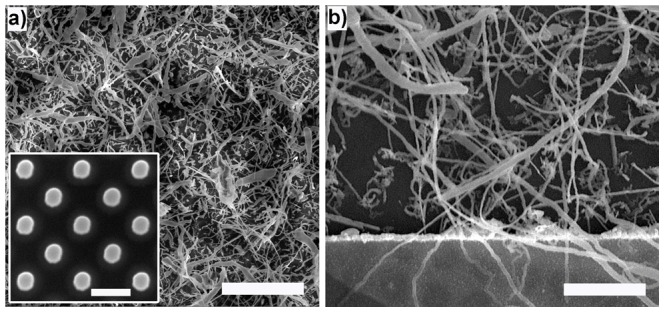
Figure 1. Device Fabrication.
(a) SEM image of complex Ag networks (scale bar = 10 µm) produced by reaction of aqueous AgNO3 (50 mM) with (inset) lithographically patterned Cu seed posts (scale bar = 1 µm). (b) High resolution image of the functionalized Ag network at the device electrode interface (Pt) showing wire widths ranging from 100 nm to 3 µm (average <1 µm) and lengths extending from a few microns to almost a millimeter (scale bar = 700 nm).
Figure 2
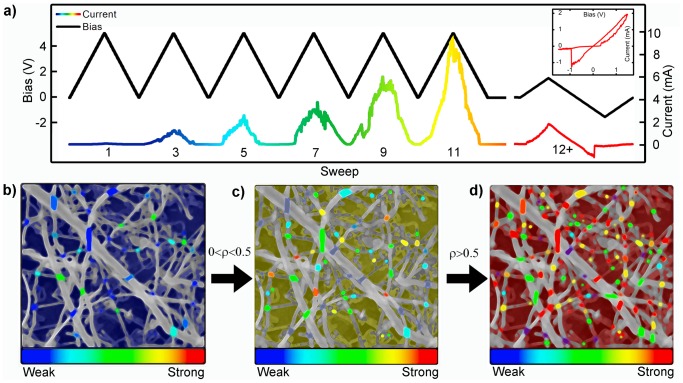
Figure 2. Network Activation - memristive behavior.
(a) Representative example of initial bias sweeps (0–5 V sweep at 1 V/s) applied to a pristine device which steadily activate higher percentages of atomic switches, resulting in increased current. After 11 sweeps, the device resistance decreases from ∼10 MΩ to ∼500 Ω. Subsequent ±1.5 V bipolar sweeps result in repeatable pinched hysteresis behavior (inset: ROFF = 25 kΩ, RON = 800 Ω), and bistable switching. (b–d) Schematic representation of the mechanism producing the I–V characteristics shown in (a). The network initially consists of weakly memristive junctions and ohmic contacts (b). Continued application of unipolar bias voltage (c) drives the dissolution of silver into silver sulfide, increasing the number of memristive elements, while cation migration across extant memristive junctions leads to filament formation and the onset of hard switching behavior. (d) After the proportion of strong memristors exceeds the percolation threshold (ρ>0.5), the network functions reliably in the hard switching regime.
Figure 3
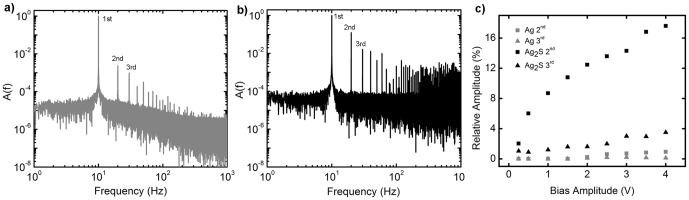
Figure 3. Frequency Response – distributed conductance.
(a) Amplitude spectrum from a Fourier transform of a control device's response to a 2 V, 10 Hz sinusoidal input signal compared to (b) that of a functionalized device which shows enhanced overtones of the input signal with respect to (a). (c) Plot of 2nd and 3rd harmonic generation in current response as a function of bias voltage in both functional (black) and control (gray) networks. Harmonic magnitudes are represented as percentage of the fundamental for a 10 Hz sinusoidal input signal.
Figure 4
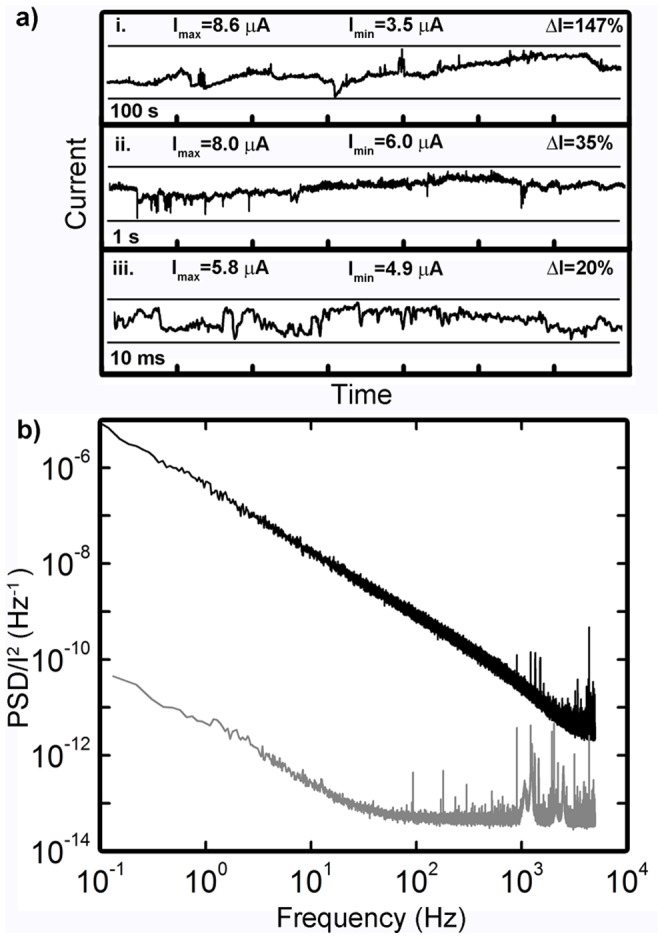
Figure 4. DC Response – recurrent dynamics.
(a) Time traces of current response to 1 V DC bias show large current increases and decreases at all time scales around a mean of 5.81 µA (172 kΩ); shorter time traces (ii–iii) are subsets of (i). Representative device parameters: ROFF>10 MΩ, RON<20 kΩ, VT = 3 V during activation (b) Fourier transforms of DC bias response for Ag control (grey) and functionalized Ag-Ag2S (black) networks. The power spectrum of the functionalized network displays 1/fβ power law scaling (β = 1.34).
Figure 5
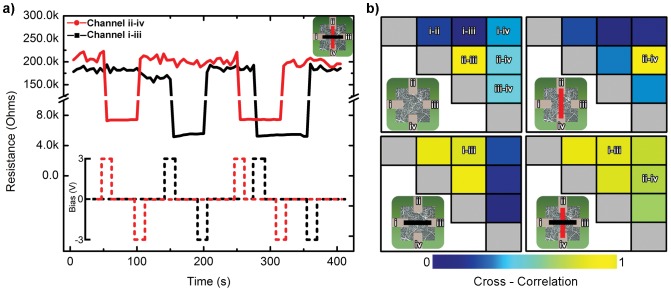
Figure 5. Distributed Memory Storage from Network-scale Switching.
(a) The device operates as a 2-bit non-volatile memory device. The resistance states across two channels (i–iii and ii–iv) are monitored. ON/OFF switching of each channel is induced using super-threshold pulses (3 V, 1 s in duration); the threshold voltages for each channel are ∼1.5 V. The resistances are measured every 5 s with a sub-threshold 200 mV, 100 ms pulses. (b) Although the device operates with a four state output (both channels ON, 1 ON/1 OFF, etc), the network's internal configurations show diverse correlated patterns, from no correlation (blue) to total correlation (yellow). The figure shows correlation coefficients of channel resistances for all 6 pairwise electrode combinations. The correlation coefficients are calculated during each of the 4 network switching configurations; the black and red bars (insets) show the channels that are ON in the switching state.

References

    1. Thorpe S, Fize D, Marlot C (1996) Speed of processing in the human visual system. Nature 381: 520–522. - PubMed
    1. Torralba A, Fergus R, Freeman WT (2008) 80 Million Tiny Images: A Large Data Set for Nonparametric Object and Scene Recognition. IEEE Pattern Anal 30: 1958–1970. - PubMed
    1. Serre T, Wolf L, Bileschi S, Riesenhuber M, Poggio T (2007) Robust Object Recognition with Cortex-Like Mechanisms. IEEE Pattern Anal 29: 411–426. - PubMed
    1. Ullman S (2007) Object recognition and segmentation by a fragment-based hierarchy. Trends Cogn Sci 11: 58–64. - PubMed
    1. Abeles M (1991) Corticonics. Cambridge: Cambridge University Press. 280.

Publication types