. 2012 Sep;63(14):5171-87.
doi: 10.1093/jxb/ers178. Epub 2012 Aug 9.

Molecular characterization of banana NAC transcription factors and their interactions with ethylene signalling component EIL during fruit ripening

Affiliations

Molecular characterization of banana NAC transcription factors and their interactions with ethylene signalling component EIL during fruit ripening

Wei Shan et al. J Exp Bot. 2012 Sep.

Abstract

The plant-specific NAC (NAM, ATAF1/2, and CUC2) transcription factors (TFs) play important roles in plant growth, development, and stress responses. However, the precise role of NAC TFs in relation to fruit ripening is poorly understood. In this study, six NAC genes, designated MaNAC1-MaNAC6, were isolated and characterized from banana fruit. Subcellular localization showed that MaNAC1-MaNAC5 proteins localized preferentially to the nucleus, while MaNAC6 was distributed throughout the entire cell. A transactivation assay in yeast demonstrated that MaNAC4 and MaNAC6, as well as their C-terminal regions, possessed trans-activation activity. Gene expression profiles in fruit with four different ripening characteristics, including natural, ethylene-induced, 1-methylcyclopropene (1-MCP)-delayed, and a combination of 1-MCP with ethylene treatment, revealed that the MaNAC genes were differentially expressed in peel and pulp during post-harvest ripening. MaNAC1 and MaNAC2 were apparently upregulated by ethylene in peel and pulp, consistent with the increase in ethylene production. In contrast, MaNAC3 in peel and pulp and MaNAC5 in peel were constitutively expressed, and transcripts of MaNAC4 in peel and pulp and MaNAC6 in peel decreased, while MaNAC5 or MaNAC6 in pulp increased slightly during fruit ripening. Furthermore, the MaNAC2 promoter was activated after ethylene application, further enhancing the involvement of MaNAC2 in fruit ripening. More importantly, yeast two-hybrid and bimolecular fluorescence complementation analyses confirmed that MaNAC1/2 physically interacted with a downstream component of ethylene signalling, ethylene insensitive 3 (EIN3)-like protein, termed MaEIL5, which was downregulated during ripening. Taken together, these results suggest that MaNACs such as MaNAC1/MaNAC2, may be involved in banana fruit ripening via interaction with ethylene signalling components.


Figures
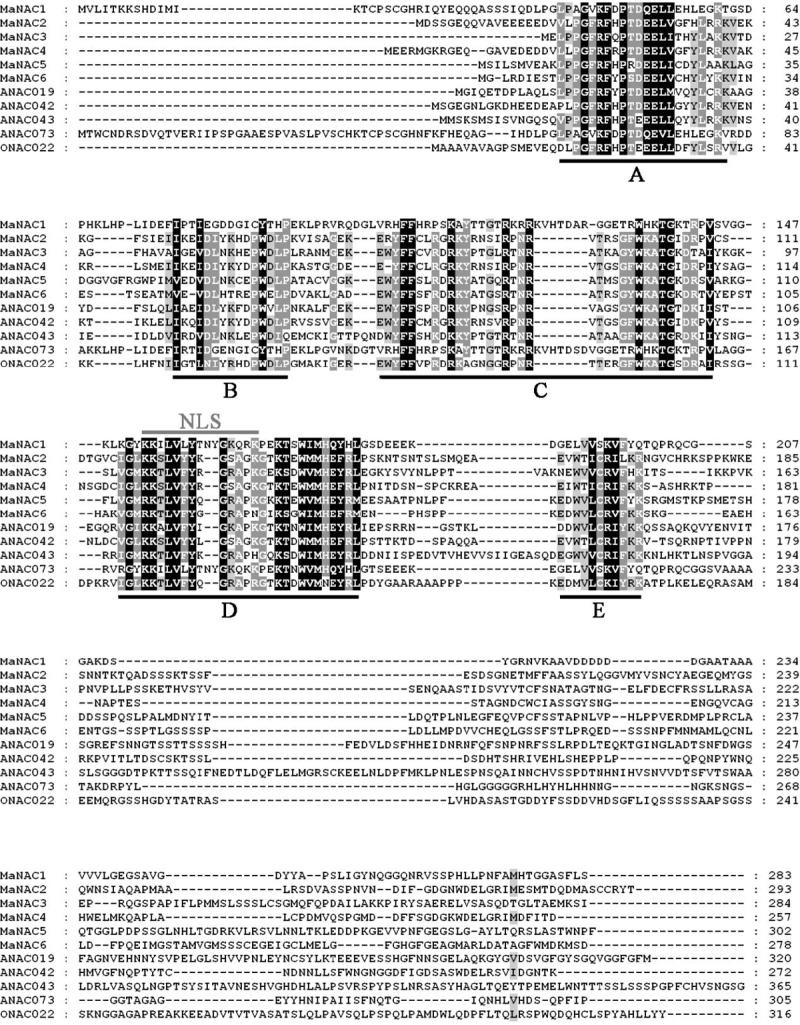
Fig. 1.
Fig. 1.
Amino acid sequence alignment of the MaNACs proteins with other plant NAC proteins. MaNACs were aligned with Arabidopsis ANAC019 (At1g52890.1), ANAC042 (At2g43000.1), ANAC043 (At2g46770.1), and ANAC073 (At4g28500.1), and rice ONAC022 (AK107090). Identical and similar amino acids are indicated by black and grey shading, respectively. Gaps were introduced to optimize alignment. The five highly conserved amino acid motifs (A–E) and the nuclear localization signal (NLS) are indicated by black and grey lines, respectively.
Fig. 2.
Fig. 2.
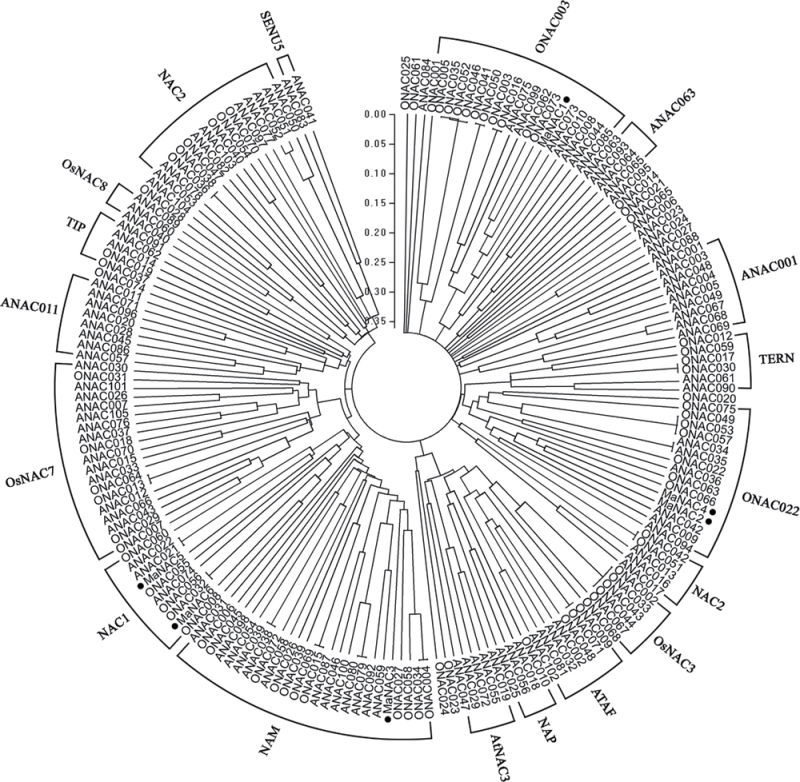
Phylogenetic tree of NACs. Six banana MaNACs (black circles) were aligned with those of the Arabidopsis and rice NAC families as designated by Ooka et al. (2003). Multiple alignment was carried using CLUSTALW and the phylogenetic tree was constructed with MEGA5.0 using a bootstrap test of phylogeny with minimum evolution test and default parameters. The GenBank accession numbers of the Arabidopsis and rice NAC proteins are listed as Supplementary Data at JXB online.
Fig. 3.
Fig. 3.
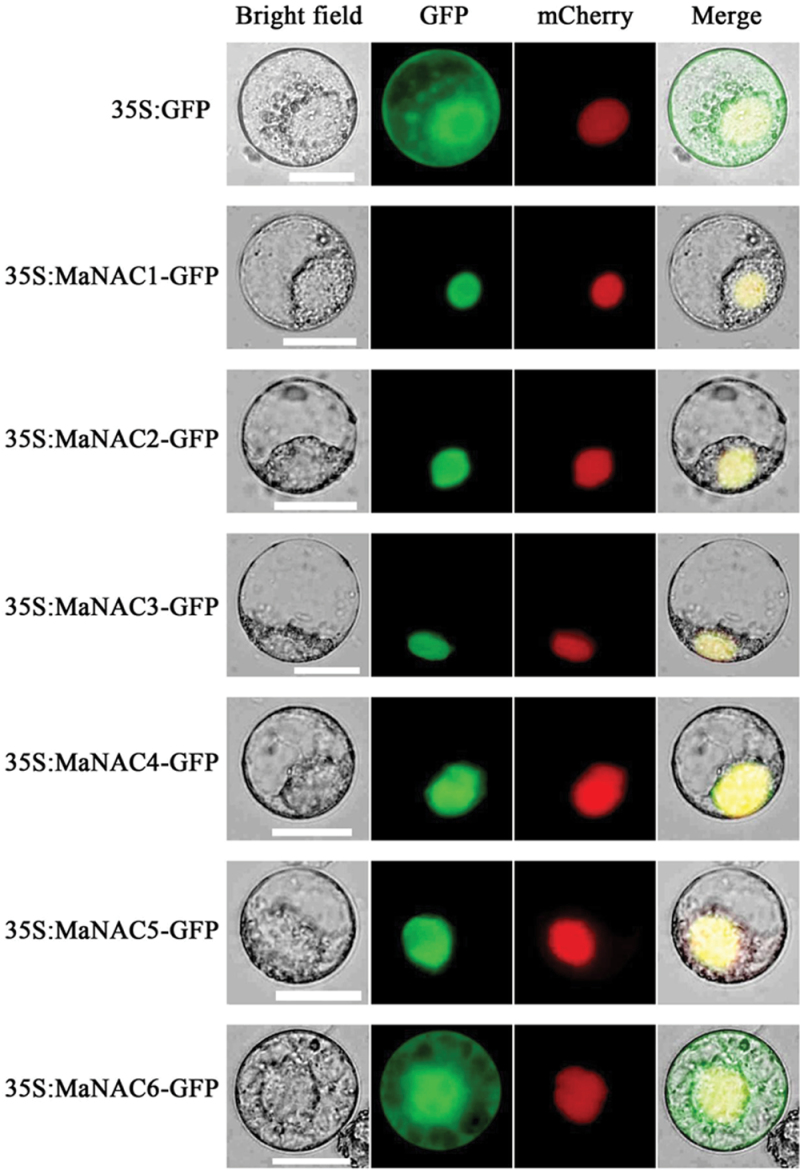
Subcellular localization of MaNACs in tobacco BY-2 protoplasts. Protoplasts were transiently transformed with MaNAC–GFP constructs or GFP vector using a modified PEG method. GFP fluorescence was observed with a fluorescence microscope. VirD2NLS-mCherry was included in each transfection to serve as a control for successful transfection, as well as for nuclear localization. Images were taken in a dark field for green fluorescence, while the outline of the cell and the merged were photographed in a bright field. Bars, 25 µm.
Fig. 4.
Fig. 4.
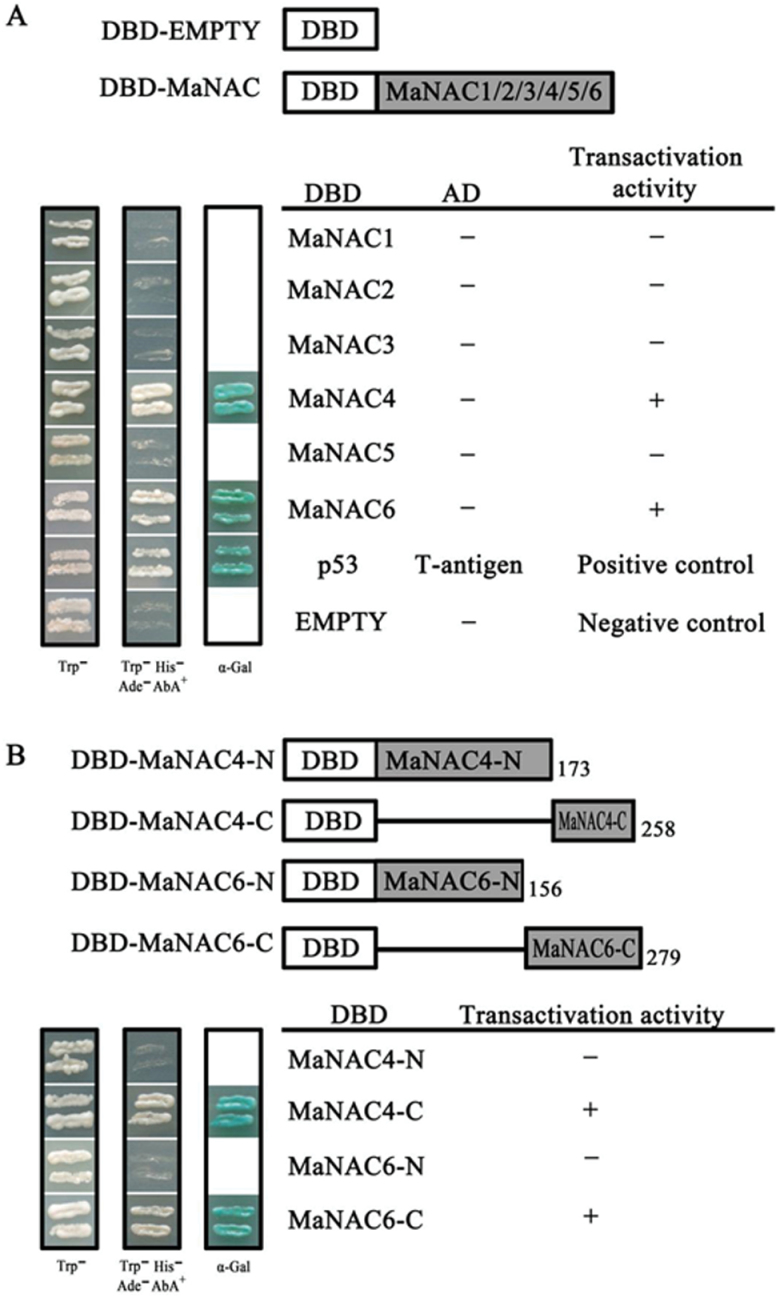
Transcriptional activation of MaNACs in yeast. (A) The coding regions of MaNAC1MaNAC6 were cloned into the pGBKT7 (GAL4 DBD) vector to create the DBD–MaNAC1 to -6 constructs, respectively. (B) Truncation analysis of transcriptional activation of MaNAC4 and MaNAC6 for mapping activation domain. C- and N-terminal derivatives of MaNAC4 and MaNAC6 were fused with the pGBKT7 vector to create the DBD–MaNAC4 and -6 constructs, respectively. The numbers on the right indicate the last residues of the polypeptides. In (A) and (B), all of the constructs mentioned above, together with the positive control (p-53+T-antigen) and negative control (pGBKT7) were transformed into yeast strain AH109. Yeast clones transformed with different constructs were grown on SD plates without tryptophan or without tryptophan, histidine, and adenine but containing 125 µM Aureobasidin A for 3 d at 30 °C. Transcription activation was monitored by the detection of yeast growth and an α-galactosidase (α-Gal) assay.
Fig. 5.
Fig. 5.
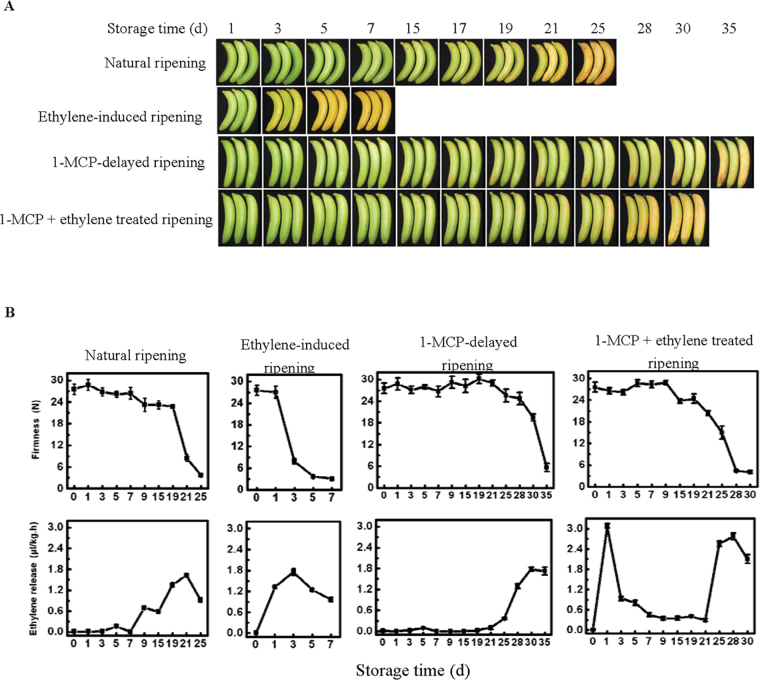
Photograph of fruit with four different ripening characteristics, comprising natural (control), ethylene-induced, 1-MCP-delayed, and a combination of 1-MCP+ethylene treated ripening (A), and changes in fruit firmness and ethylene production (B) during ripening. Each value represents the mean ±SE of three replicates.
Fig. 6.
Fig. 6.
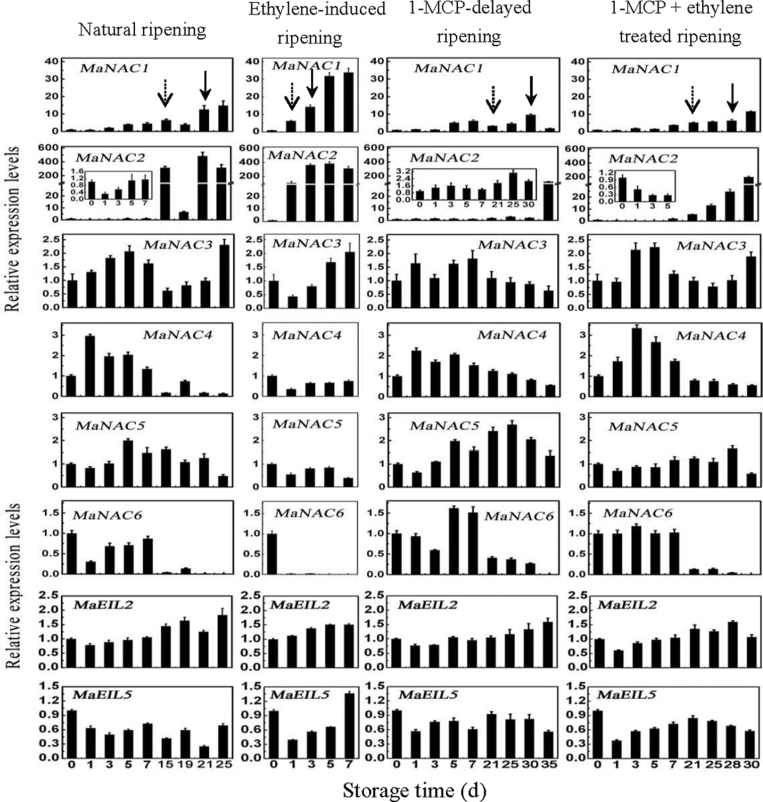
Expression of MaNAC and MaEIL genes in banana fruit peel with four different ripening characteristics: natural (control), ethylene-induced, 1-MCP-delayed, and a combination of 1-MCP and ethylene-treated ripening. The expression levels of each gene are expressed as a ratio relative to the harvest time (0 d of control), which was set at 1. Each value represents the mean ±SE of three replicates. The broken arrow and full arrow represent the time point of ethylene production beginning to increase and its peak for each treatment, respectively.
Fig. 7
Fig. 7
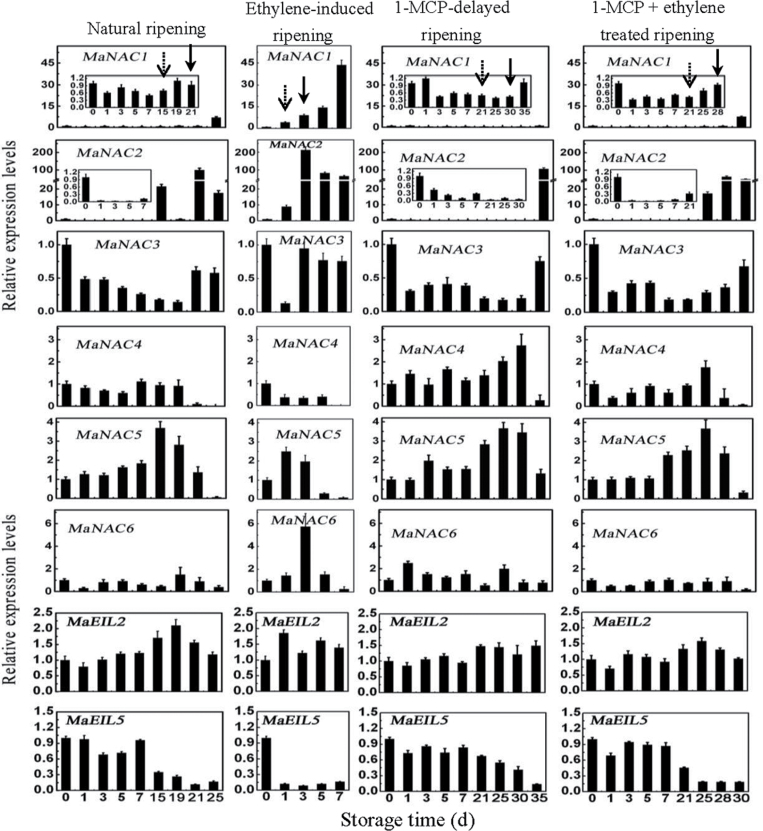
. Expression of MaNAC and MaEIL genes in banana fruit pulp with four different ripening characteristics: natural (control), ethylene-induced, 1-MCP-delayed, and a combination of 1-MCP and ethylene-treated ripening. The expression levels of each gene are expressed as a ratio relative to the harvest time (0 d of control), which was set at 1. Each value represents the mean ±SE of three replicates. The broken arrow and full arrow represent the time point of ethylene production beginning to increase and its peak for each treatment, respectively.
Fig. 8.
Fig. 8.
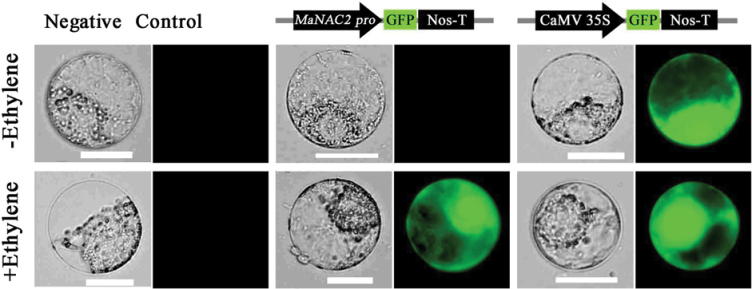
MaNAC2 promoter activity in response to ethylene. GFP reporter constructs containing the MaNAC2 promoter (MaNAC2pro::GFP) and the CaMV 35S promoter (35S::GFP, positive control) were transiently transformed into tobacco BY-2 protoplasts using a modified PEG method and test for ethylene induction. Non-transformed protoplasts were used as a negative control. After incubation for 12h, GFP fluorescence was observed by fluorescence microscopy. Bar, 25 µm. The experiment was repeated at least three times.
Fig. 9
Fig. 9
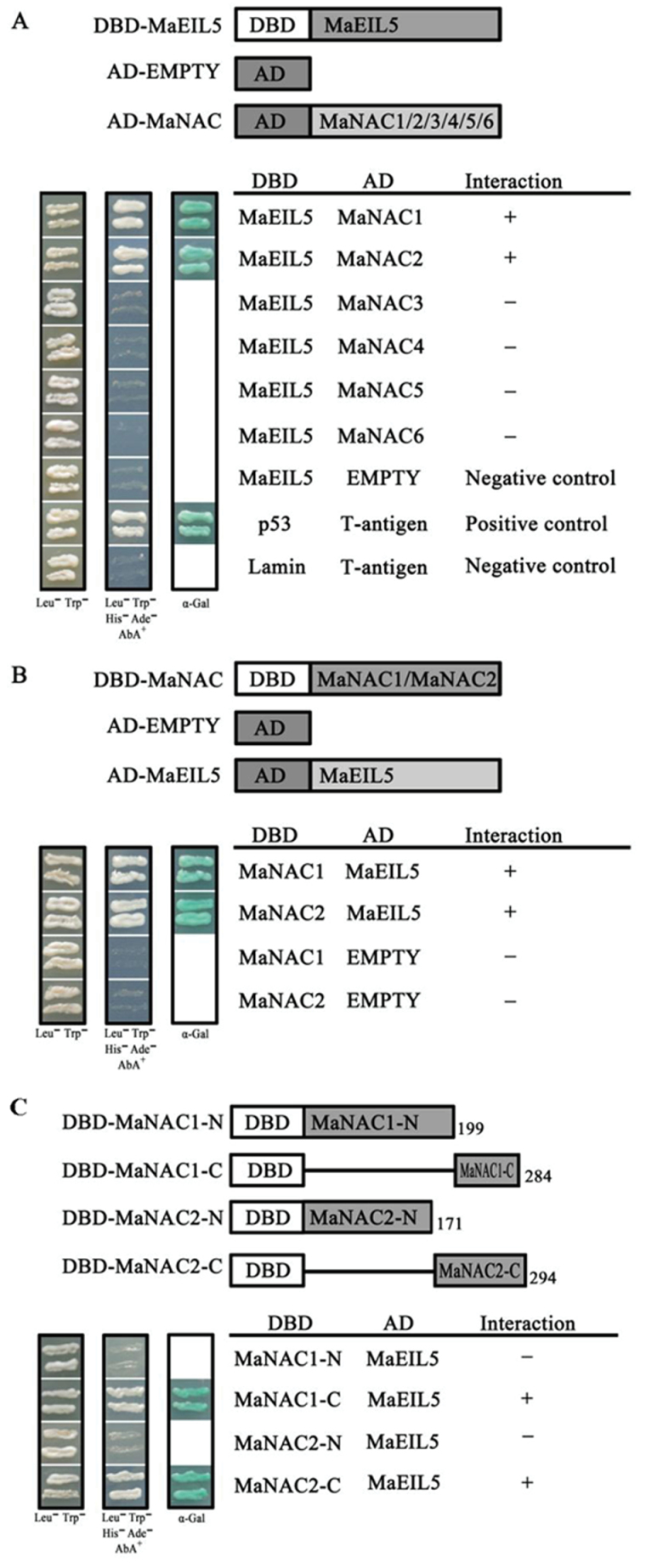
. Physical interactions between MaNAC proteins and MaEIL5 detected in Y2H assays. (A) The coding regions of MaNAC1MaNAC6 were cloned into the pGADT7 vector to create the AD–MaNAC1 to -6 constructs, while the coding region of MaEIL5 was cloned into the pGBKT7 vector to create the DBD–MaEIL5 construct. Gold Y2H yeast strains were co-transformed with DBD–MaEIL5 and AD–MaNAC1 to -6, respectively. (B) The coding regions of MaNAC1/2 were cloned into the pGBKT7 vector to create the DBD–MaNAC1 and -2 constructs, while the coding region of MaEIL5 was cloned into the pGADT7 vector to create the AD–MaEIL5 construct. Gold Y2H yeast strains were co-transformed with DBD–MaNAC1 or -2 and AD–MaEIL5, respectively. (C) The N and C termini of MaNAC1 and MaNAC2 were tested for interaction with MaEIL5. Gold Y2H yeast strains were co-transformed with DBD–MaNAC1 or -2 derivatives and AD–MaEIL5, respectively. In (A), (B) and (C), the ability of yeast cells to grow on synthetic medium lacking tryptophan, leucine, histidine, and adenine but containing 125 µM Aureobasidin A, and to turn blue in the presence of the chromagenic substrate X-α-Gal, was scored as a positive interaction. Yeast cells transformed with pGBKT7-53+pGADT7-T, DBD–MaEIL5+pGADT7-T, or pGBKT7-Lam+pGADT7-T were included as positive or negative controls, respectively.
Fig. 10.
Fig. 10.
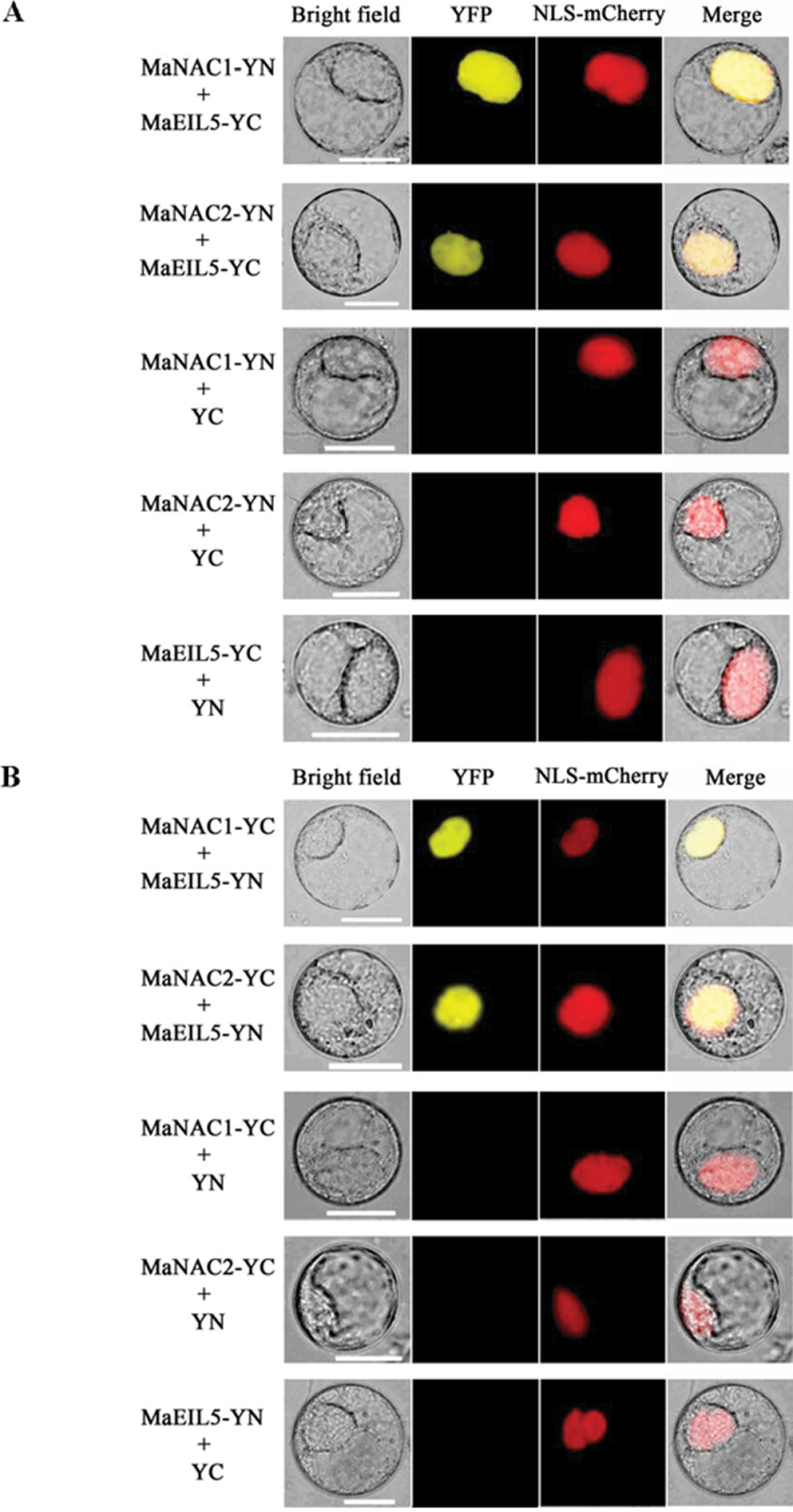
BiFC visualization of the MaNAC1/MaNAC2 and MaEIL5 interaction in transiently co-expressed tobacco BY-2 protoplasts. (A) MaNAC1/ MaNAC2 and MaEIL5 proteins were fused with the N (YN) and C (YC) termini of YFP, respectively. (B) MaNAC1/MaNAC2 and MaEIL5 proteins were fused with the C (YC) and N (YN) terminus of YFP, respectively. Expression of MaNAC1/MaNAC2 or MaEIL5 alone was used as a negative control. VirD2NLS-mCherry was included in each transfection to serve as a control for successful transfection, as well as for nuclear localization. YFP fluorescence is yellow; the merged image is a digital merge of bright field and fluorescent images. Bar, 25 µm.

References

    1. Abel S, Theologis A. 1994. Transient transformation of Arabidopsis leaf protoplasts: a versatile experimental system to study gene expression The Plant Journal 5 421–427 - PubMed
    1. Aida M, Ishida T, Fukaki H, Fujisawa H, Tasaka M. 1997. Genes involved in organ separation in Arabidopsis: an analysis of the cup-shaped cotyledon mutant The Plant Cell 9 841–857 - PMC - PubMed
    1. Al-Daoud F, Cameron RK. 2011. ANAC055 and ANAC092 contribute non-redundantly in an EIN2-dependent manner to age-related resistance in Arabidopsis Physiological and Molecular Plant Pathology 76 212–222
    1. Balazadeh S, Kwasneewski M, Caldana C, Mehrnia M, Zanor MI, Xue GP, Mueller-Roeber B. 2011. ORS1, an H2O2-responsive NAC transcription factor, controls senescence in Arabidopsis thaliana Molecular Plant 4 346–360 - PMC - PubMed
    1. Bapat VA, Trivedi PK, Ghosh A, Sane VA. 2010. Ripening of fleshy fruit: molecular insight and the role of ethylene Biotechnology Advances 28 94–107 - PubMed

Publication types

MeSH terms