


The genomics and genetics of endometrial cancer
- PMID: 22888282
- PMCID: PMC3415201
- DOI: 10.2147/AGG.S28953
The genomics and genetics of endometrial cancer
Abstract
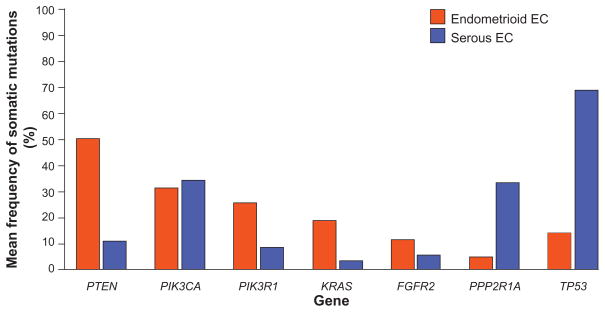
Most sporadic endometrial cancers (ECs) can be histologically classified as endometrioid, serous, or clear cell. Each histotype has a distinct natural history, clinical behavior, and genetic etiology. Endometrioid ECs have an overall favorable prognosis. They are typified by high frequency genomic alterations affecting PIK3CA, PIK3R1, PTEN, KRAS, FGFR2, ARID1A (BAF250a), and CTNNB1 (β-catenin), as well as epigenetic silencing of MLH1 resulting in microsatellite instability. Serous and clear cell ECs are clinically aggressive tumors that are rare at presentation but account for a disproportionate fraction of all endometrial cancer deaths. Serous ECs tend to be aneuploid and are typified by frequent genomic alterations affecting TP53 (p53), PPP2R1A, HER-2/ERBB2, PIK3CA, and PTEN; additionally, they display dysregulation of E-cadherin, p16, cyclin E, and BAF250a. The genetic etiology of clear cell ECs resembles that of serous ECs, but it remains relatively poorly defined. A detailed discussion of the characteristic patterns of genomic alterations that distinguish the three major histotypes of endometrial cancer is reviewed herein.
Conflict of interest statement
The authors have no conflicts of interest in this work.
Figures
References
-
- Ferlay J, Shin HR, Bray F, Forman D, Mathers C, Parkin DM. Estimates of worldwide burden of cancer in 2008: GLOBOCAN 2008. Int J Cancer. 2010;127(12):2893–2917. - PubMed
-
- Creasman WT, Odicino F, Maisonneuve P, et al. Carcinoma of the corpus uteri. FIGO 26th Annual Report on the Results of Treatment in Gynecological Cancer. Int J Gynaecol Obstet. 2006;95 (Suppl 1):S105–S143. - PubMed
Grants and funding
LinkOut - more resources
Full Text Sources
Other Literature Sources
Research Materials
Miscellaneous