


Double Jeopardy? Age, Race, and HRQOL in Older Adults with Cancer
- PMID: 22888348
- PMCID: PMC3410302
- DOI: 10.1155/2012/478642
Double Jeopardy? Age, Race, and HRQOL in Older Adults with Cancer
Abstract
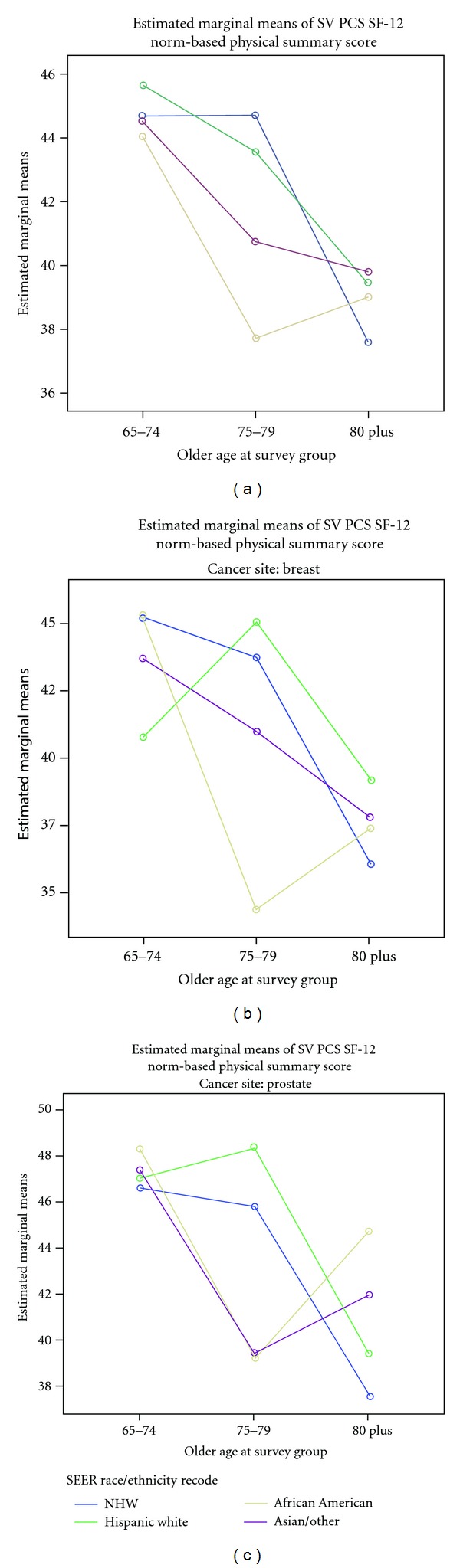
Understanding the post-treatment physical and mental function of older adults from ethnic/racial minority backgrounds with cancer is a critical step to determine the services required to serve this growing population. The double jeopardy hypothesis suggests being a minority and old could have compounding effects on health. This population-based study examined the physical and mental function of older adults by age (mean age = 75.7, SD = 6.1), ethnicity/race, and cancer (breast, prostate, colorectal, and gynecologic) as well as interaction effects between age, ethnicity/race and HRQOL. There was evidence of a significant age by ethnicity/race interaction in physical function for breast, prostate and all sites combined, but the interaction became non-significant (for breast and all sites combined) when comorbidity was entered into the model. The interaction persisted in the prostate cancer group after controlling for comorbidity, such that African Americans and Asian Americans in the 75-79 age group report lower physical health than non-Hispanic Whites and Hispanic Whites in this age group. The presence of double jeopardy in the breast and all sites combined group can be explained by a differential comorbid burden among the older (75-79) minority group, but the interaction found in prostate cancer survivors does not reflect this differential comorbid burden.
Figures
References
-
- Centers for Disease Control and Prevention and The Merck Company Foundation. The State of Aging and Health. Whitehouse Station, NJ, USA: America in Foundation TMC; 2007.
-
- Smith BD, Smith GL, Hurria A, Hortobagyi GN, Buchholz TA. Future of cancer incidence in the United States: burdens upon an aging, changing nation. Journal of Clinical Oncology. 2009;27(17):2758–2765. - PubMed
-
- Clark DO, Maddox GL. Racial and social correlates of age-related changes in functioning. Journals of Gerontology. 1992;47(5):S222–S232. - PubMed
-
- Ferraro KF, Farmer MM. Double jeopardy to health hypothesis for African Americans: analysis and critique. Journal of Health and Social Behavior. 1996;37(1):27–43. - PubMed
-
- Dannefer D. Cumulative advantage/disadvantage and the life course: cross-fertilizing age and social science theory. Journals of Gerontology. 2003;58(6):S327–S337. - PubMed
Grants and funding
LinkOut - more resources
Full Text Sources
