


Paracrine release from nonviral engineered adipose-derived stem cells promotes endothelial cell survival and migration in vitro
- PMID: 22889246
- PMCID: PMC3549626
- DOI: 10.1089/scd.2012.0201
Paracrine release from nonviral engineered adipose-derived stem cells promotes endothelial cell survival and migration in vitro
Abstract
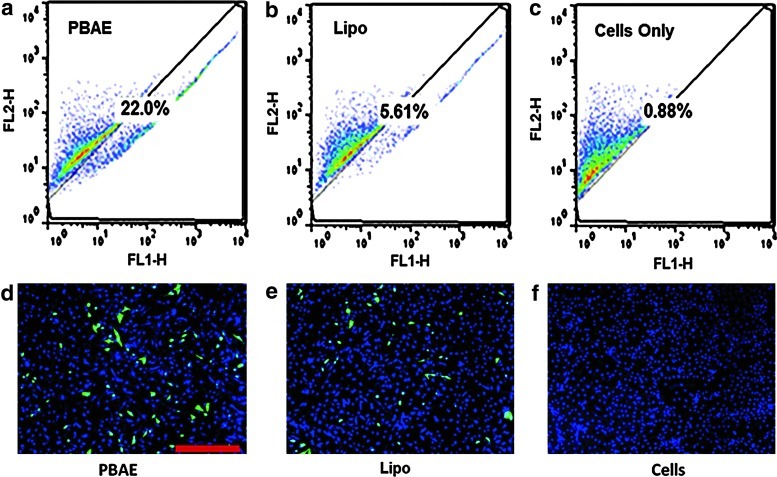
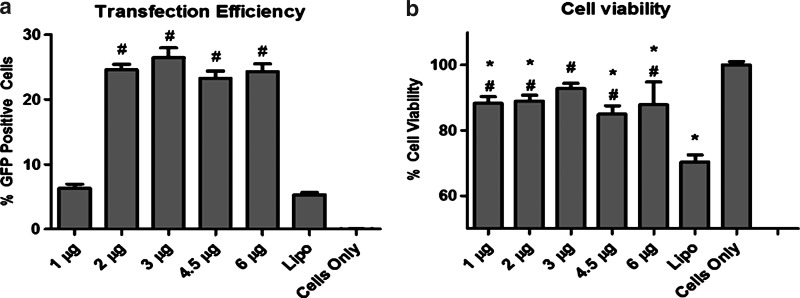
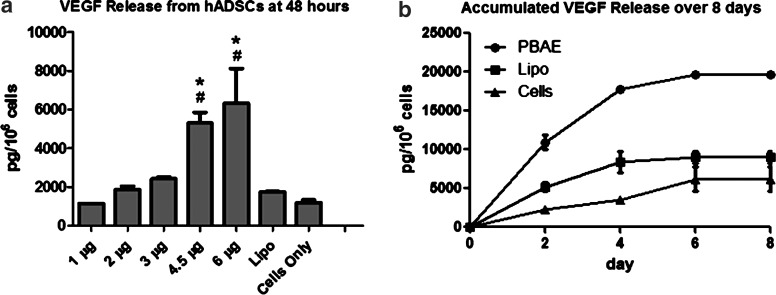
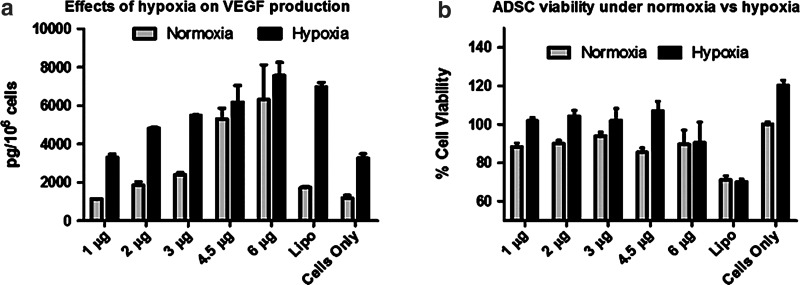
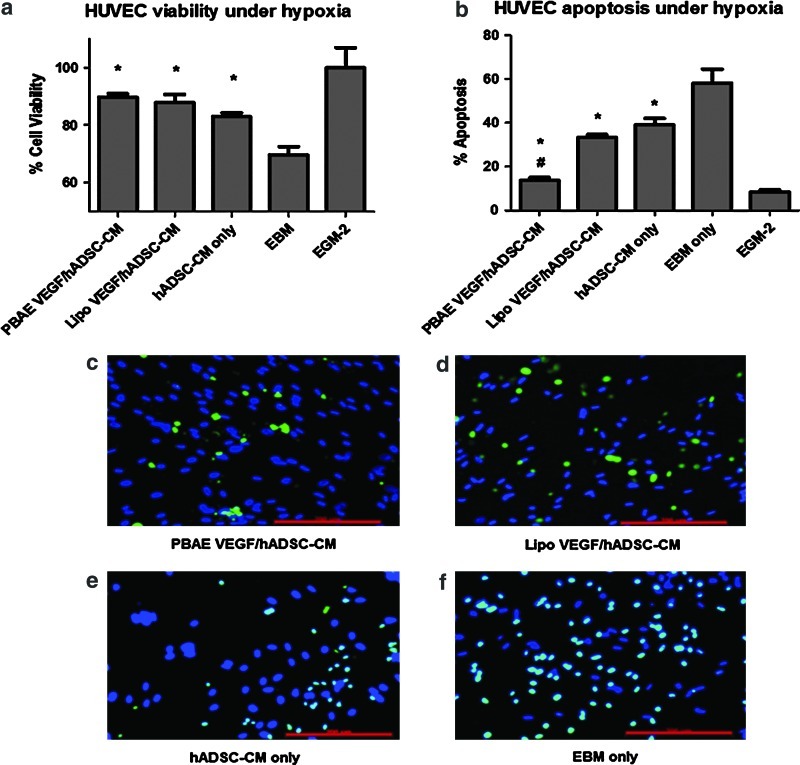
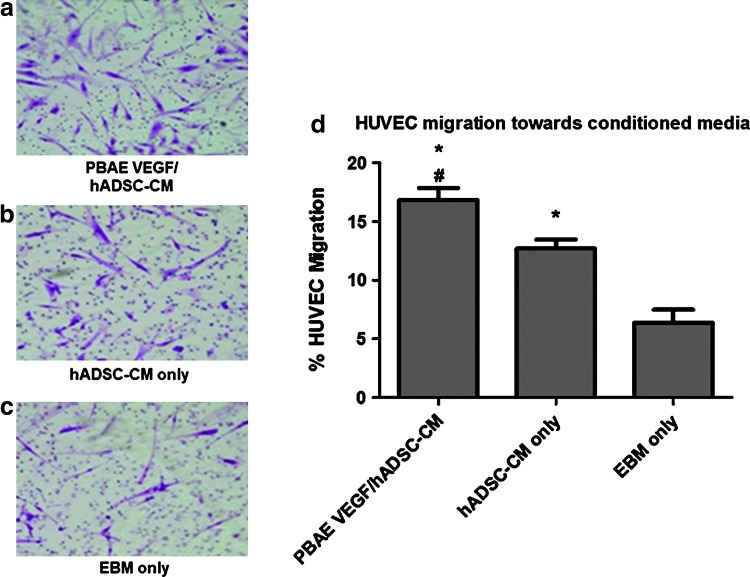
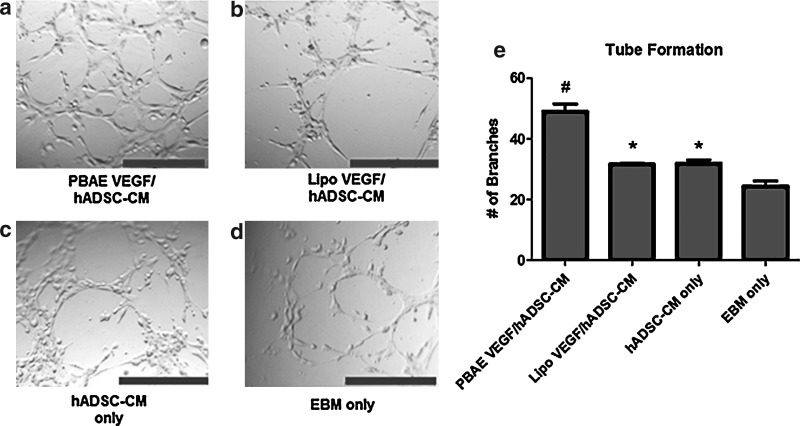
Stem cells hold great potential for therapeutic angiogenesis due to their ability to directly contribute to new vessel formation or secrete paracrine signals. Adipose-derived stem cells (ADSCs) are a particularly attractive autologous cell source for therapeutic angiogenesis due to their ease of isolation and relative abundance. Gene therapy may be used to further enhance the therapeutic efficacy of ADSCs by overexpressing desired therapeutic factors. Here, we developed vascular endothelial growth factor (VEGF)-overexpressing ADSCs utilizing poly(β-amino esters) (PBAEs), a hydrolytically biodegradable polymer, and examined the effects of paracrine release from nonviral modified ADSCs on the angiogenic potential of human umbilical vein endothelial cells (HUVECs) in vitro. PBAE polymeric vectors delivered DNA into ADSCs with high efficiency and low cytotoxicity, leading to an over 3-fold increase in VEGF production by ADSCs compared with Lipofectamine 2000. Paracrine release from PBAE/VEGF-transfected ADSCs enhanced HUVEC viability and decreased HUVEC apoptosis under hypoxia. Further, paracrine release from PBAE/VEGF-transfected ADSCs significantly enhanced HUVEC migration and tube formation, two critical cellular processes for effective angiogenesis. Our results demonstrate that genetically engineered ADSCs using biodegradable polymeric nanoparticles may provide a promising autologous cell source for therapeutic angiogenesis in treating cardiovascular diseases.
Figures
References
-
- Losordo DW. Dimmeler S. Therapeutic angiogenesis and vasculogenesis for ischemic disease. Part I: angiogenic cytokines. Circulation. 2004;109:2487–2491. - PubMed
-
- Potente M. Gerhardt H. Carmeliet P. Basic and therapeutic aspects of angiogenesis. Cell. 2011;146:873–887. - PubMed
-
- Losordo DW. Dimmeler S. Therapeutic angiogenesis and vasculogenesis for ischemic disease. Part II: cell-based therapies. Circulation. 2004;109:2692–2697. - PubMed
-
- Gruber R. Kandler B. Holzmann P. Vogele-Kadletz M. Losert U. Fischer MB. Watzek G. Bone marrow stromal cells can provide a local environment that favors migration and formation of tubular structures of endothelial cells. Tissue Eng. 2005;11:896–903. - PubMed
-
- Kamihata H. Matsubara H. Nishiue T. Fujiyama S. Tsutsumi Y. Ozono R. Masaki H. Mori Y. Iba O, et al. Implantation of bone marrow mononuclear cells into ischemic myocardium enhances collateral perfusion and regional function via side supply of angioblasts, angiogenic ligands, and cytokines. Circulation. 2001;104:1046–1052. - PubMed
Publication types
MeSH terms
Substances
LinkOut - more resources
Full Text Sources
Other Literature Sources
