


Plk1 is upregulated in androgen-insensitive prostate cancer cells and its inhibition leads to necroptosis
- PMID: 22890325
- PMCID: PMC3499666
- DOI: 10.1038/onc.2012.309
Plk1 is upregulated in androgen-insensitive prostate cancer cells and its inhibition leads to necroptosis
Abstract
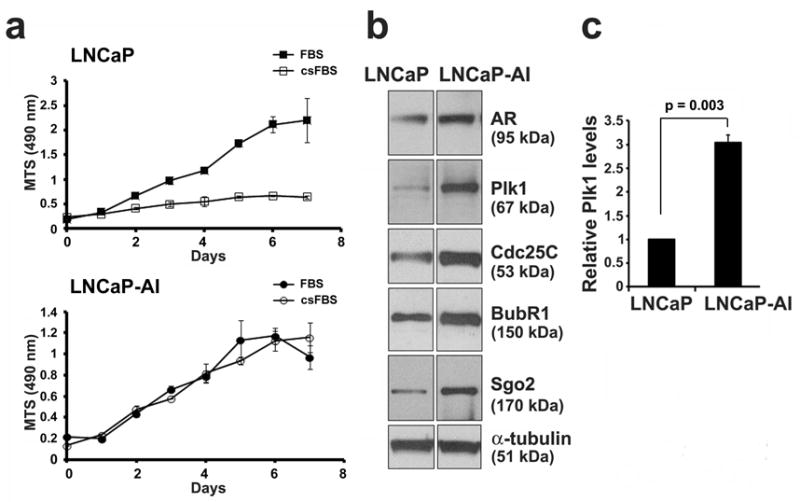
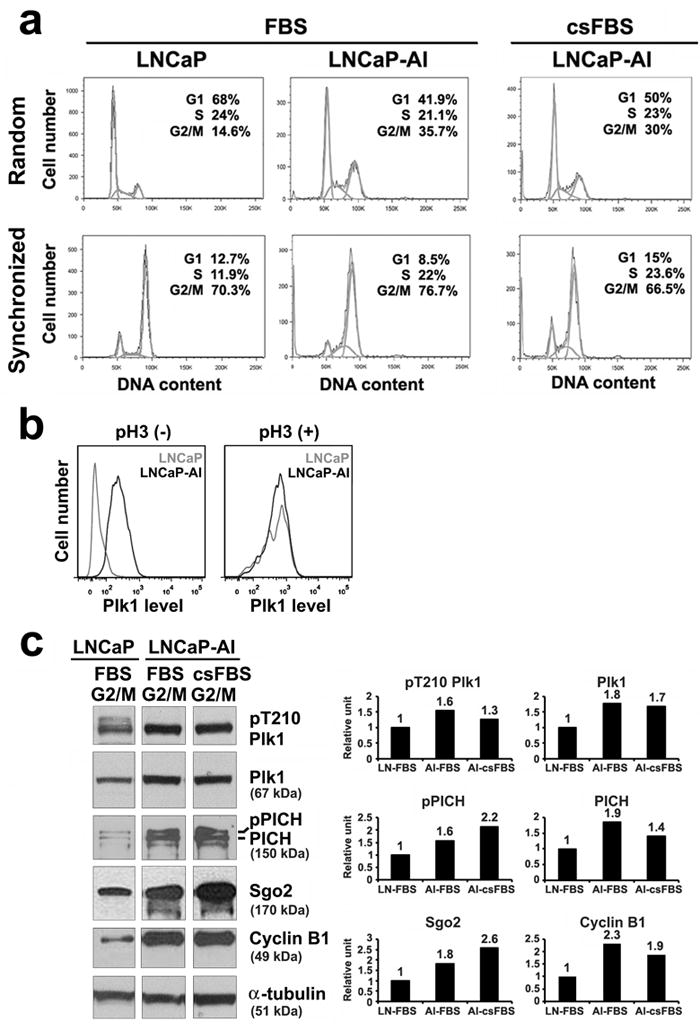
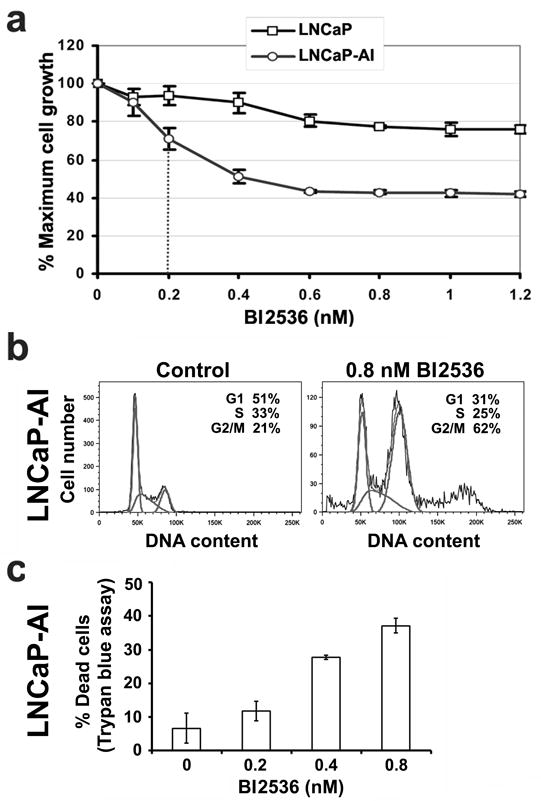
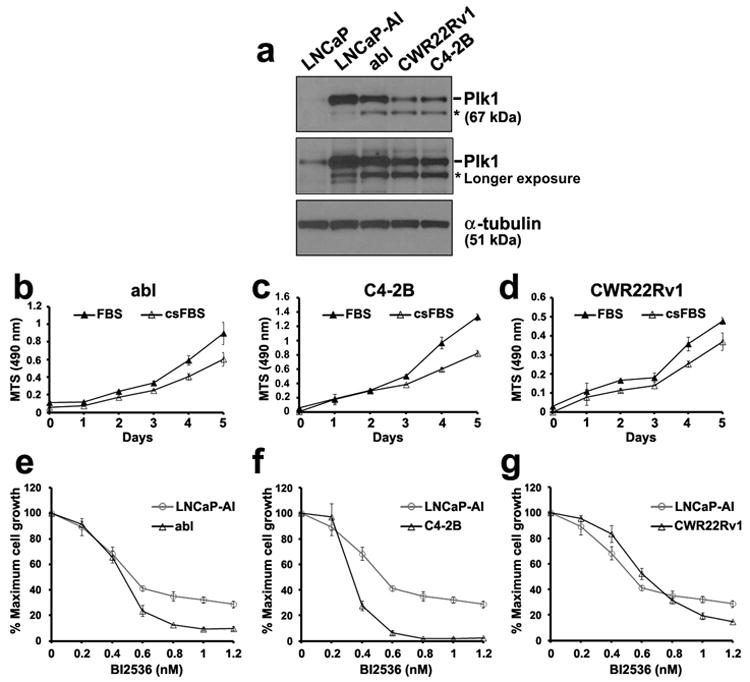
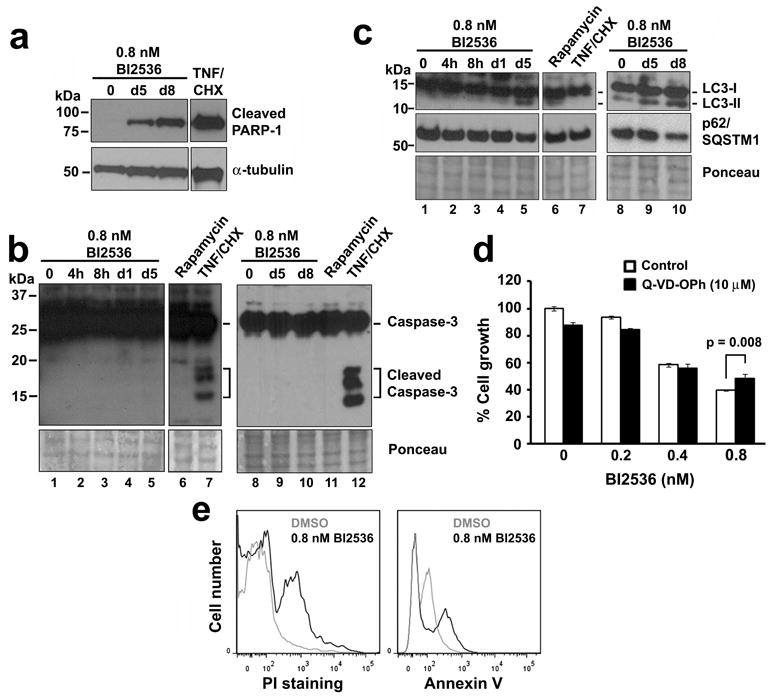
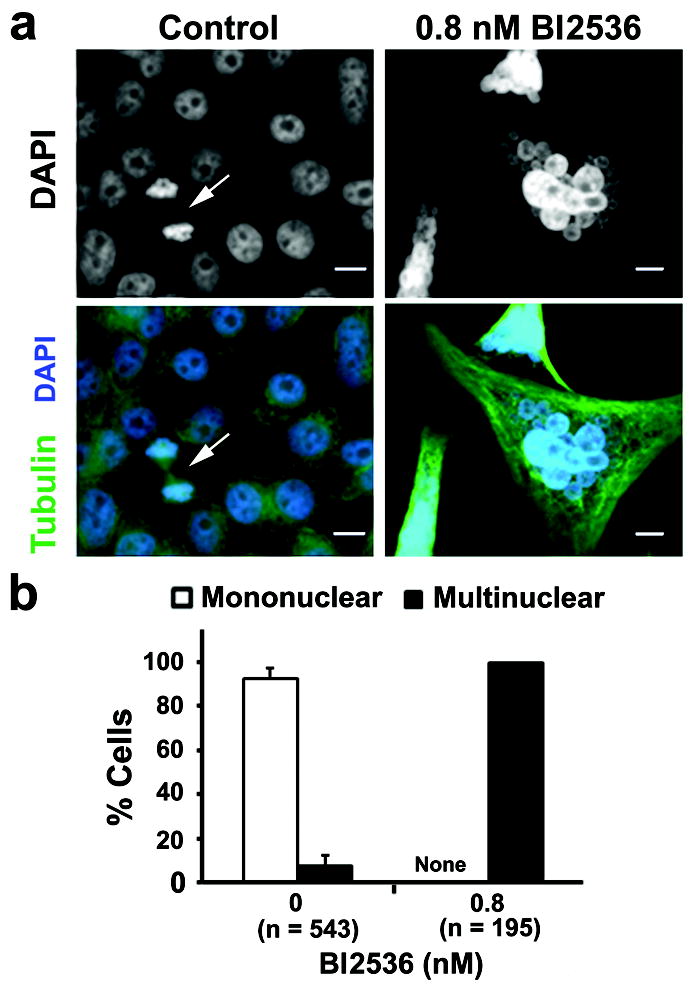
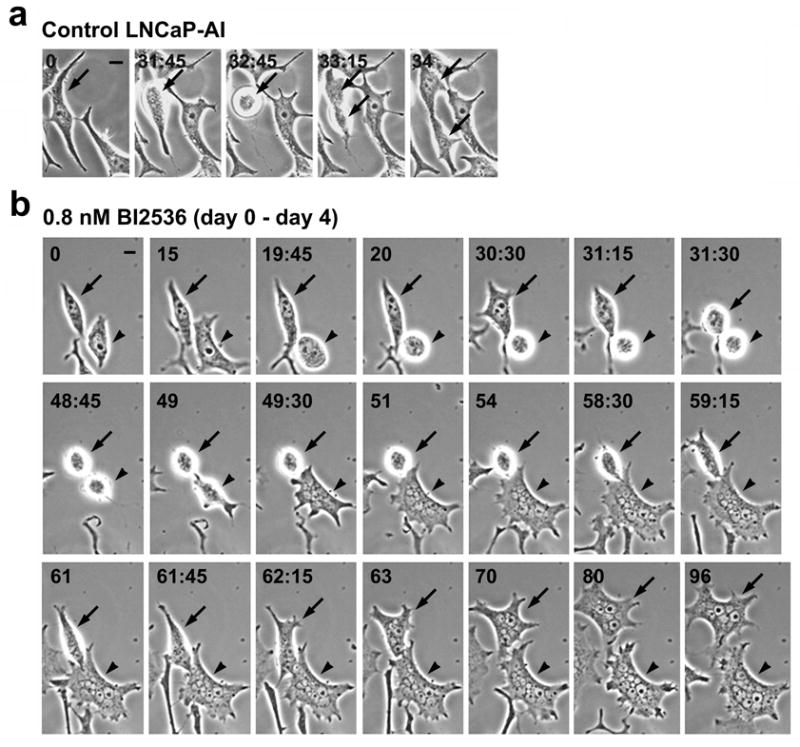
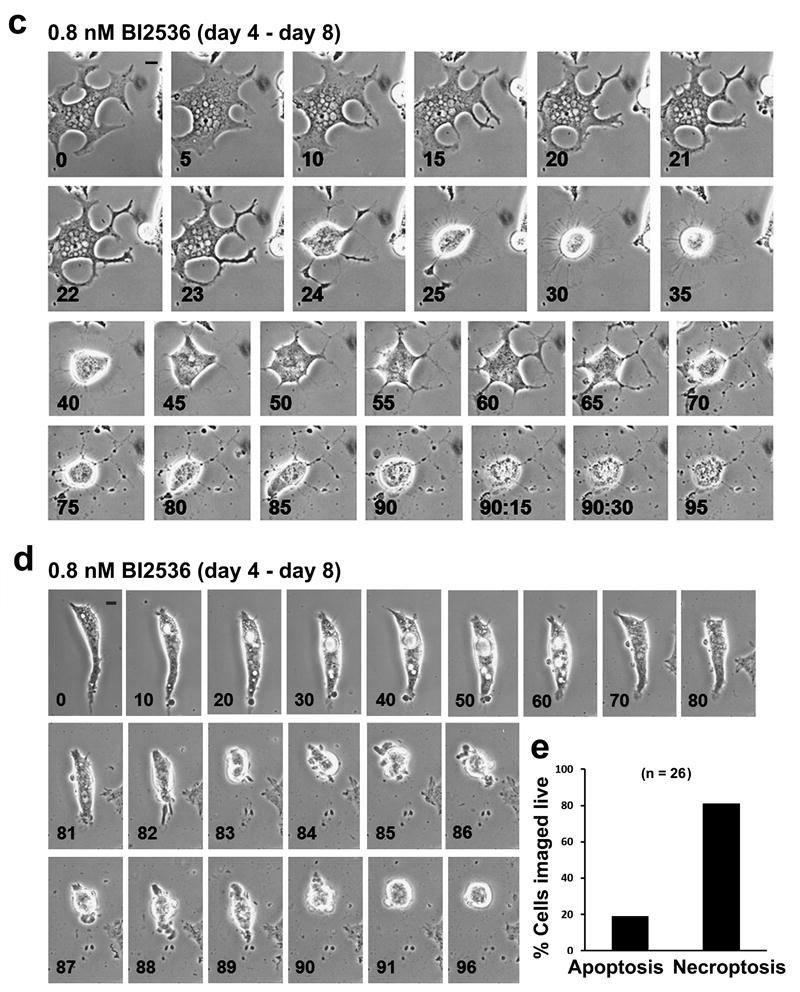
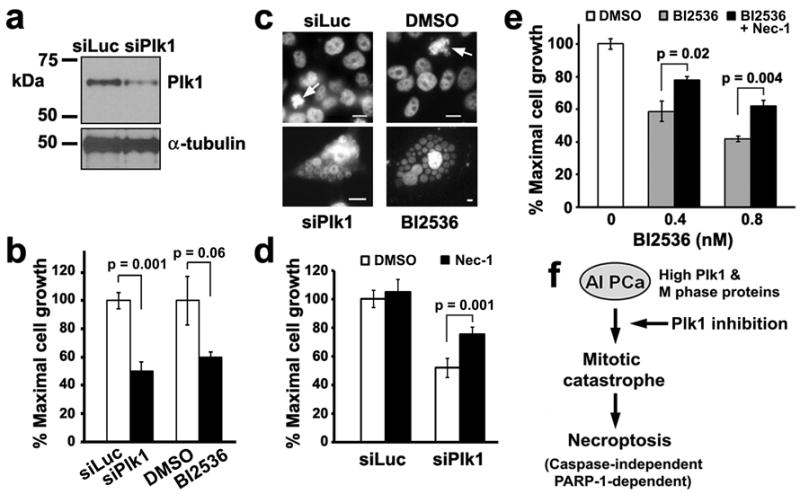
Castration-resistant prostate cancer (PCa) is refractory to hormone therapy and new strategies for treatment are urgently needed. We found that androgen-insensitive (AI) PCa cells, LNCaP-AI, are reprogrammed to upregulate the mitotic kinase Plk1 (Polo-like kinase 1) and other M-phase cell-cycle proteins, which may underlie AI PCa growth. In androgen-depleted media, LNCaP-AI cells showed exquisite sensitivity to growth inhibition by subnanomolar concentrations of a small molecule inhibitor of Plk1, BI2536, suggesting that these cells are dependent on Plk1 for growth. In contrast, the androgen-responsive parental LNCaP cells showed negligible responses to BI2536 treatment under the same condition. BI2536 treatment of LNCaP-AI cells resulted in an increase in cell death marker PARP-1 (polymerase-1) but did not activate caspase-3, an apoptosis marker, suggesting that the observed cell death was caspase-independent. BI2536-treated LNCaP-AI cells formed multinucleated giant cells that contain clusters of nuclear vesicles indicative of mitotic catastrophe. Live-cell time-lapse imaging revealed that BI2536-treated giant LNCaP-AI cells underwent necroptosis, as evidenced by 'explosive' cell death and partial reversal of cell death by a necroptosis inhibitor. Our studies suggest that LNCaP-AI cells underwent reprogramming in both their cell growth and cell death pathways, rendering them highly sensitive to Plk1 inhibition that induces necroptosis. Harnessing necroptosis through Plk1 inhibition may be explored for therapeutic intervention of castration-resistant PCa.
Conflict of interest statement
The authors declare no conflict of interest.
Figures
References
-
- Jemal A, Siegel R, Ward E, Murray T, Xu J, Thun MJ. Cancer statistics 2007. CA Cancer J Clin. 2007;57:43–66. - PubMed
-
- Barr FA, Sillje HH, Nigg EA. Polo-like kinases and the orchestration of cell division. Nat Rev Mol Cell Biol. 2004;5:429–440. - PubMed
-
- Takaki T, Trenz K, Costanzo V, Petronczki M. Polo-like kinase 1 reaches beyond mitosis - cytokinesis, DNA damage response, and development. Curr Op Cell Biol. 2008;20:650–660. - PubMed
-
- Wang LG, Ossowski L, Ferrari AC. Androgen receptor level controlled by a suppressor complex lost in an androgen-independent prostate cancer cell line. Oncogene. 2004;23:5175–5184. - PubMed
Publication types
MeSH terms
Substances
Grants and funding
- T32-DK07696/DK/NIDDK NIH HHS/United States
- R01 CA111479/CA/NCI NIH HHS/United States
- T32 DK007696/DK/NIDDK NIH HHS/United States
- T32 AI007495/AI/NIAID NIH HHS/United States
- R01 DK053176/DK/NIDDK NIH HHS/United States
- ImNIH/Intramural NIH HHS/United States
- R01 HL080205/HL/NHLBI NIH HHS/United States
- R01 CA174798/CA/NCI NIH HHS/United States
- DK53176/DK/NIDDK NIH HHS/United States
- AI071130/AI/NIAID NIH HHS/United States
- U19 AI071130/AI/NIAID NIH HHS/United States
- HL080205/HL/NHLBI NIH HHS/United States
- T32-AI07495/AI/NIAID NIH HHS/United States
- CA111479/CA/NCI NIH HHS/United States
LinkOut - more resources
Full Text Sources
Other Literature Sources
Medical
Research Materials
Miscellaneous
