Differentiation of circulating monocytes into fibroblast-like cells
- PMID: 22890933
- PMCID: PMC3756564
- DOI: 10.1007/978-1-61779-943-3_16
Differentiation of circulating monocytes into fibroblast-like cells
Abstract
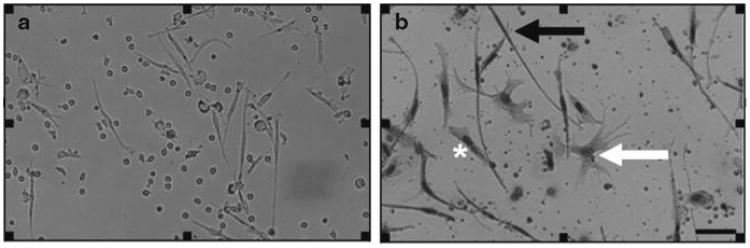
Monocytes are produced in the bone marrow and enter the blood. They generally leave the blood and enter a tissue, and then become macrophages. In healing wounds, circulating monocytes also enter the tissue and instead of becoming macrophages, can differentiate into fibroblast-like cells called fibrocytes. Fibrocytes are also present in the lesions associated with fibrosing diseases such as congestive heart failure, end stage kidney disease, and pulmonary fibrosis. We have found that culturing blood monocytes, or white blood cell preparations containing monocytes, in serum-free media permits some of the monocytes to differentiate into fibrocytes within 5 days, and that this differentiation is inhibited by the blood plasma protein serum amyloid P.
Figures
References
-
- Abe R, Donnelly SC, Peng T, Bucala R, Metz CN. Peripheral blood fibrocytes: differentiation pathway and migration to wound sites. J Immunol. 2001;166:7556–7562. - PubMed
-
- Quan TE, Cowper S, Wu SP, Bockenstedt LK, Bucala R. Circulating fibrocytes: collagen-secreting cells of the peripheral blood. Int J Biochem Cell Biol. 2004;36:598–606. - PubMed
-
- Gomperts BN, Strieter RM. Fibrocytes in lung disease. J Leukoc Biol. 2007;82:449–456. - PubMed
-
- Bellini A, Mattoli S. The role of the fibrocyte, a bone marrow-derived mesenchymal progenitor, in reactive and reparative fibroses. Lab Invest. 2007;87:858–870. - PubMed
Publication types
MeSH terms
Substances
Grants and funding
LinkOut - more resources
Full Text Sources