


Is the amyloid hypothesis of Alzheimer's disease therapeutically relevant?
- PMID: 22891628
- PMCID: PMC3686157
- DOI: 10.1042/BJ20120653
Is the amyloid hypothesis of Alzheimer's disease therapeutically relevant?
Abstract
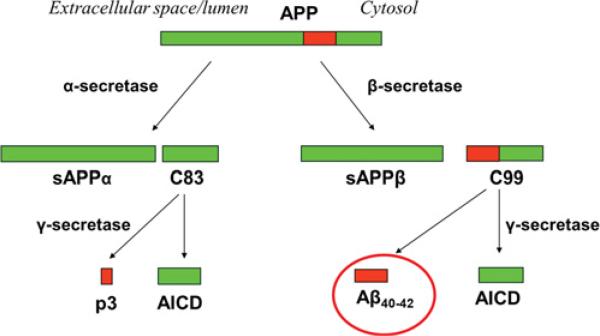
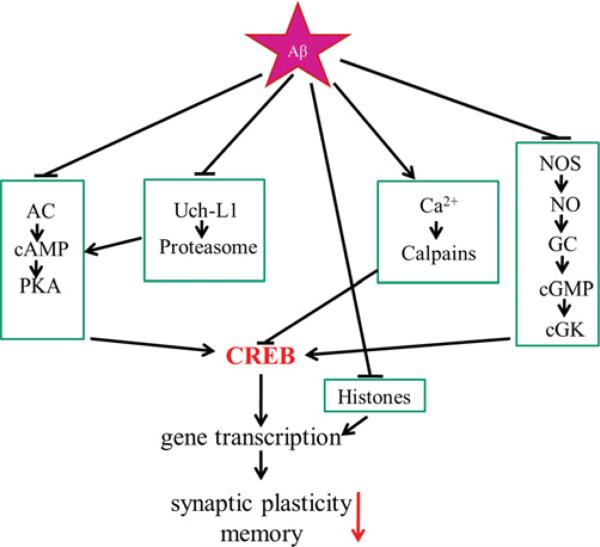
The conventional view of AD (Alzheimer's disease) is that much of the pathology is driven by an increased load of β-amyloid in the brain of AD patients (the 'Amyloid Hypothesis'). Yet, many therapeutic strategies based on lowering β-amyloid have so far failed in clinical trials. This failure of β-amyloid-lowering agents has caused many to question the Amyloid Hypothesis itself. However, AD is likely to be a complex disease driven by multiple factors. In addition, it is increasingly clear that β-amyloid processing involves many enzymes and signalling pathways that play a role in a diverse array of cellular processes. Thus the clinical failure of β-amyloid-lowering agents does not mean that the hypothesis itself is incorrect; it may simply mean that manipulating β-amyloid directly is an unrealistic strategy for therapeutic intervention, given the complex role of β-amyloid in neuronal physiology. Another possible problem may be that toxic β-amyloid levels have already caused irreversible damage to downstream cellular pathways by the time dementia sets in. We argue in the present review that a more direct (and possibly simpler) approach to AD therapeutics is to rescue synaptic dysfunction directly, by focusing on the mechanisms by which elevated levels of β-amyloid disrupt synaptic physiology.
Figures
References
-
- Maurer K, Volk S, Gerbaldo H. Auguste D and Alzheimer's disease. Lancet. 1997;349:1546–1549. - PubMed
-
- Alzheimer A. Über eine eigenartige Erkrankung der Hirnrinde. Allg. Z. Psychiatr. Psych. Gerichtl. Med. 1907;64:146–148.
-
- Alzheimer A. Über eigenartige Krankheitsfälle des späteren Alters. Z. Gesamte Neurol. Psychiatr. 1911;4:356–385.
-
- Glenner GG, Wong CW. Alzheimer's disease: initial report of the purification and characterization of a novel cerebrovascular amyloid protein. Biochem. Biophys. Res. Commun. 1984;120:885–890. - PubMed
Publication types
MeSH terms
Substances
Grants and funding
LinkOut - more resources
Full Text Sources
Other Literature Sources
Medical
