


Glycemic load effect on fasting and post-prandial serum glucose, insulin, IGF-1 and IGFBP-3 in a randomized, controlled feeding study
- PMID: 22892437
- PMCID: PMC3463643
- DOI: 10.1038/ejcn.2012.107
Glycemic load effect on fasting and post-prandial serum glucose, insulin, IGF-1 and IGFBP-3 in a randomized, controlled feeding study
Abstract
Background/objectives: The effect of a low glycemic load (GL) diet on insulin-like growth factor-1 (IGF-1) concentration is still unknown but may contribute to lower chronic disease risk. We aimed to assess the impact of GL on concentrations of IGF-1 and IGF-binding protein-3 (IGFBP-3).
Subjects/methods: We conducted a randomized, controlled crossover feeding trial in 84 overweight obese and normal weight healthy individuals using two 28-day weight-maintaining high- and low-GL diets. Measures were fasting and post-prandial concentrations of insulin, glucose, IGF-1 and IGFBP-3. In all 80 participants completed the study and 20 participants completed post-prandial testing by consuming a test breakfast at the end of each feeding period. We used paired t-tests for diet component and linear mixed models for biomarker analyses.
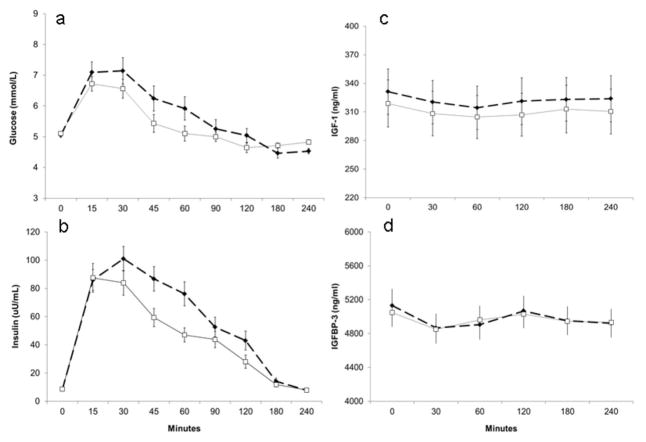
Results: The 28-day low-GL diet led to 4% lower fasting concentrations of IGF-1 (10.6 ng/ml, P=0.04) and a 4% lower ratio of IGF-1/IGFBP-3 (0.24, P=0.01) compared with the high-GL diet. The low-GL test breakfast led to 43% and 27% lower mean post-prandial glucose and insulin responses, respectively; mean incremental areas under the curve for glucose and insulin, respectively, were 64.3±21.8 (mmol/l/240 min; P<0.01) and 2253±539 (μU/ml/240 min; P<0.01) lower following the low- compared with the high-GL test meal. There was no effect of GL on mean homeostasis model assessment for insulin resistance or on mean integrated post-prandial concentrations of glucose-adjusted insulin, IGF-1 or IGFBP-3. We did not observe modification of the dietary effect by adiposity.
Conclusions: Low-GL diets resulted in 43% and 27% lower post-prandial responses of glucose and insulin, respectively, and modestly lower fasting IGF-1 concentrations. Further intervention studies are needed to weigh the impact of dietary GL on risk for chronic disease.
Trial registration: ClinicalTrials.gov NCT00622661.
Conflict of interest statement
The authors have no conflicts of interest to disclose.
Figures
References
-
- Opperman AM, Venter CS, Oosthuizen W, Thompson RL, Vorster HH. Meta-analysis of the health effects of using the glycaemic index in meal-planning. Br J Nutr. 2004;92:367–381. - PubMed
-
- Pawlak DB, Ebbeling CB, Ludwig DS. Should obese patients be counselled to follow a low-glycaemic index diet? Yes. Obes Rev. 2002;3:235–243. - PubMed
-
- Jenkins DJ, Wolever TM, Taylor RH, Barker H, Fielden H, Baldwin JM, et al. Glycemic index of foods: a physiological basis for carbohydrate exchange. Am J Clin Nutr. 1981;34:362–366. - PubMed
-
- Jenkins DJ, Kendall CW, Augustin LS, Franceschi S, Hamidi M, Marchie A, et al. Glycemic index: overview of implications in health and disease. Am J Clin Nutr. 2002;76:266S–273S. - PubMed
-
- Salmeron J, Ascherio A, Rimm EB, Colditz GA, Spiegelman D, Jenkins DJ, et al. Dietary fiber, glycemic load, and risk of NIDDM in men. Diabetes Care. 1997;20:545–550. - PubMed
Publication types
MeSH terms
Substances
Associated data
Grants and funding
LinkOut - more resources
Full Text Sources
Medical
Miscellaneous
