


Prevalence of post-traumatic stress disorder among patients with substance use disorder: it is higher than clinicians think it is
- PMID: 22893849
- PMCID: PMC3415609
- DOI: 10.3402/ejpt.v3i0.17734
Prevalence of post-traumatic stress disorder among patients with substance use disorder: it is higher than clinicians think it is
Abstract
Objectives: This study had three objectives. Firstly, the prevalence of post-traumatic stress disorder (PTSD) and trauma exposure was compared between individuals with and without substance use disorder (SUD). Secondly, we compared self-rating of PTSD and clinical judgement. Thirdly, an analysis of the characteristics of SUD/PTSD patients was performed.
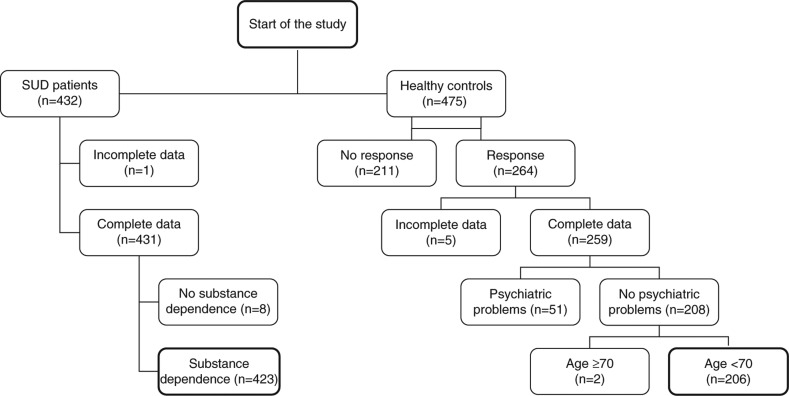
Methods: The sample consisted of 423 patients with SUD and 206 healthy controls. All individuals were screened on PTSD using the self-rating inventory for PTSD.
Results: Significantly higher numbers of PTSD and trauma exposure were found in the SUD group (resp. 36.6 and 97.4%). PTSD went frequently unnoticed when relying on clinical judgement alone. Patients with SUD/PTSD were significantly more often unemployed and had a lower educational level. Axis I comorbidity and especially depressive disorders were more common in the SUD/PTSD group.
Conclusion: It is concluded that patients with SUD/PTSD are a substantial and vulnerable subgroup in addiction treatment facilities and that a systematic screening for PTSD is required.
Keywords: clinical judgment; post-traumatic stress disorder; prevalence; substance use disorder; trauma exposure.
References
-
- Back S. E, Brady K. T, Sonne S. C, Verduin M. L. Symptom improvement in co-occurring PTSD and alcohol dependence. The Journal of Nervous and Mental Disease. 2006;194(9):690–696. - PubMed
-
- Blake D. D, Weathers F. W, Nagy L. M, Kaloupeck D. G, Gusman F. D, Charney D. S, et al. The development of a Clinician-Administered PTSD Scale. Journal of Traumatic Stress. 1995;8(1):75–90. - PubMed
-
- Bonin M. F, Norton G. R, Asmundson G. J. G, Dicurzio S, Pidlubney S. Drinking away the hurt: The nature and prevalence of PTSD in substance abuse patients attending a community-based treatment program. Journal of Behavior Therapy and Experimental Psychiatry. 2000;31(1):55–66. - PubMed
-
- Bromner M. B, Peek N, Bronner A. E, Last B. F, Grootenhuis M. A. A community-based survey of posttraumatic stress disorder in the Netherlands. Journal of Traumatic Stress. 2009;22(1):74–78. - PubMed
LinkOut - more resources
Full Text Sources
