Use of a compound approach to derive auditory-filter-wide frequency-importance functions for vowels and consonants
- PMID: 22894227
- PMCID: PMC3427368
- DOI: 10.1121/1.4730905
Use of a compound approach to derive auditory-filter-wide frequency-importance functions for vowels and consonants
Abstract
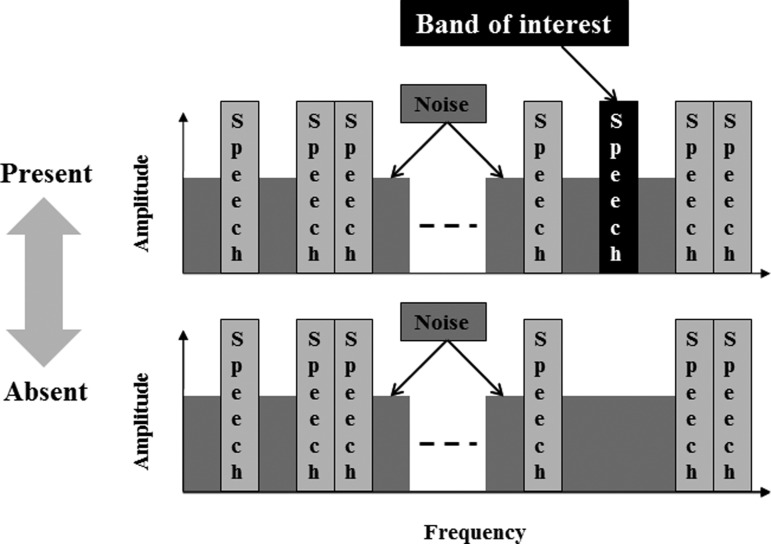
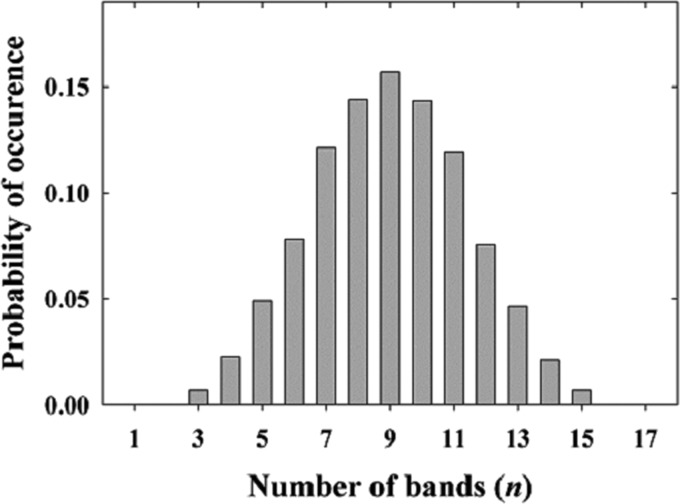
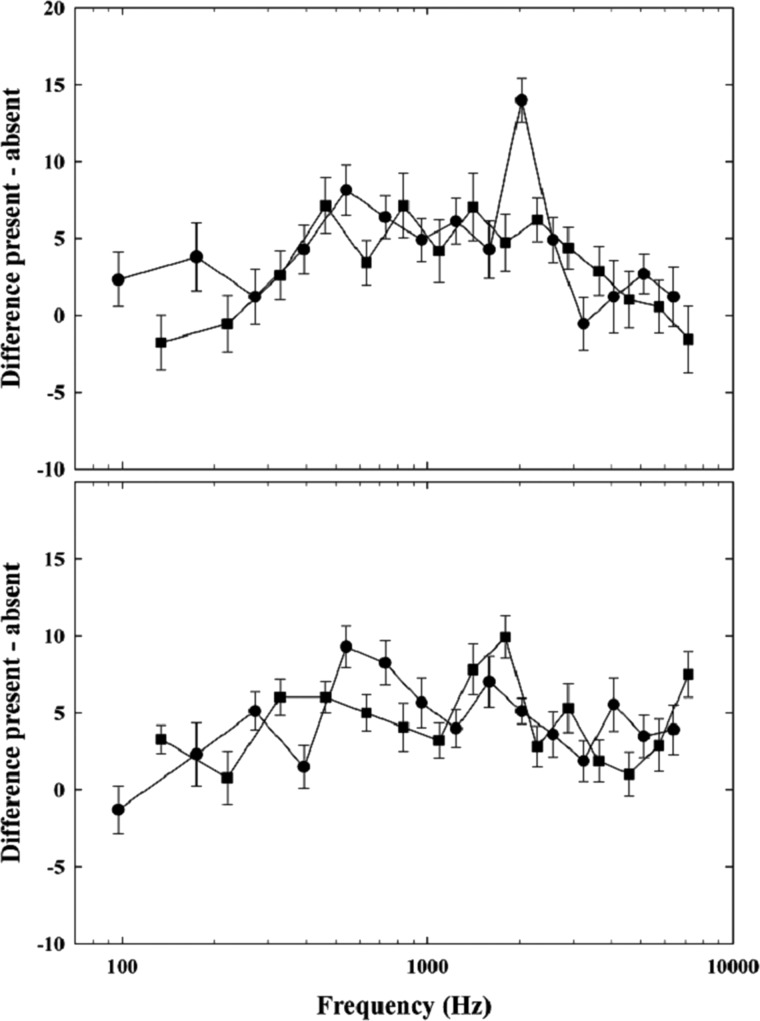
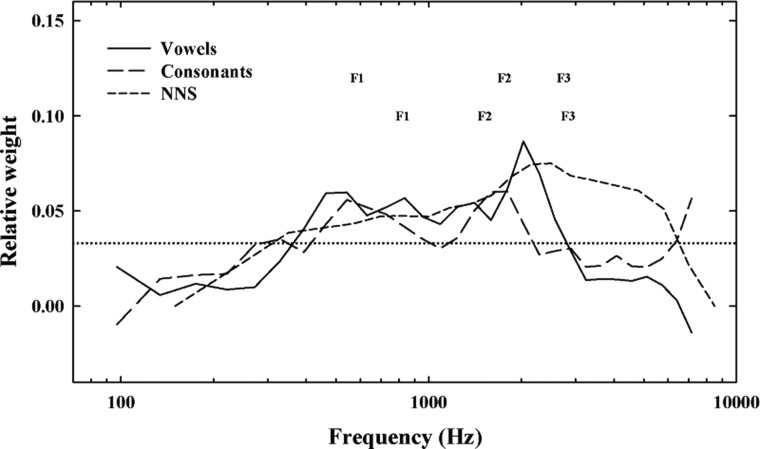
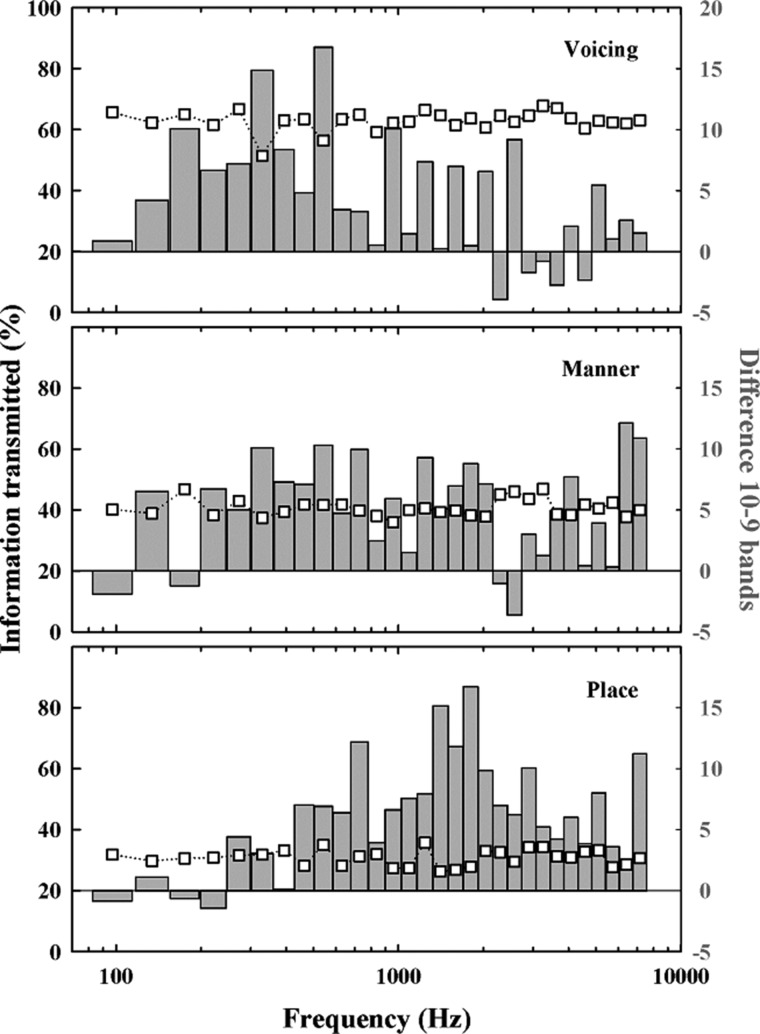
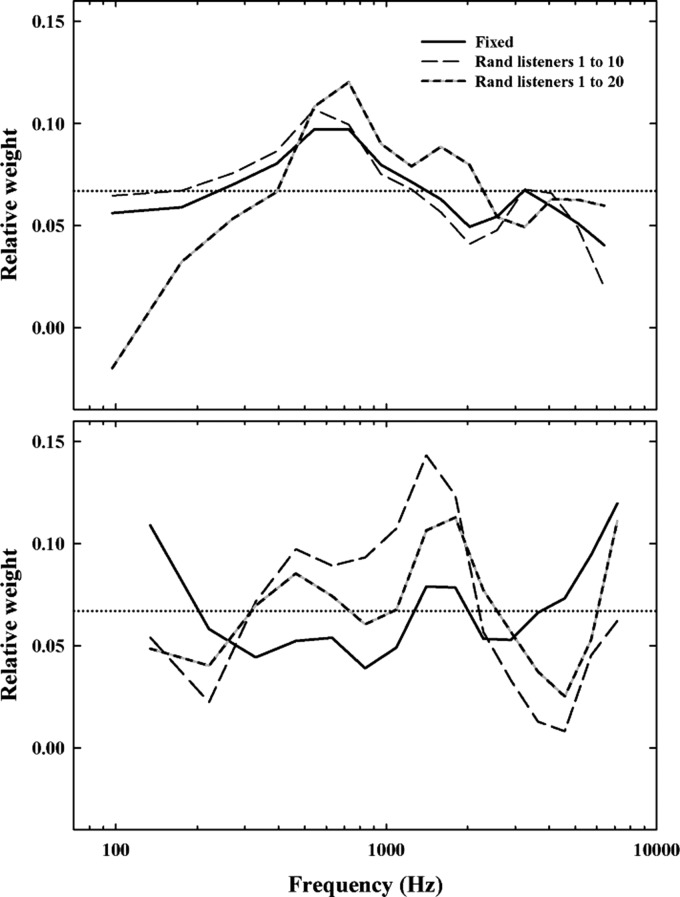
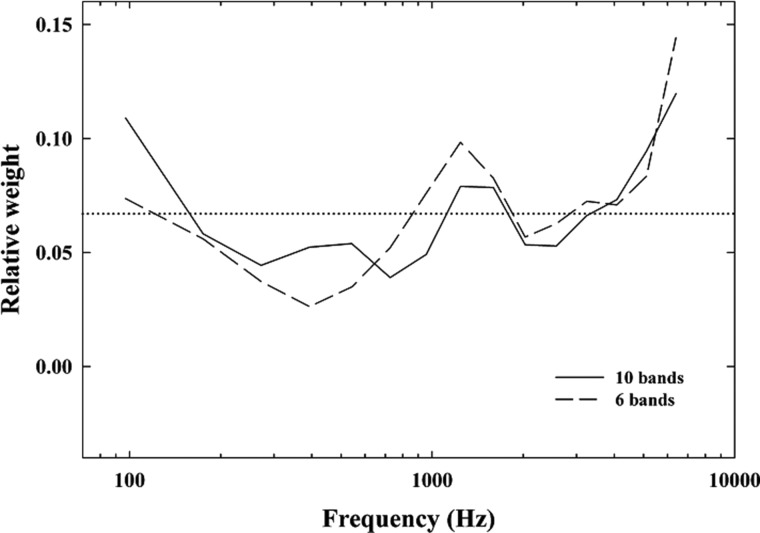
Speech recognition in noise presumably relies on the number and spectral location of available auditory-filter outputs containing a relatively undistorted view of local target signal properties. The purpose of the present study was to estimate the relative weight of each of the 30 auditory-filter wide bands between 80 and 7563 Hz. Because previous approaches were not compatible with this goal, a technique was developed. Similar to the "hole" approach, the weight of a given band was assessed by comparing intelligibility in two conditions differing in only one aspect-the presence or absence of the band of interest. In contrast to the hole approach, however, random gaps were also created in the spectrum. These gaps were introduced to render the auditory system more sensitive to the removal of a single band and their location was randomized to provide a general view of the weight of each band, i.e., irrespective of the location of information elsewhere in the spectrum. Frequency-weighting functions derived using this technique confirmed the main contribution of the 400-2500 Hz frequency region. However, they revealed a complex microstructure, contrasting with the "bell curve" shape typically reported.
Figures
References
-
- American National Standards Inst. (1969). ANSI S3.5, American National Standard Methods for Calculation of the Articulation Index (American National Standard Inst., New York: ).
-
- American National Standards Inst. (1997). ANSI S3.5 (R2007), American National Standard Methods for Calculation of the Speech Intelligibility Index (American National Standard Inst., New York).
-
- American National Standards Inst. (2004). ANSI S3.6 (R2010), American National Standard Specifications for Audiometers (American National Standard Inst., New York: ).
Publication types
MeSH terms
Grants and funding
LinkOut - more resources
Full Text Sources
Medical