


Epidemiology and outcome of severe pneumococcal pneumonia admitted to intensive care unit: a multicenter study
- PMID: 22894879
- PMCID: PMC3580745
- DOI: 10.1186/cc11471
Epidemiology and outcome of severe pneumococcal pneumonia admitted to intensive care unit: a multicenter study
Abstract
Introduction: Community-acquired pneumonia (CAP) account for a high proportion of ICU admissions, with Streptococcus pneumoniae being the main pathogen responsible for these infections. However, little is known on the clinical features and outcomes of ICU patients with pneumococcal pneumonia. The aims of this study were to provide epidemiological data and to determine risk factors of mortality in patients admitted to ICU for severe S. pneumoniae CAP.
Methods: We performed a retrospective review of two prospectively-acquired multicentre ICU databases (2001-2008). Patients admitted for management of severe pneumococcal CAP were enrolled if they met the 2001 American Thoracic Society criteria for severe pneumonia, had life-threatening organ failure and had a positive microbiological sample for S. pneumoniae. Patients with bronchitis, aspiration pneumonia or with non-pulmonary pneumococcal infections were excluded.
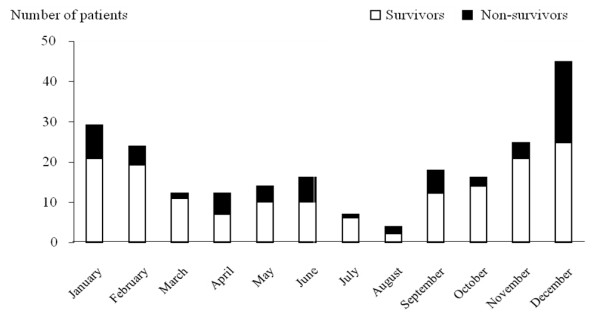
Results: Two hundred and twenty two patients were included, with a median SAPS II score reaching 47 [36-64]. Acute respiratory failure (n = 154) and septic shock (n = 54) were their most frequent causes of ICU admission. Septic shock occurred in 170 patients (77%) and mechanical ventilation was required in 186 patients (84%); renal replacement therapy was initiated in 70 patients (32%). Bacteraemia was diagnosed in 101 patients. The prevalence of S. pneumoniae strains with decreased susceptibility to penicillin was 39.7%. Although antibiotherapy was adequate in 92.3% of cases, hospital mortality reached 28.8%. In multivariate analysis, independent risk factors for mortality were age (OR 1.05 (95% CI: 1.02-1.08)), male sex (OR 2.83 (95% CI: 1.16-6.91)) and renal replacement therapy (OR 3.78 (95% CI: 1.71-8.36)). Co-morbidities, macrolide administration, concomitant bacteremia or penicillin susceptibility did not influence outcome.
Conclusions: In ICU, mortality of pneumococcal CAP remains high despite adequate antimicrobial treatment. Baseline demographic data and renal replacement therapy have a major impact on adverse outcome.
Figures
References
-
- Robinson KA, Baughman W, Rothrock G, Barrett NL, Pass M, Lexau C, Damaske B, Stefonek K, Barnes B, Patterson J, Zell ER, Schuchat A, Whitney CG. Epidemiology of invasive Streptococcus pneumoniae infections in the United States, 1995-1998: Opportunities for prevention in the conjugate vaccine era. JAMA. 2001;285:1729–1735. doi: 10.1001/jama.285.13.1729. - DOI - PubMed
-
- Levy MM, Dellinger RP, Townsend SR, Linde-Zwirble WT, Marshall JC, Bion J, Schorr C, Artigas A, Ramsay G, Beale R, Parker MM, Gerlach H, Reinhart K, Silva E, Harvey M, Regan S, Angus DC. The Surviving Sepsis Campaign: results of an international guideline-based performance improvement program targeting severe sepsis. Intensive Care Med. 2010;36:222–231. doi: 10.1007/s00134-009-1738-3. - DOI - PMC - PubMed
Publication types
MeSH terms
Substances
LinkOut - more resources
Full Text Sources
Other Literature Sources
Miscellaneous
