


Restricting dietary magnesium accelerates ectopic connective tissue mineralization in a mouse model of pseudoxanthoma elasticum (Abcc6(-/-) )
- PMID: 22897576
- PMCID: PMC3422765
- DOI: 10.1111/j.1600-0625.2012.01553.x
Restricting dietary magnesium accelerates ectopic connective tissue mineralization in a mouse model of pseudoxanthoma elasticum (Abcc6(-/-) )
Abstract
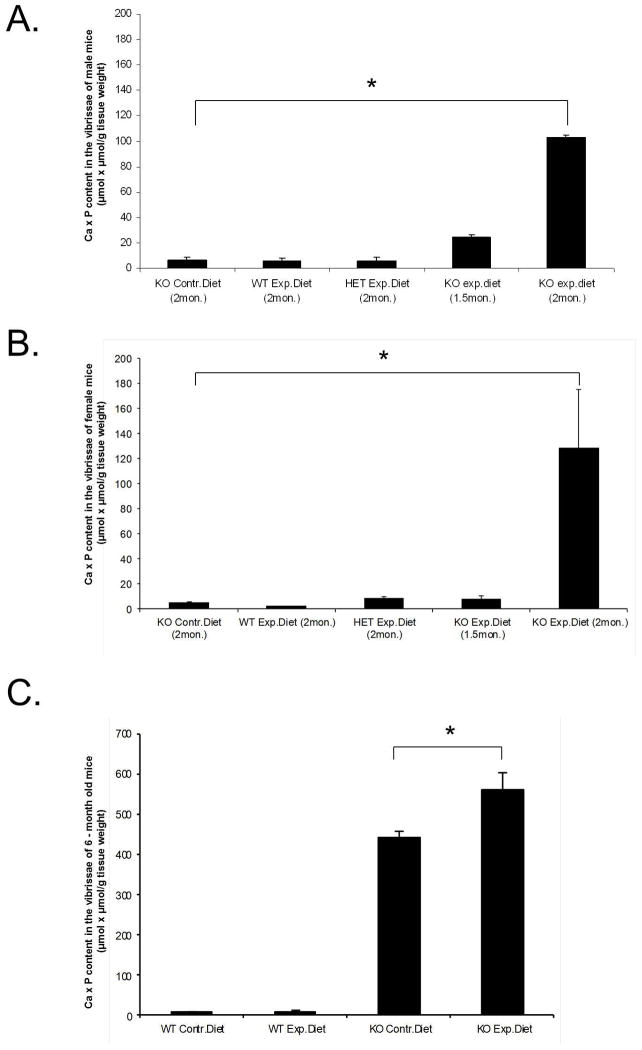
Ectopic mineralization, linked to a number of diseases, is a major cause of morbidity and mortality in humans. Pseudoxanthoma elasticum (PXE) is a heritable multisystem disorder characterized by calcium phosphate deposition in various tissues. The mineral content of diet has been suggested to modify the disease severity in PXE. The aim of this study is to explore the role of diet with reduced magnesium in modifying tissue mineralization in a mouse model of PXE. Abcc6(-/-) mice were placed on either standard rodent diet (control) or an experimental diet low in magnesium at weaning (4 weeks) and examined for mineralization in the skin and internal organs at the ages of 1.5, 2 or 6 months by computerized morphometric analysis of histopathological sections and by chemical assay of calcium and phosphate. Abcc6(-/-) mice on experimental diet demonstrated an accelerated, early-onset mineralization of connective tissues, as compared to control mice. Wild-type or heterozygous mice on experimental diet did not show evidence of mineralization up to 6 months of age. All mice on experimental diet showed decreased urinary calcium, increased urinary phosphate and elevated parathyroid serum levels. However, no difference in bone density at 6 months of age was noted. Our findings indicate that the mineral content, particularly magnesium, can modify the extent and the onset of mineralization in Abcc6(-/-) mice and suggest that dietary magnesium levels may contribute to the phenotypic variability of PXE. The control of mineralization by dietary magnesium may have broader implications in general population in the context of vascular mineralization.
© 2012 John Wiley & Sons A/S.
Conflict of interest statement
The authors have no conflict of interest.
Figures

References
-
- Touart DM, Sau P. Cutaneous deposition diseases. Part I and Part II. J Am Acad Dermatol. 1998;39:149–171. 527–544. - PubMed
-
- Köstler E, Porst H, Wollina U. Cutaneous manifestations of metabolic diseases: uncommon presentations. Clin Dermatol. 2005;23:457–464. - PubMed
-
- Budoff MJ, Shaw LJ, Liu ST, et al. Long-term prognosis associated with coronary calcification: observations from a registry of 25,253 patients. J Am Coll Cardiol. 2007;49:1860–1870. - PubMed
-
- Weenig RH, Seqell LD, Davis MD, McCarthy JT, Pittelkow MR. Calciphylaxis: natural history, risk factor analysis, and outcome. J Am Acad Dermatol. 2007;56:569–579. - PubMed
Publication types
MeSH terms
Substances
Grants and funding
LinkOut - more resources
Full Text Sources
Medical
