


Increased protein-coding mutations in the mitochondrial genome of African American women with preeclampsia
- PMID: 22902742
- PMCID: PMC4046444
- DOI: 10.1177/1933719112450337
Increased protein-coding mutations in the mitochondrial genome of African American women with preeclampsia
Abstract
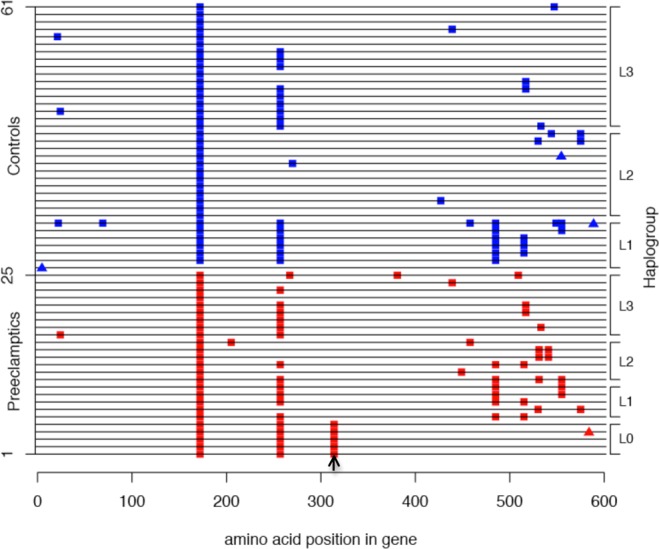
Preeclampsia occurs more frequently in women of African ancestry. The cause of this hypertensive complication is unclear, but placental oxidative stress may play a role. Because mitochondria are the major sites of oxidative phosphorylation, we hypothesized that placentas of preeclamptic pregnancies harbor mitochondrial DNA (mtDNA) mutations. Next-generation sequencing of placental mtDNA in African American preeclamptics (N = 30) and controls (N = 38) from Chicago revealed significant excesses in preeclamptics of nonsynonymous substitutions in protein-coding genes and mitochondrially encoded nicotinamide adenine dinucleotide dehydrogenase 5 gene and an increase in the substitution rate (P = .0001). Moreover, 88% of preeclamptics and 53% of controls carried at least one nonsynonymous substitution (P = .005; odds ratio [OR] = 6.36, 95% confidence interval [CI]: 1.5-39.1). These results were not replicated in a sample of African American preeclamptics (N = 162) and controls (N = 171) from Detroit. Differences in study design and heterogeneity may account for this lack of replication. Nonsynonymous substitutions in mtDNA may be risk factors for preeclampsia in some African American women, but additional studies are required to establish this relationship.
Conflict of interest statement
Figures
References
-
- Ness R, Roberts J. Epidemiology of pregnancy-related hypertension. In: Lindheimer M, Roberts J, Cunningham F, eds. Chesley’s Hypertensive Disorders in Pregnancy. 3 rd ed San Diego, CA: Academic Press; 2009:37–50
-
- Villar J, Say L, Gulmezohlu A, et al. Eclampsia and preeclampsia: a worldwide health problem for 2000 years. In: Critchley H, Maclean A, Poston L, Walker J, eds. Preeclampsia. RCOG Press; 2003:189–207
-
- Samadi A, Mayberry R, Zaidi A, et al. Maternal hypertension and associated pregnancy complications among African-American and other women in the United States. Obstet Gynecol. 1996;87(4):557–563 - PubMed
-
- Caughey AB, Stotland NE, Washington AE, Escobar GJ. Maternal ethnicity, paternal ethnicity, and parental ethnic discordance: predictors of preeclampsia. Obstet Gynecol. 2005;106(1):156–161 - PubMed
Publication types
MeSH terms
Substances
Grants and funding
LinkOut - more resources
Full Text Sources
