


One health: the Hong Kong experience with avian influenza
- PMID: 22903569
- PMCID: PMC7120750
- DOI: 10.1007/82_2012_254
One health: the Hong Kong experience with avian influenza
Abstract
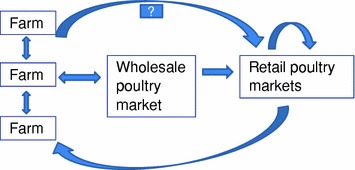
The occurrence of avian influenza A(H5N1) in Hong Kong in 1997 led to the development of a "One-Health" approach to deal with emerging infectious diseases that has been applied to other emergent diseases such as SARS and the pandemic H1N1 2009. Evaluation of poultry marketing and production systems and investigations at the animal-human interface, led to defining the routes of human exposure to avian influenza and factors that allowed virus to multiply and persist. Active and systematic surveillance of apparently healthy as well as diseased poultry and wild birds provided evidence of ongoing virus evolution in the wider region. Epidemiological studies, supplemented with molecular epidemiology, helped to elucidate the role of the poultry marketing system and live poultry markets in the persistence of avian influenza viruses and provided evidence for the impact of interventions designed to interrupt virus transmission. Enhanced bio-security, active surveillance together with targeted and evidence-based interventions in the poultry production, and marketing system together with poultry vaccination has prevented further human H5N1 disease and minimized outbreaks of poultry disease in Hong Kong. Similar strategies have led to the understanding of the emergence of SARS and provided options for preventing the re-emergence of this disease. Surveillance of influenza in swine has provided insights into the emergence of the 2009 pandemic, to the reverse zoonosis of the pandemic virus from humans to swine and to the emergence of novel reassortant viruses within swine. "One Health" strategies are not "cost-free" and require sensitive implementation to optimize food-safety and food security, while safeguarding the economics of animal husbandry and the environment and remaining sensitive to cultural practices.
Figures
References
-
- American Veterinary Medical Association (2008) One health initiative task force. One health: a new professional imperative. AMVA, Schaumburg, Available. http://www.avma.org/onehealth/onehealth_final.pdf
-
- Anonymous (2006) Location of H5N1 infected wild-birds found in Hong Kong in 2006. http://www.afcd.gov.hk/english/quarantine/qua_vetlab/qua_vetlab_ndr/qua_.... Accessed 3 July 2012
-
- Anonymous (2006) Location of H5N1 infected wild-birds found in Hong Kong in 2008. http://www.afcd.gov.hk/tc_chi/whatsnew/what_qua/files/common/h5n1_2008.pdf
Publication types
MeSH terms
Grants and funding
LinkOut - more resources
Full Text Sources
Medical
Miscellaneous
