


Avian coronavirus spike glycoprotein ectodomain shows a low codon adaptation to Gallus gallus with virus-exclusive codons in strategic amino acids positions
- PMID: 22903606
- PMCID: PMC7079877
- DOI: 10.1007/s00239-012-9515-2
Avian coronavirus spike glycoprotein ectodomain shows a low codon adaptation to Gallus gallus with virus-exclusive codons in strategic amino acids positions
Abstract
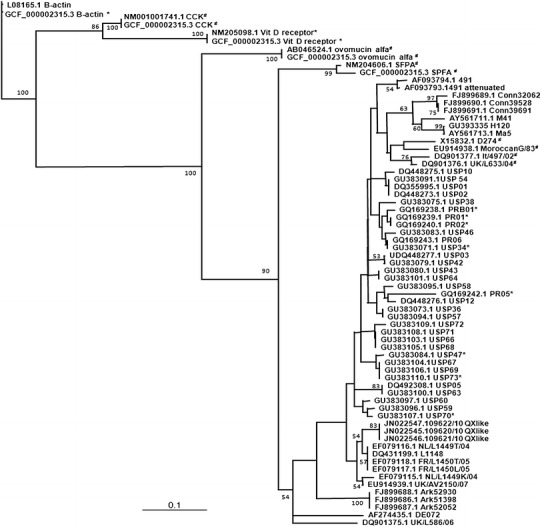
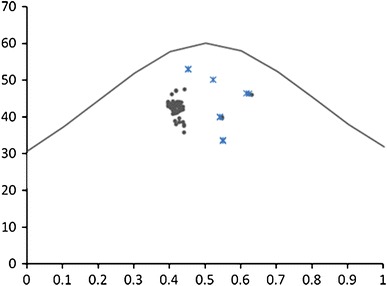
This is a study on the Avian coronavirus IBV and chicken host-relationship from the codon usage point of view based on fifty-nine non-redundant IBV S1 sequences (nt 1-507) from strains detected worldwide and chicken tissue-specific protein genes sequences from IBV-replicating sites. The effective number of codons (ENC) values ranged from 36 to 47.8, indicating a high-to-moderate codon usage bias. The highest IBV codon adaptation index (CAI) value was 0.7, indicating a distant virus versus host synonymous codons usage. The ENC × GC3 % curve indicates that both mutational pressure and natural selection are the driving forces on codon usage pattern in S1. The low CAI values agree with a low S protein expression and considering that S protein is a determinant for attachment and neutralization, this could be a further mechanism besides mRNA transcription attenuation for a low expression of this protein leading to an immune camouflage.
Figures
References
-
- Abd El Rahman S, El-Kenawy AA, Neumann U, Herrler G, Winter C. Comparative analysis of the sialic acid binding activity and the tropism for the respiratory epithelium of four different strains of avian infectious bronchitis virus. Avian Pathol. 2009;38:41–45. doi: 10.1080/03079450802632049. - DOI - PubMed
-
- Berg JM, Tymoczko JL, Stryer L. Biochemistry. 5. New York: Freeman and Company; 2002.
MeSH terms
Substances
LinkOut - more resources
Full Text Sources
Research Materials
