. 2012 Nov;192(3):943-57.
doi: 10.1534/genetics.112.143248. Epub 2012 Aug 17.

NAT1/DAP5/p97 and atypical translational control in the Drosophila Circadian Oscillator

Affiliations

NAT1/DAP5/p97 and atypical translational control in the Drosophila Circadian Oscillator

Sean Bradley et al. Genetics. 2012 Nov.

Abstract

Circadian rhythms are driven by gene expression feedback loops in metazoans. Based on the success of genetic screens for circadian mutants in Drosophila melanogaster, we undertook a targeted RNAi screen to study the impact of translation control genes on circadian locomotor activity rhythms in flies. Knockdown of vital translation factors in timeless protein-positive circadian neurons caused a range of effects including lethality. Knockdown of the atypical translation factor NAT1 had the strongest effect and lengthened circadian period. It also dramatically reduced PER protein levels in pigment dispersing factor (PDF) neurons. BELLE (BEL) protein was also reduced by the NAT1 knockdown, presumably reflecting a role of NAT1 in belle mRNA translation. belle and NAT1 are also targets of the key circadian transcription factor Clock (CLK). Further evidence for a role of NAT1 is that inhibition of the target of rapamycin (TOR) kinase increased oscillator activity in cultured wings, which is absent under conditions of NAT1 knockdown. Moreover, the per 5'- and 3'-UTRs may function together to facilitate cap-independent translation under conditions of TOR inhibition. We suggest that NAT1 and cap-independent translation are important for per mRNA translation, which is also important for the circadian oscillator. A circadian translation program may be especially important in fly pacemaker cells.


Figures
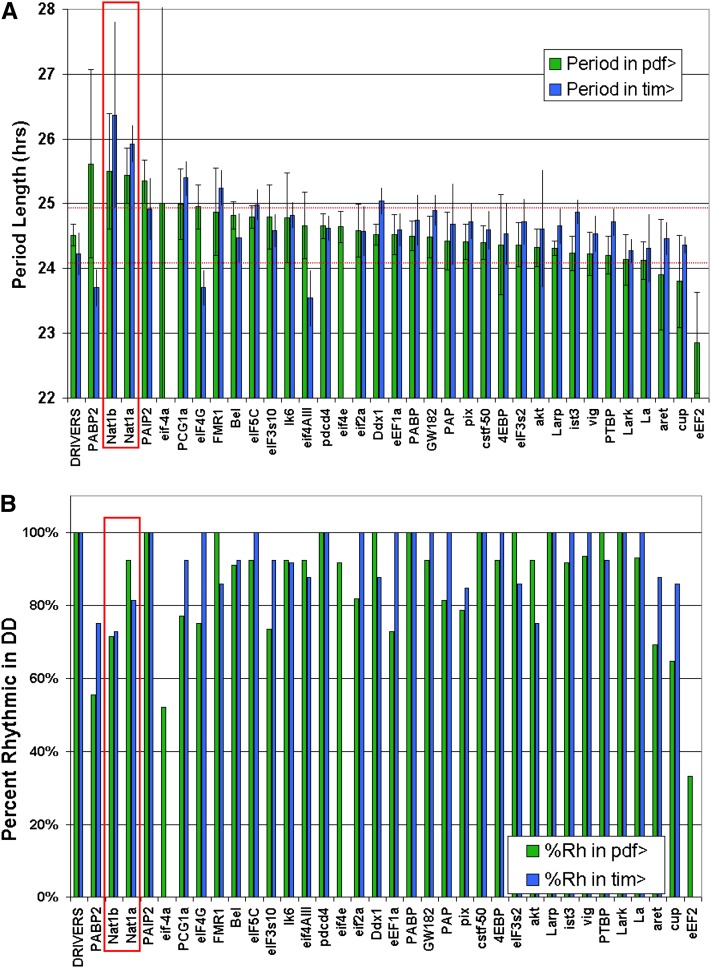
Figure 1
Figure 1
Locomotor behavior period lengths following RNAi in clock cells. Thirty-four translation and mRNA metabolism genes were knocked down in TIM+ or PDF+ cells and the DD behavior analyzed by autocorrelation. (A) Targeted genes are ranked by their period length when driven in PDF cells. Period lengths at least two standard deviations from the mean driver control were considered significant, apart from eIF-4a, which caused highly variable rhythms. When multiple targeting vectors were used, only the one providing a greater effect was plotted, except for NAT1, which is the subject of this report. (B) Percentage of highly rhythmic flies (RI > 0.2) is plotted for each knockdown.
Figure 2
Figure 2
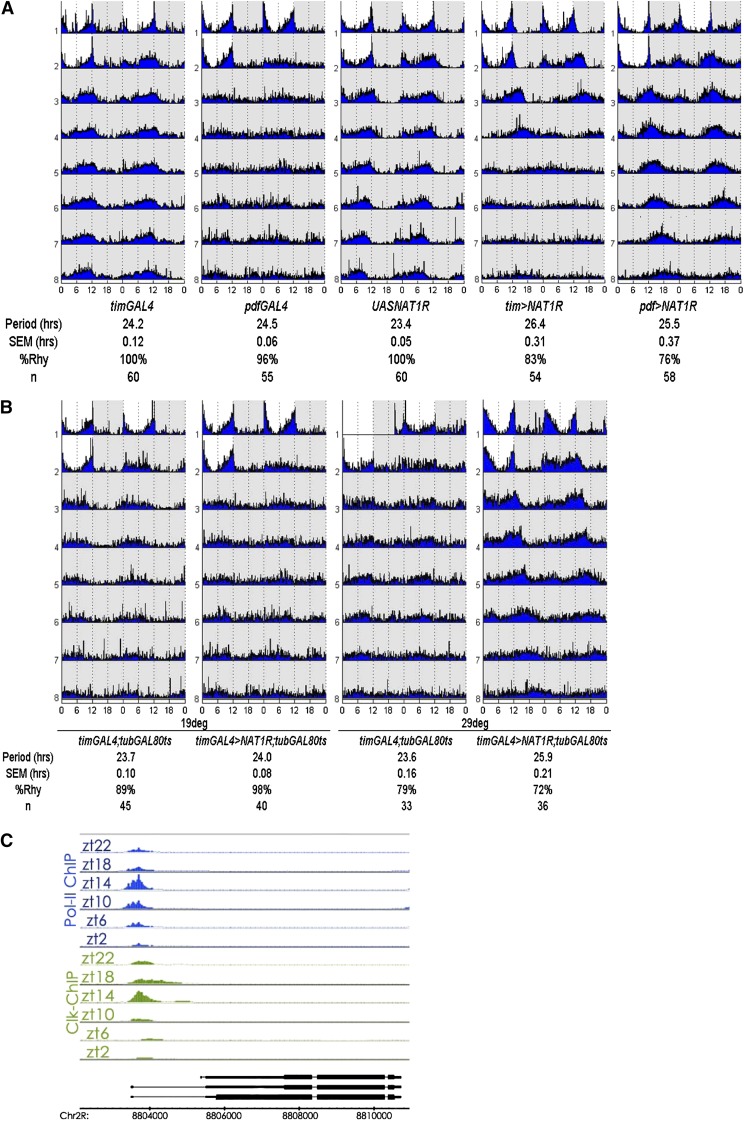
NAT1 supports circadian locomotor rhythms. (A) Actograms for NAT1 knockdown with tim- and pdf-GAL4 drivers demonstrate stable long-period rhythms over 7 days in constant darkness. SEM denotes standard error of the mean and %Rhy indicates the percentage of rhythmic flies. (B) Coexpression of temperature-sensitive GAL80 with NAT1RNAi can block the phenotype unless the flies are subject to 3 days of 29°, ruling out a developmental origin for the rhythm defect. (C) Schematic view of chromatin IP performed with antibodies against CLK and RNAPolII shows cyclic transcriptional activation at the NAT1 locus, with the same temporal peak as canonical CLK targets.
Figure 3
Figure 3
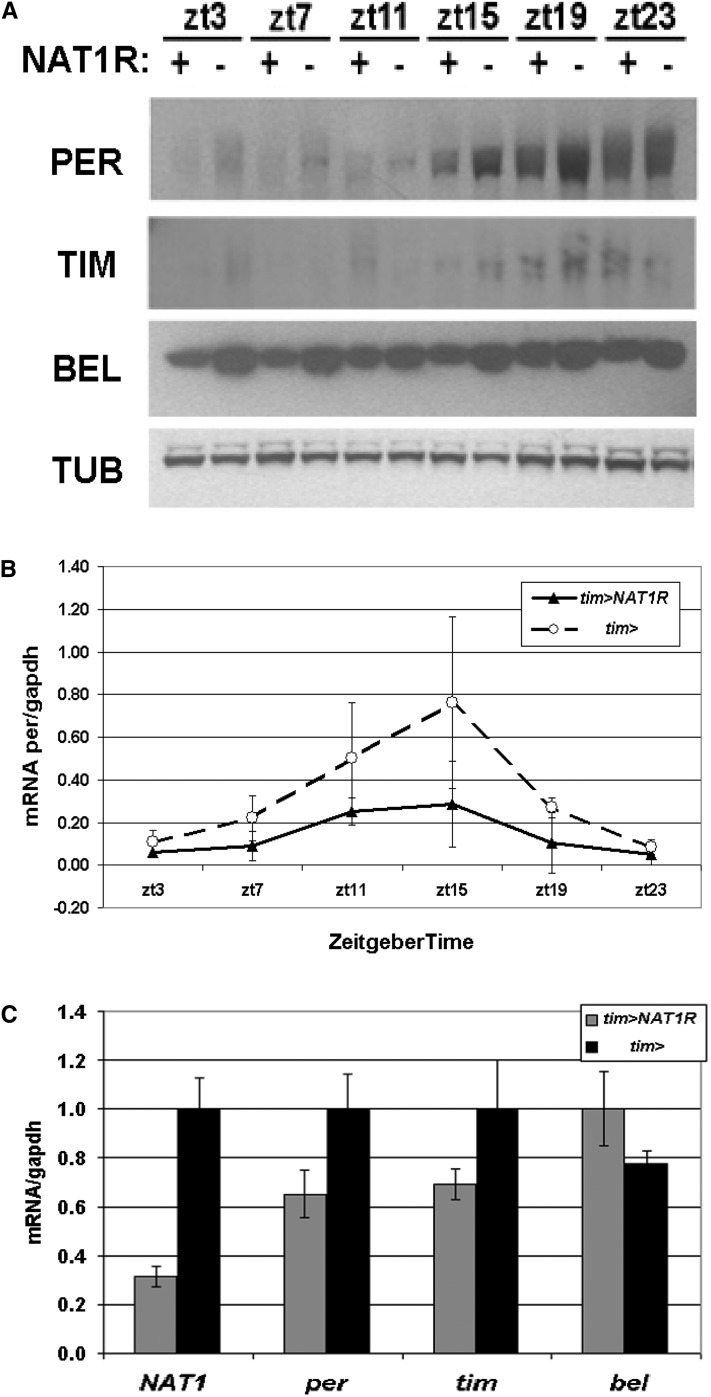
Whole head biochemistry under NAT1 knockdown. (A) Flies expressing UAS-NAT1RNAi under the control of tim-GAL4 have reduced PER, TIM, and BEL protein levels in LD conditions. (B) per mRNA cycles with reduced amplitude in tim > NAT1RNAi consistent with impaired oscillator function. (C) Assessment of mRNA levels for NAT1, per, tim, and bel at ZT12, which are all normalized to driver controls.
Figure 4
Figure 4
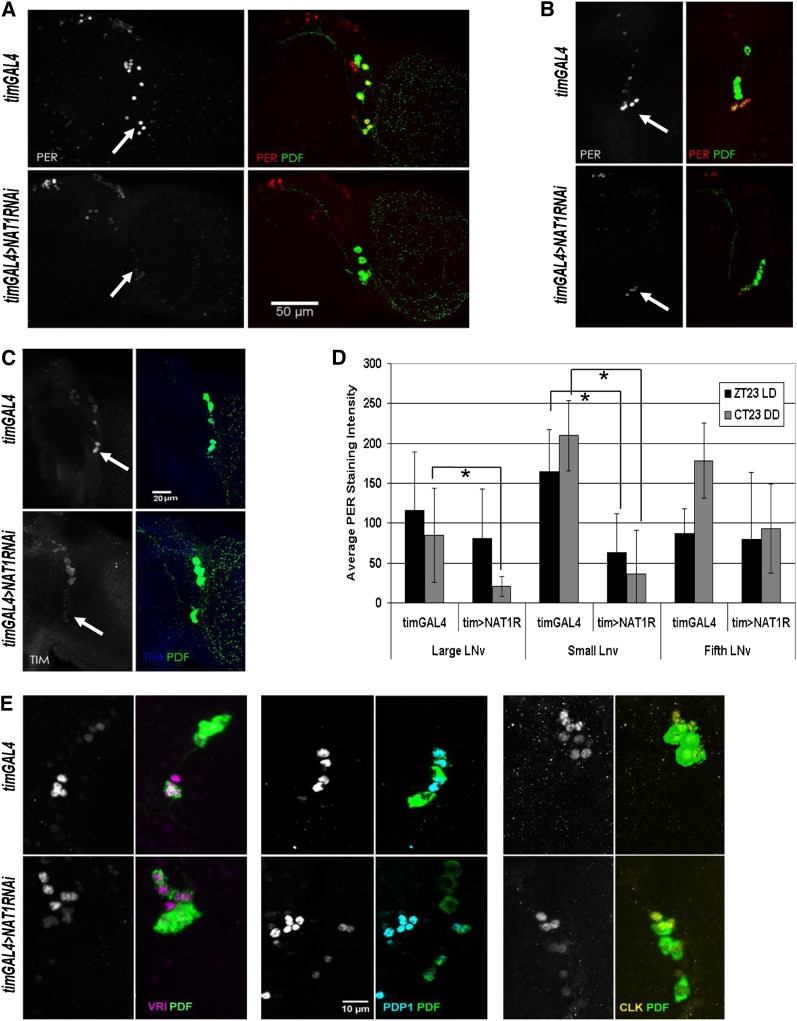
NAT1 knockdown reduces PER expression in PDF+ cells. (A) In LD conditions, control brains (top of each panel) have the highest levels of PER signal at ZT23 in small lateral ventral neurons (s-LNv, arrowheads), but in tim > NAT1RNAi knockdown (bottom of each panel) staining is significantly reduced relative to that in dorsal cells. (B) This effect is more pronounced in DD, where cycling in whole heads rapidly damps and high amplitude PER cycling in small cells drives locomotor rhythms. (C) TIM levels are also reduced in LNv cells in DD conditions. (D) Quantification of seven hemispheres per genotype shows significant PER reductions in DD conditions for small and large PDF cells. The fifth, PDF LNv cell is not significantly affected (*P < 0.0001, two-sample t-test; error bars represent SD). (E) Control staining for VRI at CT15, PDP1, at CT19 and CLK at CT3 in PDF cells shows only minor signal reductions in tim > NAT1RNAi brains.
Figure 5
Figure 5
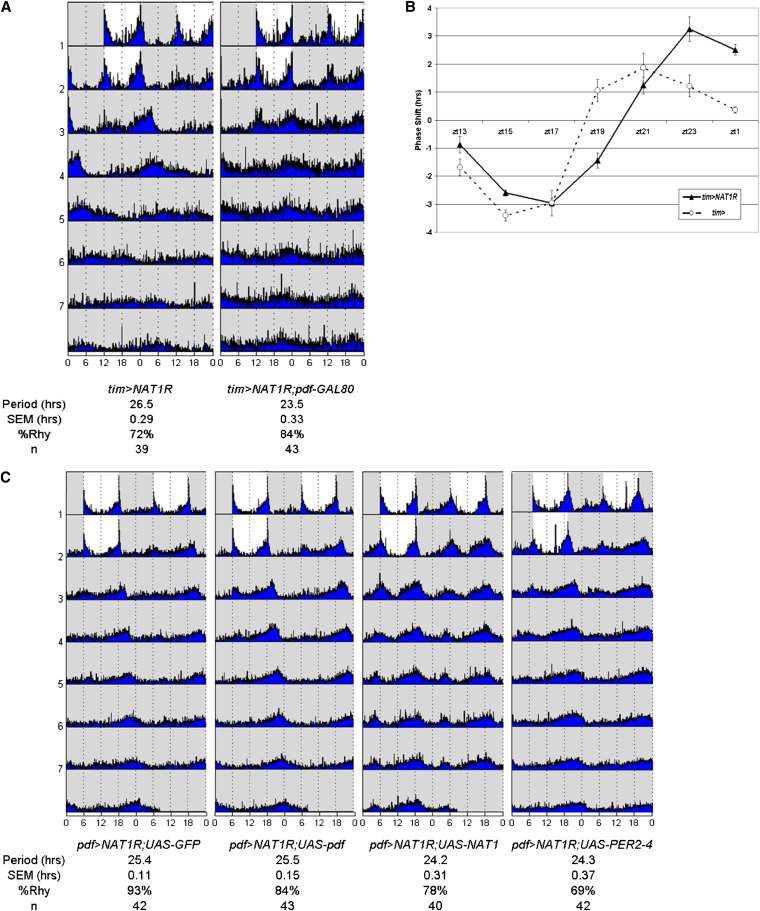
NAT1 is primarily active in PDF+ cells. (A) Period lengthening requires knockdown in PDF cells, shown by expressing NAT1RNAi in TIM+ cells but blocking GAL4 activity with pdf > GAL80. (B) The phase response curve for tim > NAT1RNAi shows increased phase shifts and a delayed profile relative to controls in the late night, supporting a role in PDF+ morning cells. (C) Coexpression of UAS-NAT1 or UAS-PER2-4 rescues the pdf > NAT1RNAi phenotype, but UAS-GFP or UAS-pdf does not, the latter showing that the deficit in period length is not due to a shortage of this peptide. Pronounced morning peaks are evident in the UAS-NAT1 rescue only.
Figure 6
Figure 6
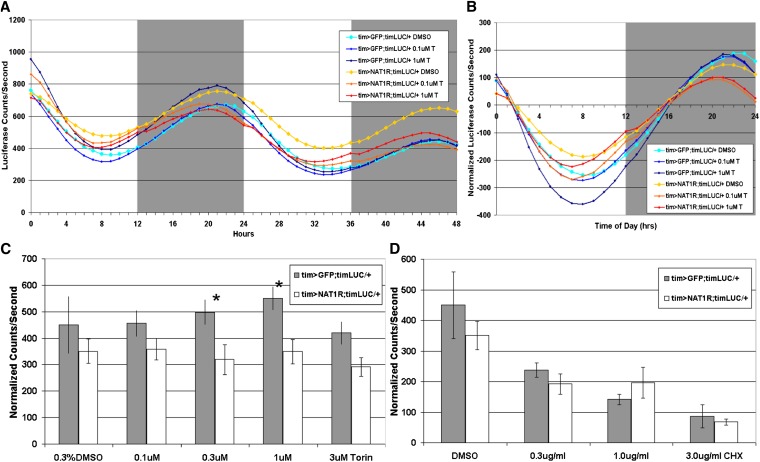
NAT1 supports oscillator function in the peripheral circadian cells of cultured wings. (A) Average luciferase activity originating from a circadian transcriptional reporter over days 2 and 3 for control and tim > NAT1RNAi wings in culture (torin, T). (B) Detrended activity averages reveal amplitude differences. (C) Torin increases amplitude in control cultures but not in tim > NAT1RNAi. (n > 15 each condition, *P < 0.05, Mann–Whitney test; error bars are SEM). (D) Addition of cycloheximide showed similar reductions in amplitude for both genotypes, showing that global translation is not impaired in tim > NAT1RNAi.
Figure 7
Figure 7
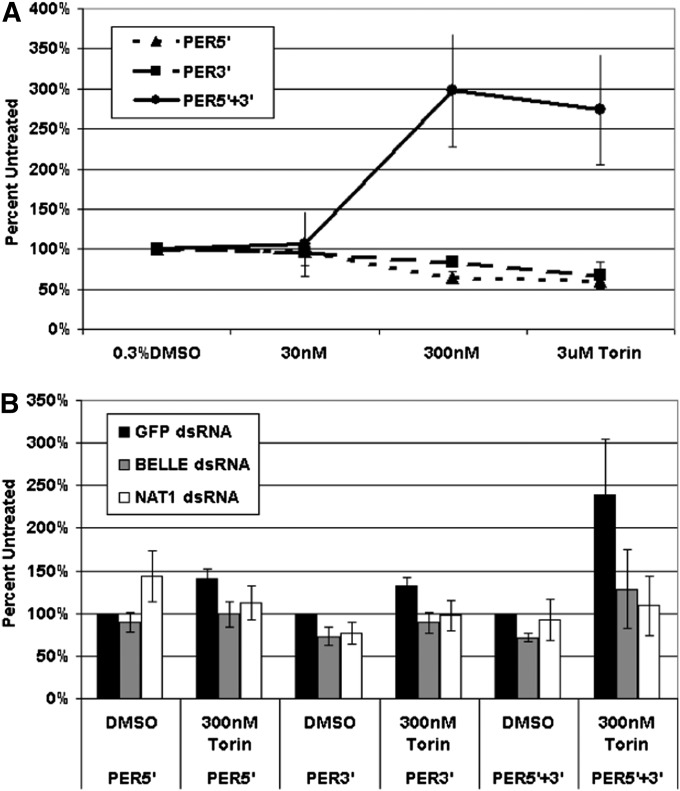
per mRNA untranslated regions (UTRs) act synergistically to support reporter expression under conditions of TOR inhibition. (A) In S2 cell culture, a construct bearing the luciferase coding sequence flanked by per 5′- and 3′-UTRs is relatively immune to repression of cap-dependent translation by torin. (B) RNAi knockdown of NAT1 or bel blocks the protective effects of the per UTR combination in response to torin treatment.

References

    1. Abruzzi K. C., Rodriguez J., Menet J. S., Desrochers J., Zadina A., et al. , 2011. Drosophila CLOCK target gene characterization: implications for circadian tissue-specific gene expression. Genes Dev. 25: 2374–2386. - PMC - PubMed
    1. Allada R., White N. E., So W. V., Hall J. C., Rosbash M., 1998. A mutant Drosophila homolog of mammalian Clock disrupts circadian rhythms and transcription of period and timeless. Cell 93: 791–804. - PubMed
    1. Ambrus A. M., Frolov M. V., 2010. Mutation of the DEAD-box helicase belle downregulates the cyclin-dependent kinase inhibitor Dacapo. Cell Cycle 9: 1016–1020. - PMC - PubMed
    1. Baylies M. K., Bargiello T. A., Jackson F. R., Young M. W., 1987. Changes in abundance and structure of the per gene product can alter periodicity of the Drosophila clock. Nature 326: 390–392. - PubMed
    1. Cao R., Li A., Cho H. Y., Lee B., Obrietan K., 2010. Mammalian target of rapamycin signaling modulates photic entrainment of the suprachiasmatic circadian clock. J. Neurosci. 30: 6302–6314. - PMC - PubMed

Publication types

MeSH terms

LinkOut - more resources