Inflammation in response to glucose ingestion is independent of excess abdominal adiposity in normal-weight women with polycystic ovary syndrome
- PMID: 22904174
- PMCID: PMC3485595
- DOI: 10.1210/jc.2012-2131
Inflammation in response to glucose ingestion is independent of excess abdominal adiposity in normal-weight women with polycystic ovary syndrome
Abstract
Context: Inflammation and excess abdominal adiposity (AA) are often present in normal-weight women with polycystic ovary syndrome (PCOS).
Objective: We determined the effects of hyperglycemia on nuclear factor-κB (NFκB) activation in mononuclear cells (MNC) of normal-weight women with PCOS with and without excess AA.
Design: This was a prospective controlled study.
Setting: The study was conducted at an academic medical center.
Patients: Fifteen normal-weight, reproductive-age women with PCOS (seven normal AA, eight excess AA) and 16 body composition-matched controls (eight normal AA, eight excess AA) participated in the study.
Main outcome measures: Body composition was measured by dual-energy absorptiometry. Insulin sensitivity was derived from an oral glucose tolerance test (IS(OGTT)). Activated NFκB and the protein content of p65 and inhibitory-κB were quantified from MNC, and TNFα and C-reactive protein (CRP) were measured in plasma obtained from blood drawn while fasting and 2 h after glucose ingestion.
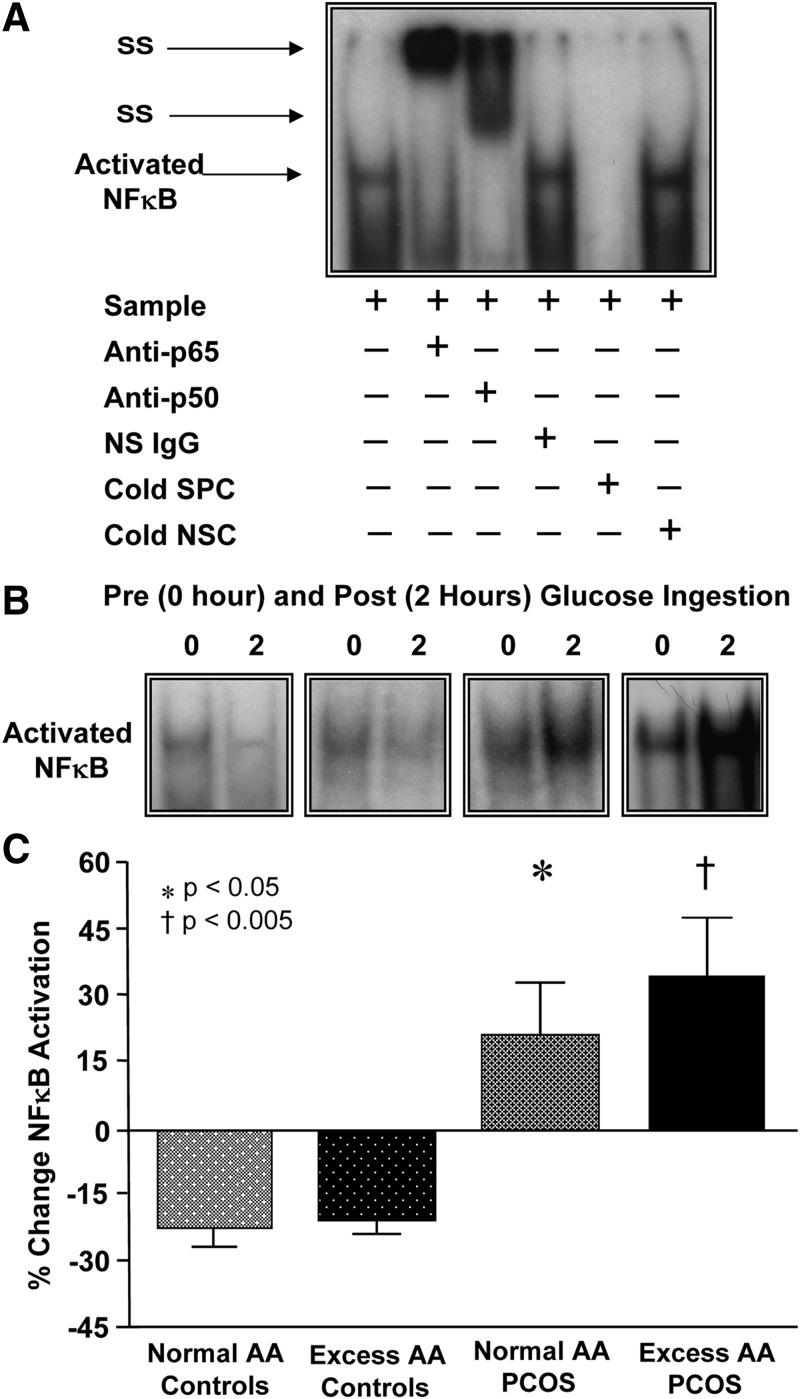
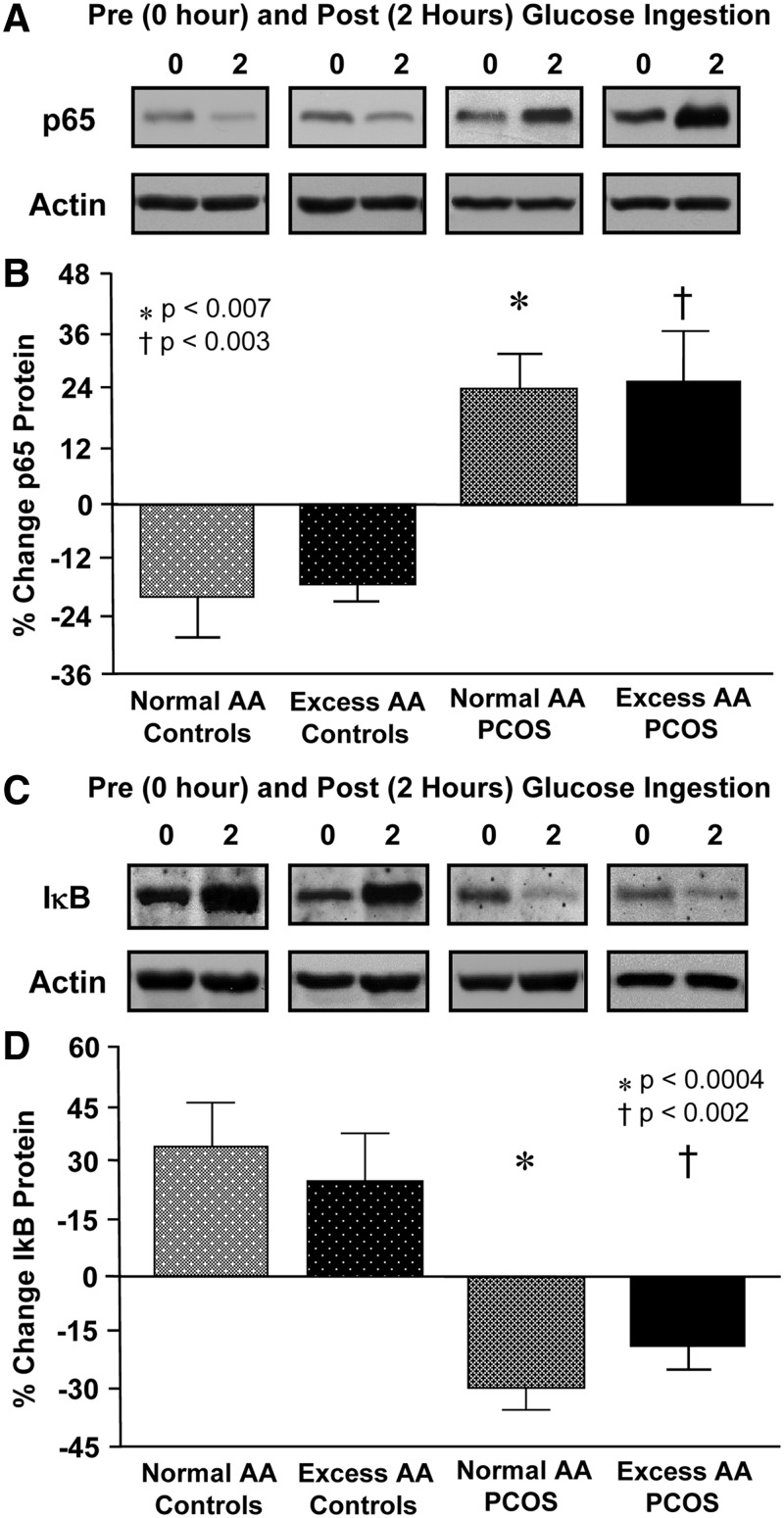
Results: Compared with controls, both PCOS groups exhibited lower IS(OGTT), increases in activated NFκB and p65 protein, and decreases in inhibitory-κB protein. Compared with women with PCOS with excess AA, those with normal AA exhibited higher testosterone levels and lower TNFα and CRP levels. For the combined groups, the percent change in NFκB activation was negatively correlated with IS(OGTT) and positively correlated with androgens. TNFα and CRP were positively correlated with abdominal fat.
Conclusion: In normal-weight women with PCOS, the inflammatory response to glucose ingestion is independent of excess AA. Circulating MNC and excess AA are separate and unique sources of inflammation in this population.
Figures

References
-
- González F, Rote NS, Minium J, Kirwan JP. 2006. Reactive oxygen species-induced oxidative stress in the development of insulin resistance and hyperandrogenism in polycystic ovary syndrome. J Clin Endocrinol Metab 91:336–340 - PubMed
-
- Kelly CC, Lyall H, Petrie JR, Gould GW, Connell JM, Sattar N. 2001. Low grade chronic inflammation in women in women with polycystic ovary syndrome. J Clin Endocrinol Metab 86:2453–2455 - PubMed
-
- Fenkci V, Fenkci S, Yilmazer M, Serteser M. 2003. Decreased total antioxidant status and increased oxidative stress in women with polycystic ovary syndrome may contribute to the risk of cardiovascular disease. Fertil Steril 80:123–127 - PubMed
-
- Gonzalez F, Thusu K, Abdel-Rahman E, Prabhala A, Tomani M, Dandona P. 1999. Elevated serum levels of tumor necrosis factor α in normal-weight women with polycystic ovary syndrome. Metabolism 48:437–441 - PubMed
-
- Dunaif A, Segal KR, Futterweit W, Dobrjansky A. 1989. Profound peripheral insulin resistance, independent of obesity, in polycystic ovary syndrome. Diabetes 38:1165–1174 - PubMed
Publication types
MeSH terms
Substances
Grants and funding
LinkOut - more resources
Full Text Sources
Medical
Research Materials
Miscellaneous