A review of intraoperative monitoring for spinal surgery
- PMID: 22905324
- PMCID: PMC3422092
- DOI: 10.4103/2152-7806.98579
A review of intraoperative monitoring for spinal surgery
Abstract
Background: Intraoperative neurophysiologic monitoring (IONM) is a technique that is helpful for assessing the nervous system during spine surgery.
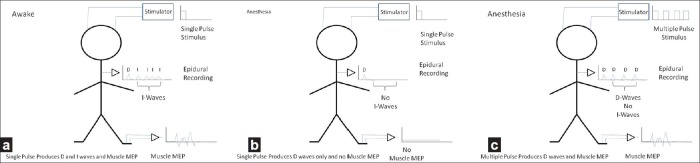
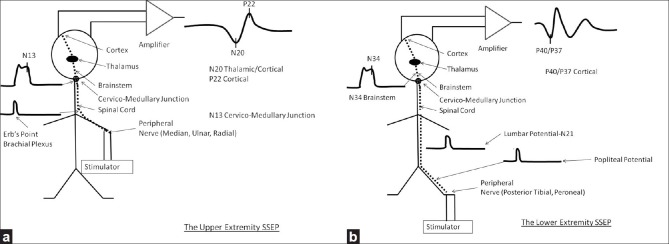
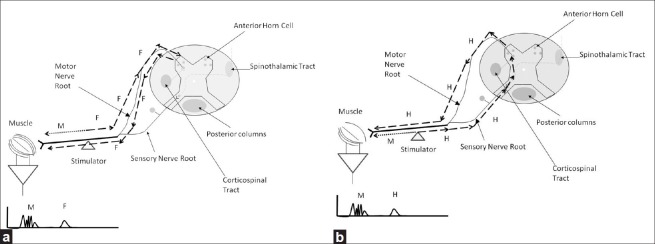
Methods: This is a review of the field describing the basic mechanisms behind the techniques of IONM. These include the most often utilized trancranial motor evoked potentials (Tc-MEPs), somatosensory evoked potentials (SSEPs), and stimulated and spontaneous EMG activity. It also describes some of the issues regarding practices and qualifications of practitioners.
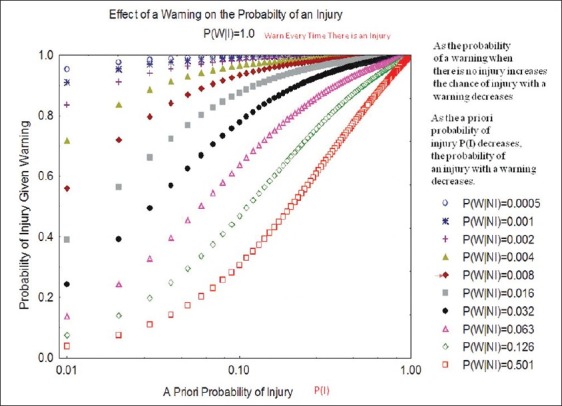
Results: Although the anatomic pathways responsible for the Tc-MEP and SSEP are well known and these clinical techniques have a high sensitivity and specificity, there is little published data showing that monitoring actually leads to improved patient outcomes. It is evident that IONM has high utility when the risk of injury is high, but may be only marginally helpful when the risk of injury is very low. The monitoring team must be well trained, be able to provide the surgeon feedback in real time, and coordinate activities with those of the surgical and anesthesia teams.
Conclusions: Although IONM is a valuable technique that provides sensitive and specific indications of neurologic injury, it does have limitations that must be understood. Maintaining a high quality of practice with appropriately trained personnel is critical.
Keywords: Intraoperative neurophysiologic monitoring; motor evoked potentials; somatosensory evoked potentials; spine.
Figures
References
-
- Amassian V. Animal and human motor system neuorphysiology related to intraoperative monitoring. In: Deletis V, Shils J, editors. Neurophysiology in Neurosurgery. San Diego California: Academic Press; 2002. pp. 3–23.
-
- Anderson DG, Wierzbowski LR, Schwartz DM, Hilibrand AS, Vaccaro AR, Albert TJ. Pedicle screws with high electrical resistance: A potential source of error with stimulus-evoked EMG. Spine (Phila Pa 1976) 2002;27:1577–81. - PubMed
-
- Baars JH, Kalisch D, Herold KF, Hadzidiakos DA, Rehberg B. Concentration-dependent suppression of F-waves by sevoflurane does not predict immobility to painful stimuli in humans. Br J Anaesth. 2005;95:789–97. - PubMed
-
- Bar-On Z, Zeilig G, Blumen N, Ohry A, Azaria M. Paraplegia following surgical correction of scoliosis with Cotrel-Dubousset instrumentation. Bull Hosp Jt Dis. 1995;54:32–4. - PubMed
-
- Bell CM, Bajcar J, Bierman AS, Li P, Mamdani MM, Urbach DR. Potentially unintended discontinuation of long-term medication use after elective surgical procedures. Arch Intern Med. 2006;166:2525–31. - PubMed
LinkOut - more resources
Full Text Sources
Other Literature Sources
Medical