


Comparison of tissue damage, cleansing and cross-contamination potential during wound cleansing via two methods: lavage and negative pressure wound therapy with instillation
- PMID: 22905800
- PMCID: PMC7950606
- DOI: 10.1111/j.1742-481X.2012.01073.x
Comparison of tissue damage, cleansing and cross-contamination potential during wound cleansing via two methods: lavage and negative pressure wound therapy with instillation
Abstract
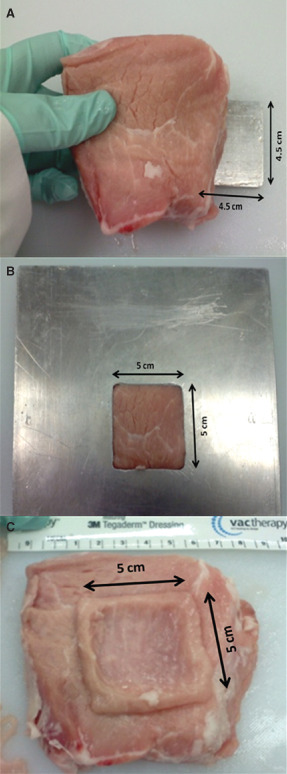
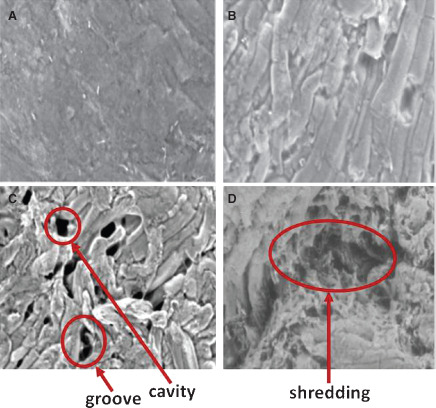
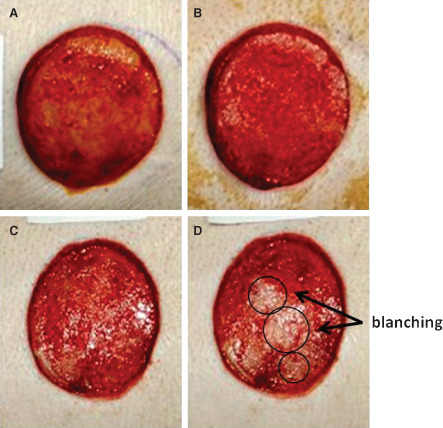
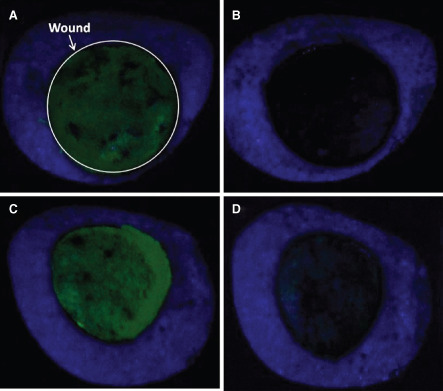
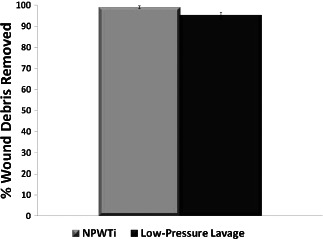
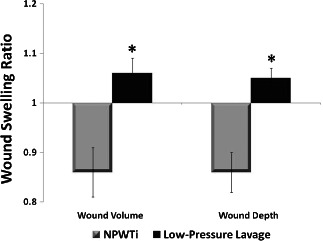
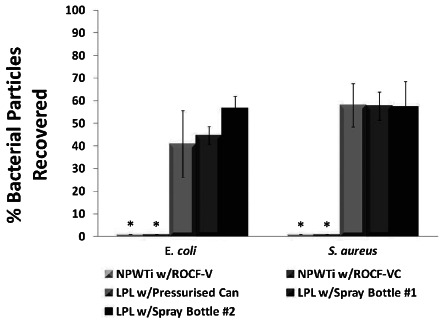
The use of lavage was compared to negative pressure wound therapy (NPWT) with instillation (NPWTi) to assess extent of soft tissue damage, debris removal and environmental cross-contamination susceptibility in three distinct models. Scanning electron microscopy in an ex vivo model showed increased visible tissue trauma from lavage treatment at low and high pressures versus NPWTi, with the degree of trauma relative to the pressure of the irrigant. These results were corroborated in granulating full-thickness excisional swine wounds coated with dextran solution to simulate wound debris. Both low-pressure lavage and NPWTi demonstrated effective cleansing in this model, reducing debris by >90%. However, using three-dimensional photography to evaluate tissue damage by measuring immediate tissue swelling (changes in wound volume and depth) showed significantly greater (P < 0.05) swelling in low-pressure lavage-treated wounds compared with NPWTi-treated wounds. Lastly, bench top wound models were inoculated with fluorescent bacterial particles to assess environmental cross-contamination potential and collected at measured distances after treatment with low-pressure lavage and NPWTi. No evidence of cross-contamination was found with NPWTi, whereas one-half of the particles became 'aerosolised' during low-pressure lavage (P < 0.05). Collectively, these studies demonstrate the effective wound cleansing capabilities of NPWTi without the tissue damage and environmental contamination associated with lavage.
Keywords: Environmental cross-contamination; Lavage; NPWTi; Tissue trauma; Wound cleansing.
© 2012 Kinetic Concepts. International Wound Journal © 2012 Medicalhelplines.com Inc and John Wiley & Sons Ltd.
Figures
References
-
- Barr JE. Principles of wound cleansing. Ostomy Wound Manage 1995. ; 41 (7A Suppl.) : 15S – 21S ; discussion 22S. - PubMed
-
- Wysocki AB. Evaluating and managing open skin wounds: colonization versus infection. AACN Clin Issues 2002. ; 13 : 382 – 97. - PubMed
-
- Edlich RF , Rodeheaver GT , Thacker JG , Lin KY , Drake DB , Mason SS , Wack CA , Chase ME , Tribble C , Long WB 3rd , Vissers RJ. Revolutionary advances in the management of traumatic wounds in the emergency department during the last 40 years: part I. J Emerg Med 2010. ; 38 : 40 – 50. - PubMed
-
- Fernandez R , Griffiths R. Water for wound cleansing. Cochrane Database Syst Rev 2008. ; 23 : CD003861. - PubMed
-
- Bergstrom N , Bennett MA , Carlson CE. Treatment of pressure ulcers: clinical practice guidelines no. 15. Rockville : US Department of Health and Human Services, Public Health Service, Agency for Health Care Policy and Research; , 1994. : 6 – 7 , 47 – 53. AHCPR Publication No. 95‐0652.
Publication types
MeSH terms
LinkOut - more resources
Full Text Sources
Medical
