An examination of biracial college youths' family ethnic socialization, ethnic identity, and adjustment: do self-identification labels and university context matter?
- PMID: 22905967
- PMCID: PMC4005377
- DOI: 10.1037/a0029438
An examination of biracial college youths' family ethnic socialization, ethnic identity, and adjustment: do self-identification labels and university context matter?
Abstract
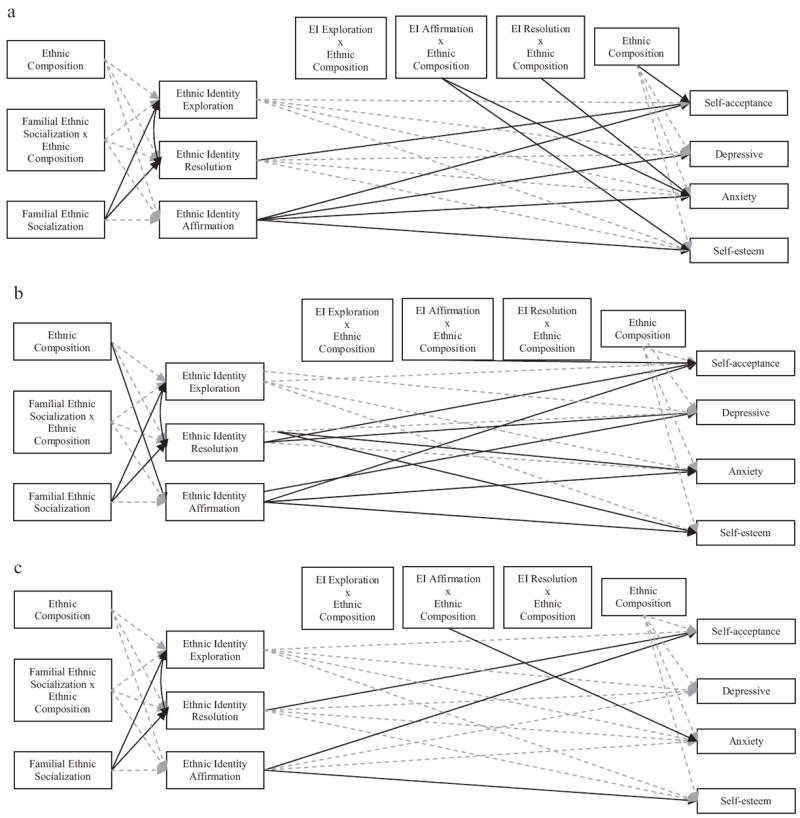
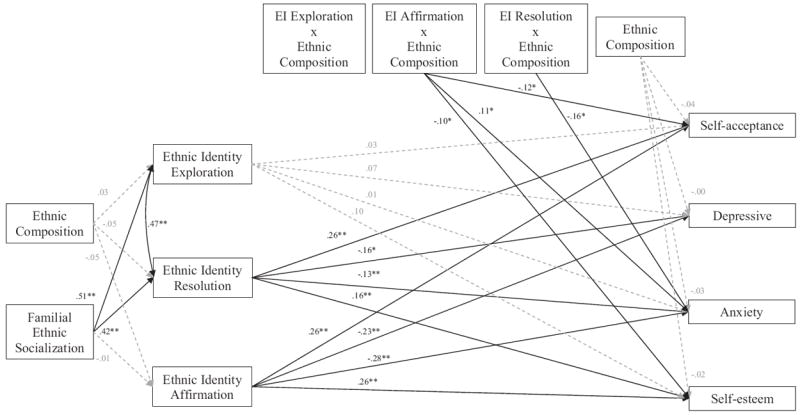
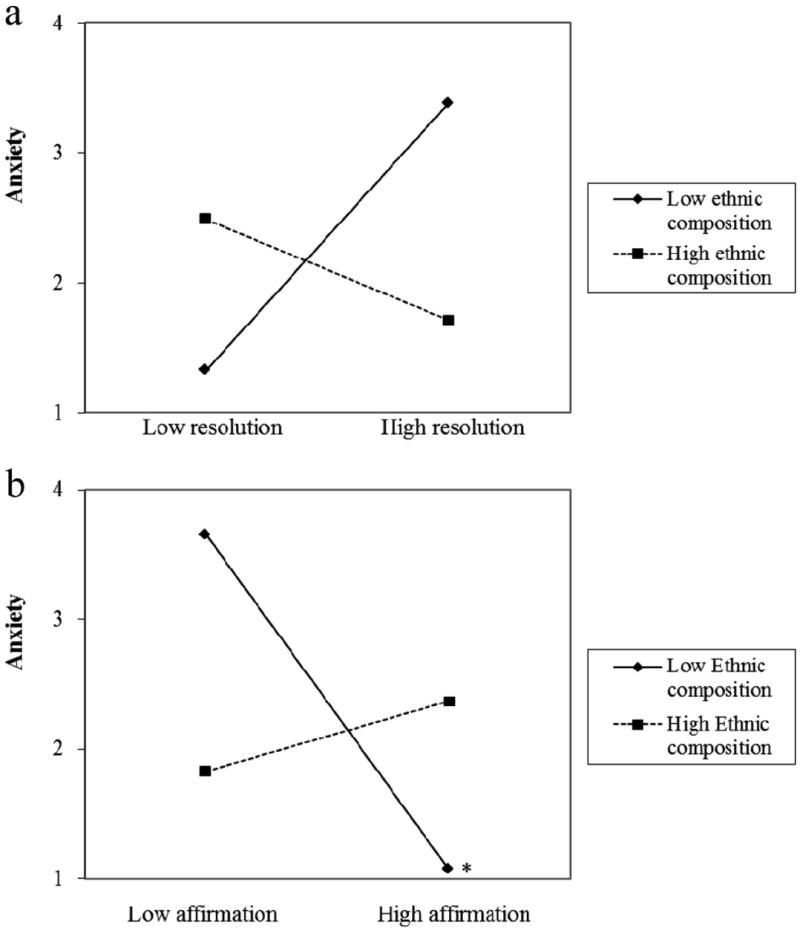
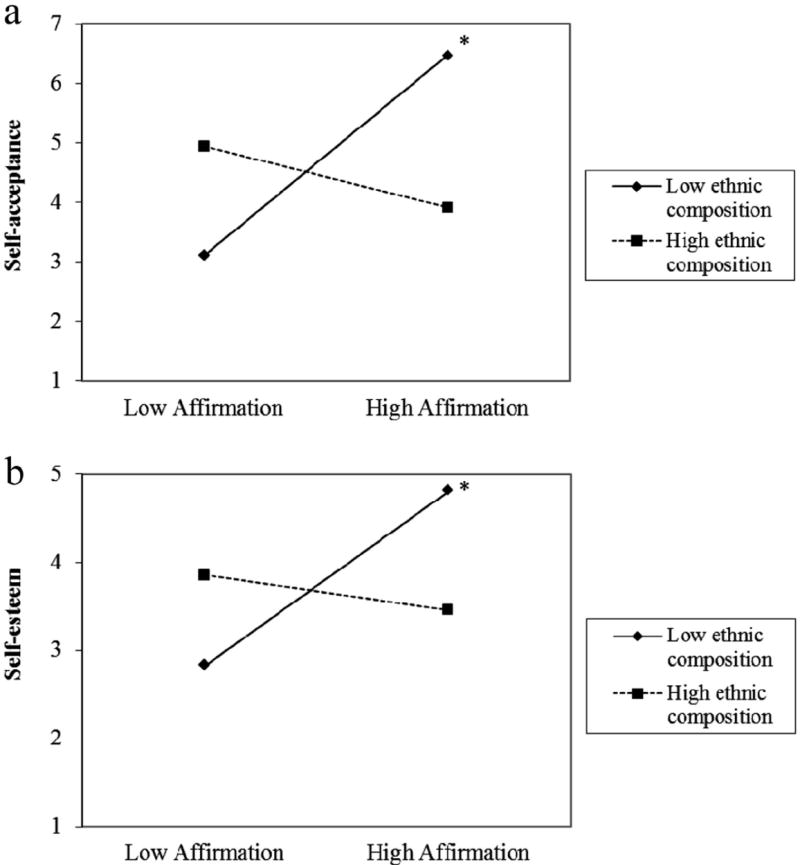
This study examined family ethnic socialization, ethnic identity, and adjustment among Latino/White and Asian/White biracial college students (n = 507), with special attention to how ethnic self-identification and university ethnic composition informed the ethnic identity process. Findings indicated that family ethnic socialization was positively related to participants' ethnic identity exploration and resolution, but not ethnic identity affirmation. Furthermore, ethnic identity resolution and affirmation were associated with higher self-acceptance and self-esteem, and lower depressive symptoms. Importantly, university ethnic composition moderated the association between ethnic identity resolution and anxiety, such that resolution promoted adjustment in contexts that were relatively more ethnically diverse. University ethnic composition also moderated the association between ethnic identity affirmation and both self-esteem and self-acceptance, such that affirmation was associated with better adjustment but only in schools that were less ethnically diverse.
Figures
References
-
- Abreu JM, Goodyear RK, Campos A, Newcomb MD. Ethnic belonging and traditional masculinity ideology among African Americans, European Americans, and Latinos. Psychology of Men & Masculinity. 2000;1:75–86. doi: 10.1037/1524-9220.1.2.75. - DOI
-
- Aiken LS, West SG. Multiple regression: Testing and interpreting interactions. Thousand Oaks, CA: Sage; 1991.
-
- Arbuckle JL. AMOS users’ guide Version 3.6. Chicago, IL: Smallwaters; 1996.
-
- Baars M. Marriage in black and white: Women’s support for law against interracial marriage, 1972–2000. Intersections. 2009;10:219–238.
Publication types
MeSH terms
Grants and funding
LinkOut - more resources
Full Text Sources
Other Literature Sources
Medical