


Moderate drinking? Alcohol consumption significantly decreases neurogenesis in the adult hippocampus
- PMID: 22906480
- PMCID: PMC4568748
- DOI: 10.1016/j.neuroscience.2012.08.018
Moderate drinking? Alcohol consumption significantly decreases neurogenesis in the adult hippocampus
Abstract
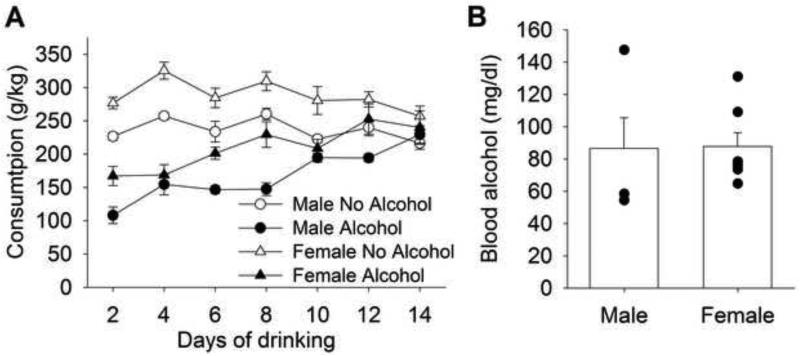
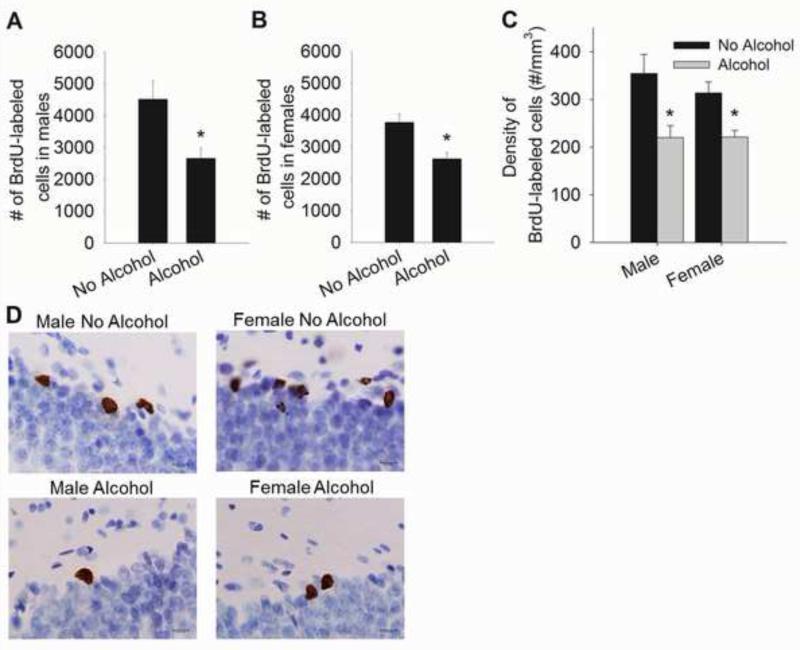
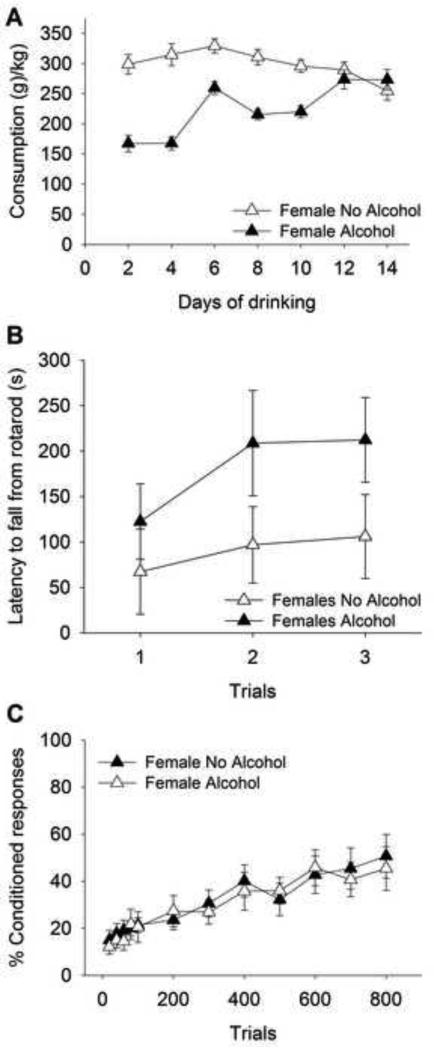
Drinking alcohol in moderation is often considered a health-conscious behavior, associated with improved cardiovascular and brain health. However, "moderate" amounts of alcohol include drinking 3-4 alcohol beverages in a day, which is closer to binge drinking and may do more harm than good. Here we examined how daily drinking of moderate-high alcohol alters the production of new neurons in the adult hippocampus. Male and female adult Sprague-Dawley rats were provided free access to a liquid replacement diet that was supplemented with either 4% ethanol or Maltodextrin for a period of 2 weeks. Proliferating cells were labeled with 5-bromo-2-deoxyuridine (BrdU) and the number of BrdU-positive cells in the hippocampus was assessed after the final day of drinking. A subset of rats was also exposed to a motor skill or associative learning task to examine the functional effects of alcohol consumption. The drinking regime resulted in an average blood alcohol concentration of approximately 0.08%, which is comparable to the human legal driving limit in many countries. This level of intoxication did not impair motor skill learning or function in either sex, nor did the alcohol consumption disrupt associative learning 2 days after drinking. Therefore, moderate alcohol consumption did not disrupt basic sensory, motor or learning processes. However, the number of cells produced in the dentate gyrus of the hippocampus was reduced by nearly 40%. Thus, even moderate consumption of alcohol for a relatively short period of time can have profound effects on structural plasticity in the adult brain.
Copyright © 2012 IBRO. Published by Elsevier Ltd. All rights reserved.
Figures
References
-
- Aberg E, Hofstetter CP, Olson L, Brené S. Moderate ethanol consumption increases hippocampal cell proliferation and neurogenesis in the adult mouse. The International Journal of Neuropsychopharmacology. 2005;8:557–567. - PubMed
-
- Au Yeung SL, Jiang CQ, Cheng KK, Liu B, Zhang WS, Lam TH, Leung GM, Schooling CM. Evaluation of Moderate Alcohol Use and Cognitive Function Among Men Using a Mendelian Randomization Design in the Guangzhou Biobank Cohort Study. American Journal of Epidemiology Ahead of print. 2012 - PubMed
-
- Brummelte S, Galea LA. Chronic high corticosterone reduces neurogenesis in the dentate gyrus of adult male and female rats. Neuroscience. 2010;168:680–690. - PubMed
-
- Cameron HA, Woolley CS, McEwen BS, Gould E. Differentiation of newly born neurons and glia in the dentate gyrus of the adult rat. Neuroscience. 1993;56:337–344. - PubMed
Publication types
MeSH terms
Grants and funding
LinkOut - more resources
Full Text Sources
Medical
