


General mechanisms of nicotine-induced fibrogenesis
- PMID: 22906950
- PMCID: PMC3509054
- DOI: 10.1096/fj.12-206458
General mechanisms of nicotine-induced fibrogenesis
Abstract
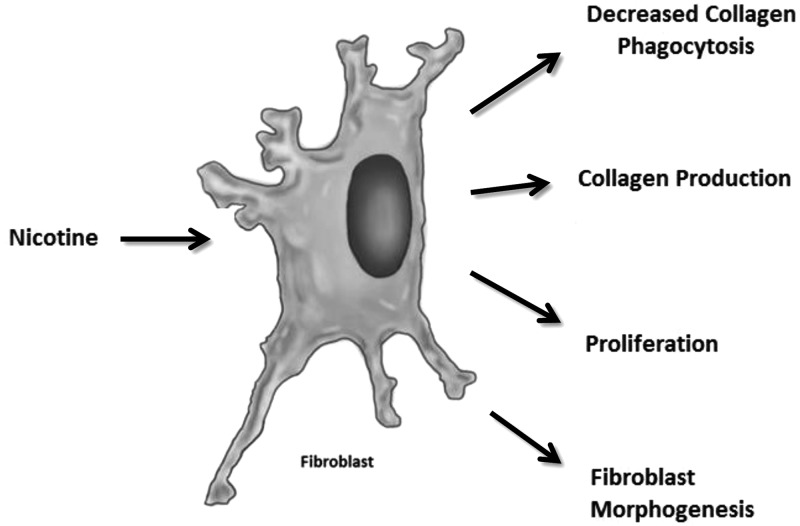
Cigarette smoking contributes to the development of cancer, and pathogenesis of other diseases. Many chemicals have been identified in cigarettes that have potent biological properties. Nicotine is especially known for its role in addiction and plays a role in other physiological effects of smoking and tobacco use. Recent studies have provided compelling evidence that, in addition to promoting cancer, nicotine also plays a pathogenic role in systems, such as the lung, kidney, heart, and liver. In many organ systems, nicotine modulates fibrosis by altering the functions of fibroblasts. Understanding the processes modulated by nicotine holds therapeutic potential and may guide future clinical and research decisions. This review discusses the role of nicotine in the general fibrogenic process that governs fibrosis and fibrosis-related diseases, focusing on the cellular mechanisms that have implications in multiple organ systems. Potential research directions for the management of nicotine-induced fibrosis, and potential clinical considerations with regard to nicotine-replacement therapy (NRT) are presented.
Figures
References
-
- Cardenas L., Tremblay L. K., Naranjo C. A., Herrmann N., Zack M., Busto U. E. (2002) Brain reward system activity in major depression and comorbid nicotine dependence. J. Pharmacol. Exp. Ther. 302, 1265–1271 - PubMed
-
- Benowitz N. L. (1988) Drug therapy. Pharmacologic aspects of cigarette smoking and nicotine addition. N. Engl. J. Med. 319, 1318–1330 - PubMed
-
- Cahill K., Stead L. F., Lancaster T. (2011) Nicotine receptor partial agonists for smoking cessation. Cochrane Database Syst. Rev. CD006103. - PubMed
-
- Hukkanen J., Jacob P., 3rd, Benowitz N. L. (2005) Metabolism and disposition kinetics of nicotine. Pharmacol. Rev. 57, 79–115 - PubMed
-
- Hucker H. B., Gillette J. R., Brodie B. B. (1960) Enzymatic pathway for the formation of cotinine, a major metabolite of nicotine in rabbit liver. J. Pharmacol. Exp. Ther. 129, 94–100 - PubMed
Publication types
MeSH terms
Substances
Grants and funding
LinkOut - more resources
Full Text Sources
