. 2013 Jun;7(2):188-92.
doi: 10.1007/s12105-012-0393-0. Epub 2012 Aug 21.

Noma (cancrum oris): a report of a case in a young AIDS patient with a review of the pathogenesis

Affiliations

Noma (cancrum oris): a report of a case in a young AIDS patient with a review of the pathogenesis

J N Masipa et al. Head Neck Pathol. 2013 Jun.

Abstract

Noma (cancrum oris) is a mutilating necrotising disease of the orofacial tissues. It affects predominantly debilitated malnourished children, in whom the necrotic process may cause severe damage to mid-facial structures. Its aetiopathogenesis is uncertain, but its course is fulminating, and without timely intervention the disease may be fatal. Antibiotic treatment during any stage of necrotising stomatitis and of its sequel noma can stop progression of the disease; therefore detection and treatment of early intraoral necrotising lesions whether necrotising gingivitis, necrotising periodontitis or necrotising stomatitis are critical in preventing noma. We present an extreme case of noma in a malnourished HIV-seropositive child. There was an acute necrotic process affecting both the maxilla and the mandible with denudation of bone, spontaneous exfoliation of teeth, necrotising fasciitis and myonecrosis which destroyed the lips and cheeks and extended to the infra-orbital margins. There was severe disfigurement and severe impairment of function. Noma is primarily an anaerobic bacterial infection with secondary ischaemia leading to osteonecrosis and mid-facial destruction.


Figures
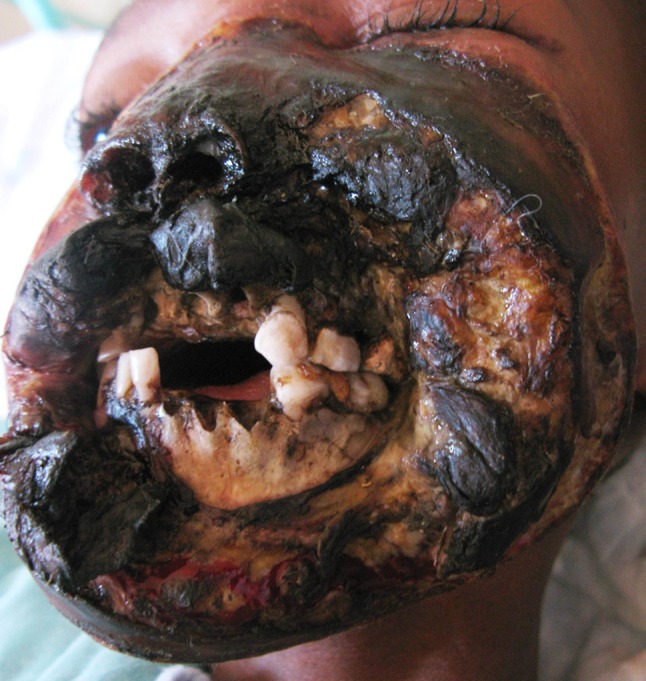
Fig. 1
Fig. 1
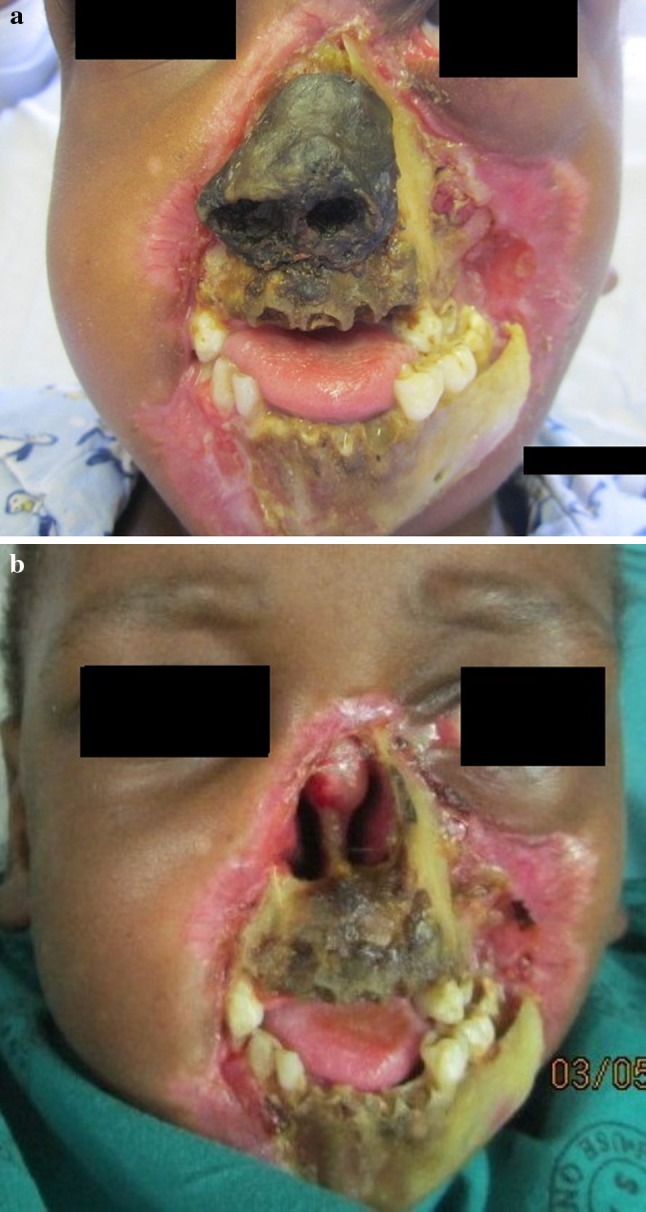
Severe destruction of the nose, lips, cheeks extending to the infra-orbital margin, and of the anterior mandible and anterior maxilla
Fig. 2
Fig. 2
The appearance 2 weeks after the child was admitted: the sloughed soft tissues have been removed excepting the nasal slough (a); all the sloughed soft tissue had been removed (b)
Fig. 3
Fig. 3
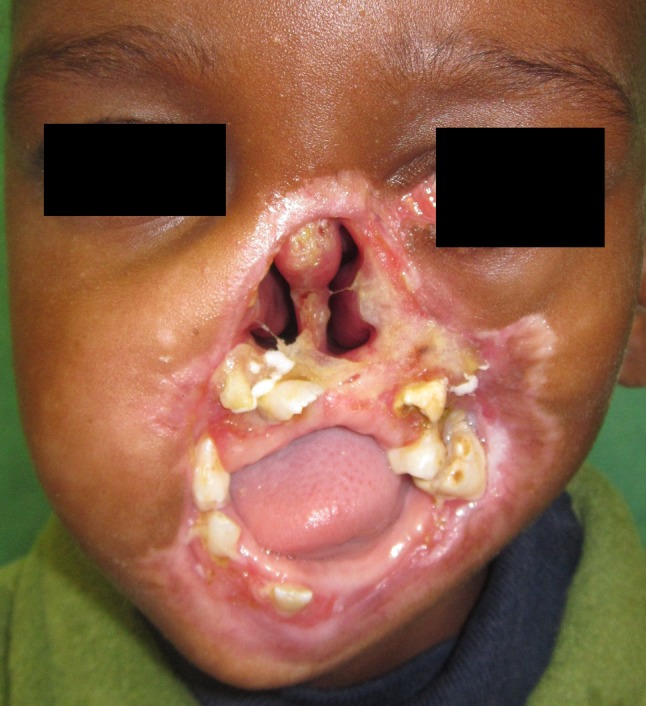
The appearance of the face 3 months after resection of the necrotic bone. There is extensive scarring around the facial defect
Fig. 4
Fig. 4
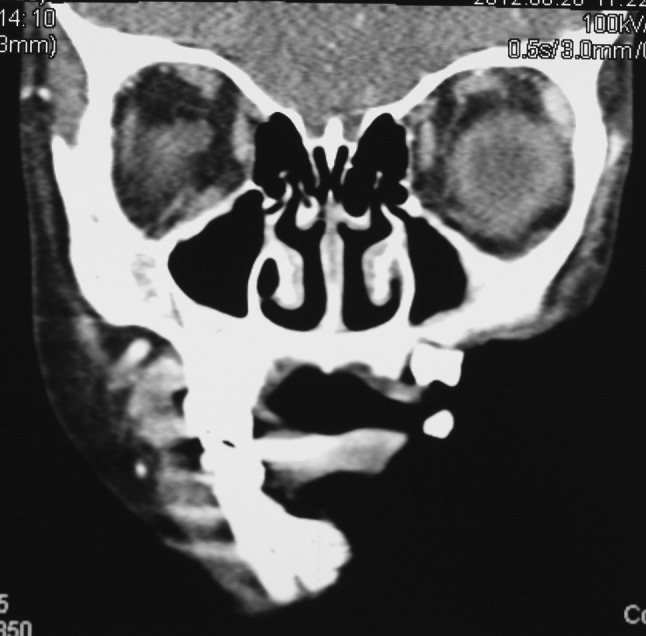
CT image showing extent of loss of the mandible and maxilla
Fig. 5
Fig. 5
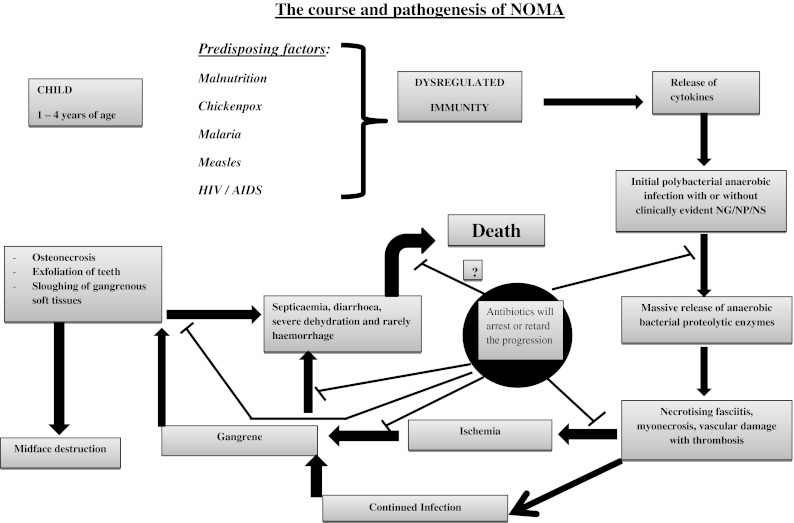
The pathogenic events in noma and how antibiotic treatment affects the course of the disease

References

    1. Enwonwu CO, Falkler WA, Jr, Phillips RS. Noma (cancrum oris) Lancet. 2006;368:147–156. doi: 10.1016/S0140-6736(06)69004-1. - DOI - PubMed
    1. Enwonwu CO, Falkler WA, Jr, Idigbe EO, et al. Noma (cancrum oris): questions and answers. Oral Dis. 1999;5:144–149. doi: 10.1111/j.1601-0825.1999.tb00080.x. - DOI - PubMed
    1. Falkler WA, Jr, Enwonwu CO, Idigbe EO. Microbiological understandings and mysteries of noma (cancrum oris) Oral Dis. 1999;5:150–155. doi: 10.1111/j.1601-0825.1999.tb00081.x. - DOI - PubMed
    1. Baratti-Mayer D, Pittet B, Montandon D, et al. Noma: an “infectious” disease of unknown aetiology. Lancet Infect Dis. 2003;3:419–431. doi: 10.1016/S1473-3099(03)00670-4. - DOI - PubMed
    1. Idigbe EO, Enwonwu CO, Falkler WA, et al. Living conditions of children at risk for noma: Nigerian experience. Oral Dis. 1999;5:156–162. doi: 10.1111/j.1601-0825.1999.tb00082.x. - DOI - PubMed