


Parallel distractor rejection as a binding mechanism in search
- PMID: 22908002
- PMCID: PMC3414861
- DOI: 10.3389/fpsyg.2012.00278
Parallel distractor rejection as a binding mechanism in search
Abstract
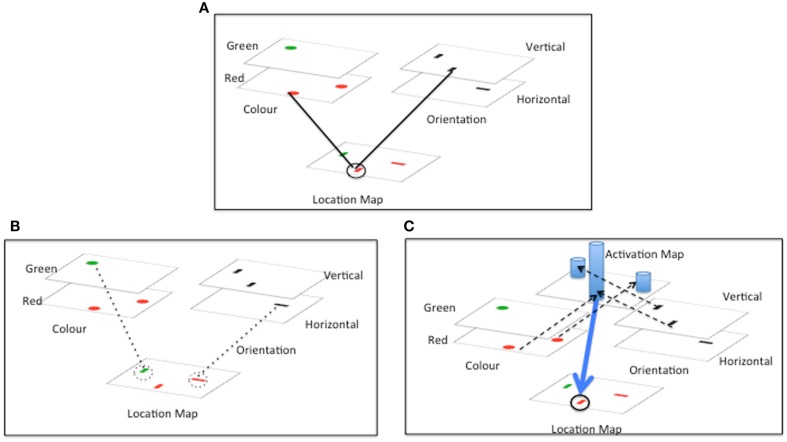
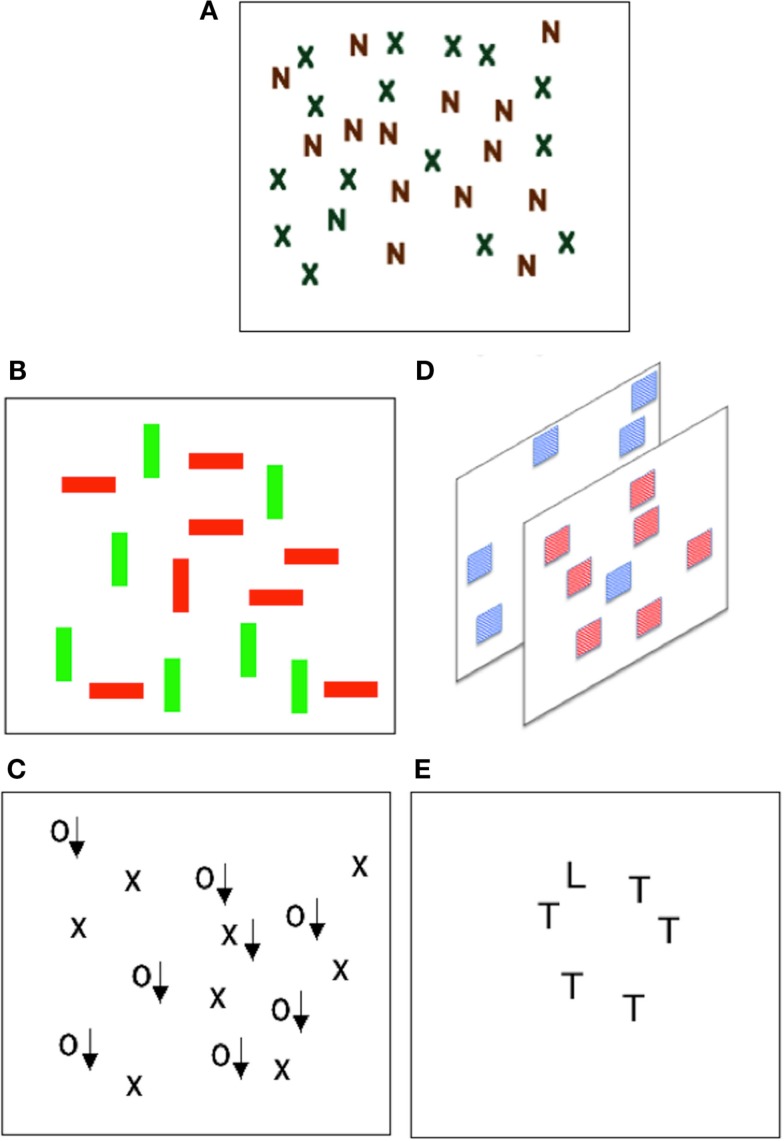
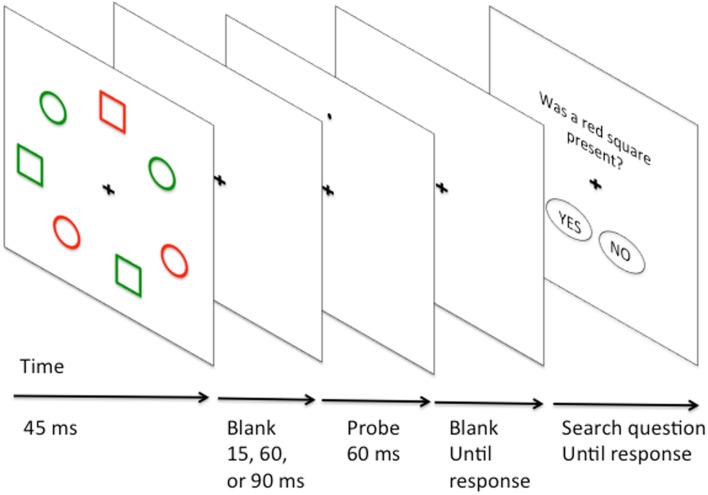
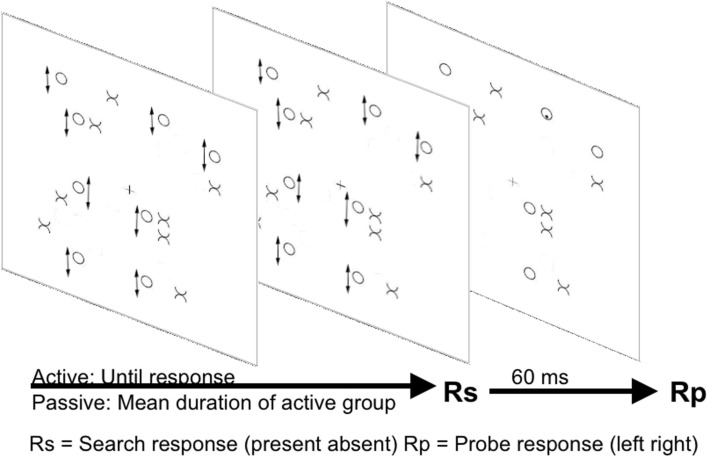
The relatively common experimental visual search task of finding a red X amongst red O's and green X's (conjunction search) presents the visual system with a binding problem. Illusory conjunctions (ICs) of features across objects must be avoided and only features present in the same object bound together. Correct binding into unique objects by the visual system may be promoted, and ICs minimized, by inhibiting the locations of distractors possessing non-target features (e.g., Treisman and Sato, 1990). Such parallel rejection of interfering distractors leaves the target as the only item competing for selection; thus solving the binding problem. In the present article we explore the theoretical and empirical basis of this process of active distractor inhibition in search. Specific experiments that provide strong evidence for a process of active distractor inhibition in search are highlighted. In the final part of the article we consider how distractor inhibition, as defined here, may be realized at a neurophysiological level (Treisman and Sato, 1990).
Keywords: attention; conjunction search; feature binding; inhibition; visual search.
Figures
References
-
- Bernstein L. J., Robertson L. C. (1998). Independence between illusory conjunctions of color and motion with shape following bilateral parietal lesions. Psychol. Sci. 9, 167–175 10.1111/1467-9280.00033 - DOI
Grants and funding
LinkOut - more resources
Full Text Sources
