


The origin and effect of small RNA signaling in plants
- PMID: 22908024
- PMCID: PMC3414853
- DOI: 10.3389/fpls.2012.00179
The origin and effect of small RNA signaling in plants
Abstract
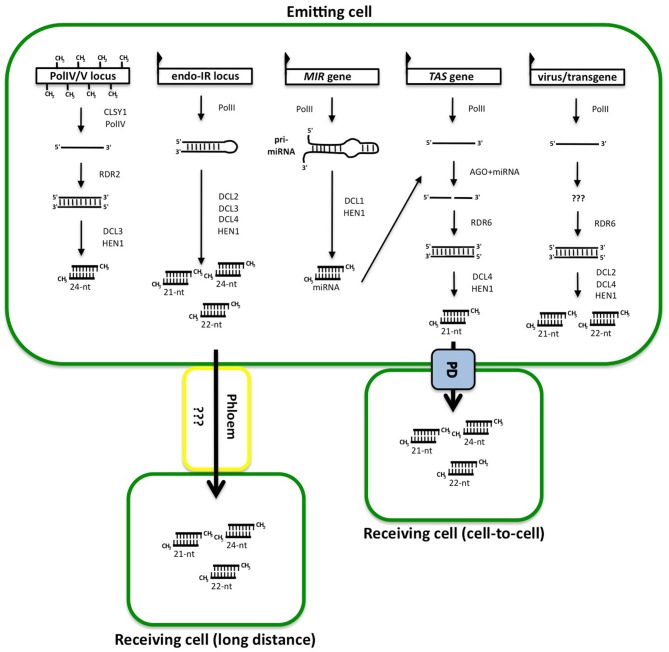
Given their sessile condition, land plants need to integrate environmental cues rapidly and send signal throughout the organism to modify their metabolism accordingly. Small RNA (sRNA) molecules are among the messengers that plant cells use to carry such signals. These molecules originate from fold-back stem-loops transcribed from endogenous loci or from perfect double-stranded RNA produced through the action of RNA-dependent RNA polymerases. Once produced, sRNAs associate with Argonaute (AGO) and other proteins to form the RNA-induced silencing complex (RISC) that executes silencing of complementary RNA molecules. Depending on the nature of the RNA target and the AGO protein involved, RISC triggers either DNA methylation or chromatin modification (leading to transcriptional gene silencing, TGS) or RNA cleavage or translational inhibition (leading to post-transcriptional gene silencing, PTGS). In some cases, sRNAs move to neighboring cells and/or to the vascular tissues for long-distance trafficking. Many genes are involved in the biogenesis of sRNAs and recent studies have shown that both their origin and their protein partners have great influence on their activity and range. Here we summarize the work done to uncover the mode of action of the different classes of sRNA with special emphasis on their movement and how plants can take advantage of their mobility. We also review the various genetic requirements needed for production, movement and perception of the silencing signal.
Keywords: RNA silencing; cell-to-cell movement; miRNA; siRNA; systemic movement.
Figures
References
LinkOut - more resources
Full Text Sources
