


Osteopontin as potential biomarker and therapeutic target in gastric and liver cancers
- PMID: 22912540
- PMCID: PMC3419986
- DOI: 10.3748/wjg.v18.i30.3923
Osteopontin as potential biomarker and therapeutic target in gastric and liver cancers
Abstract
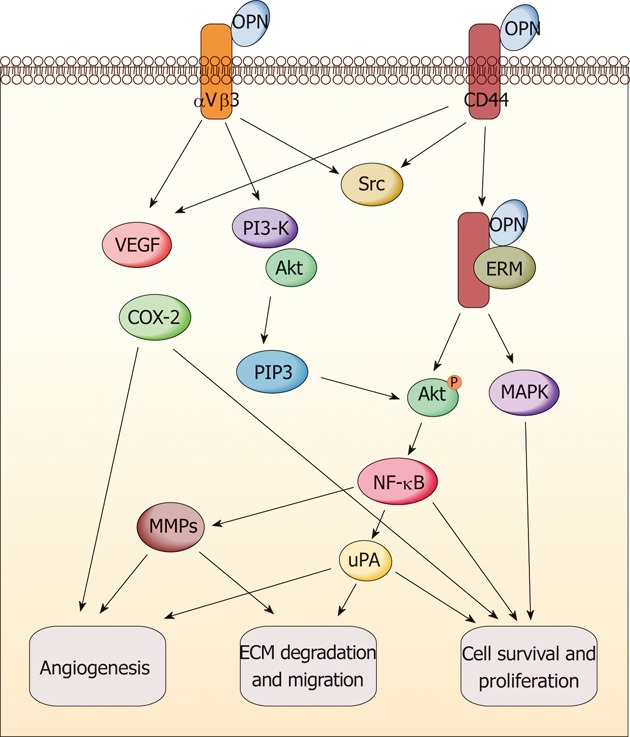
Gastric cancer and liver cancer are among the most common malignancies and the leading causes of death worldwide, due to late detection and high recurrence rates. Today, these cancers have a heavy socioeconomic burden, for which a full understanding of their pathophysiological features is warranted to search for promising biomarkers and therapeutic targets. Osteopontin (OPN) is overexpressed in most patients with gastric and liver cancers. Over the past decade, emerging evidence has revealed a correlation of OPN level and clinicopathological features and prognosis in gastric and liver cancers, indicating its potential as an independent prognostic indicator in such patients. Functional studies have verified the potential of OPN knockdown as a therapeutic approach in vitro and in vivo. Furthermore, OPN mediates multifaceted roles in the interaction between cancer cells and the tumor microenvironment, in which many details need further exploration. OPN signaling results in various functions, including prevention of apoptosis, modulation of angiogenesis, malfunction of tumor-associated macrophages, degradation of extracellular matrix, activation of phosphoinositide 3-kinase-Akt and nuclear factor-κB pathways, which lead to tumor formation and progression, particularly in gastric and liver cancers. This editorial aims to review recent findings on alteration in OPN expression and its clinicopathological associations with tumor progression, its potential as a therapeutic target, and putative mechanisms in gastric and liver cancers. Better understanding of the implications of OPN in tumorigenesis might facilitate development of therapeutic regimens to benefit patients with these deadly malignancies.
Keywords: Biomarker; Gastrointestinal cancer; Metastasis; Osteopontin; Prognosis.
Figures
References
-
- Weber GF. The metastasis gene osteopontin: a candidate target for cancer therapy. Biochim Biophys Acta. 2001;1552:61–85. - PubMed
-
- El-Tanani MK. Role of osteopontin in cellular signaling and metastatic phenotype. Front Biosci. 2008;13:4276–4284. - PubMed
-
- Johnston NI, Gunasekharan VK, Ravindranath A, O’Connell C, Johnston PG, El-Tanani MK. Osteopontin as a target for cancer therapy. Front Biosci. 2008;13:4361–4372. - PubMed
-
- Rangaswami H, Bulbule A, Kundu GC. Osteopontin: role in cell signaling and cancer progression. Trends Cell Biol. 2006;16:79–87. - PubMed
Publication types
MeSH terms
Substances
LinkOut - more resources
Full Text Sources
Other Literature Sources
Medical
Research Materials
Miscellaneous
