


A longitudinal trial comparing chloroquine as monotherapy or in combination with artesunate, azithromycin or atovaquone-proguanil to treat malaria
- PMID: 22912697
- PMCID: PMC3422316
- DOI: 10.1371/journal.pone.0042284
A longitudinal trial comparing chloroquine as monotherapy or in combination with artesunate, azithromycin or atovaquone-proguanil to treat malaria
Abstract
Background: The predominance of chloroquine-susceptible falciparum malaria in Malawi more than a decade after chloroquine's withdrawal permits contemplation of re-introducing chloroquine for targeted uses. We aimed to compare the ability of different partner drugs to preserve chloroquine efficacy and prevent the re-emergence of resistance.
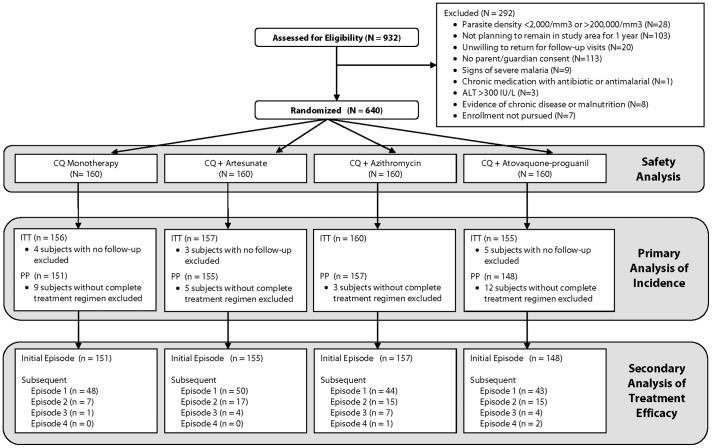
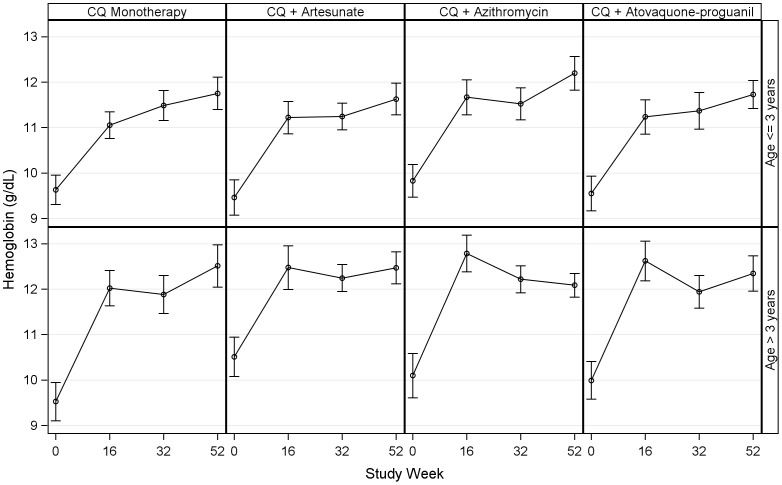
Methodology/principal findings: Children with uncomplicated malaria were enrolled at a government health center in Blantyre, Malawi. Participants were randomized to receive chloroquine alone or combined with artesunate, azithromycin or atovaquone-proguanil for all episodes of uncomplicated malaria for one year. The primary outcome was incidence of clinical malaria. Secondary endpoints included treatment efficacy, and incidence of the chloroquine resistance marker pfcrt T76 and of anemia. Of the 640 children enrolled, 628 were included in the intention-to-treat analysis. Malaria incidence (95% confidence interval) was 0.59 (.46-.74), .61 (.49-.76), .63 (.50-.79) and .68 (.54-.86) episodes/person-year for group randomized to receive chloroquine alone or in combination with artesunate, azithromycin or atovaquone-proguanil respectively and the differences were not statistically significant. Treatment efficacy for first episodes was 100% for chloroquine monotherapy and 97.9% for subsequent episodes of malaria. Similar results were seen in each of the chloroquine combination groups. The incidence of pfcrt T76 in pure form was 0%; mixed infections with both K76 and T76 were found in two out of 911 infections. Young children treated with chloroquine-azithromycin had higher hemoglobin concentrations at the study's end than did those in the chloroquine monotherapy group.
Conclusion/significance: Sustained chloroquine efficacy with repeated treatment supports the eventual re-introduction of chloroquine combinations for targeted uses such as intermittent preventive treatment.
Trial registration: ClinicalTrials.gov NCT00379821.
Conflict of interest statement
Figures

References
-
- Noedl H, Se Y, Schaecher K, Smith BL, Socheat D, et al. (2008) Evidence of artemisinin-resistant malaria in western Cambodia. N Engl J Med 359: 2619–2620. - PubMed
-
- Kublin JG, Cortese JF, Njunju EM, Mukadam RA, Wirima JJ, et al. (2003) Reemergence of chloroquine-sensitive Plasmodium falciparum malaria after cessation of chloroquine use in Malawi. J Infect Dis 187: 1870–1875. - PubMed
-
- Laufer MK, Thesing PC, Eddington ND, Masonga R, Dzinjalamala FK, et al. (2006) Return of chloroquine antimalarial efficacy in Malawi. N Engl J Med 355: 1959–1966. - PubMed
Publication types
MeSH terms
Substances
Associated data
Grants and funding
LinkOut - more resources
Full Text Sources
Other Literature Sources
Medical
