. 2012;7(8):e43142.
doi: 10.1371/journal.pone.0043142. Epub 2012 Aug 17.

Arachidonate 15-lipoxygenase type B knockdown leads to reduced lipid accumulation and inflammation in atherosclerosis

Affiliations

Arachidonate 15-lipoxygenase type B knockdown leads to reduced lipid accumulation and inflammation in atherosclerosis

Lisa U Magnusson et al. PLoS One. 2012.

Abstract

Inflammation in the vascular wall is important for development of atherosclerosis. We have shown previously that arachidonate 15-lipoxygenase type B (ALOX15B) is more highly expressed in human atherosclerotic lesions than in healthy arteries. This enzyme oxidizes fatty acids to substances that promote local inflammation and is expressed in lipid-loaded macrophages (foam cells) present in the atherosclerotic lesions. Here, we investigated the role of ALOX15B in foam cell formation in human primary macrophages and found that silencing of human ALOX15B decreased cellular lipid accumulation as well as proinflammatory cytokine secretion from macrophages. To investigate the role of ALOX15B in promoting the development of atherosclerosis in vivo, we used lentiviral shRNA silencing and bone marrow transplantation to knockdown mouse Alox15b gene expression in LDL-receptor-deficient (Ldlr(-/-)) mice. Knockdown of mouse Alox15b in vivo decreased plaque lipid content and markers of inflammation. In summary, we have shown that ALOX15B influences progression of atherosclerosis, indicating that this enzyme has an active proatherogenic role.


Conflict of interest statement

Competing Interests: The authors have declared that no competing interests exist.

Figures

Figure 1
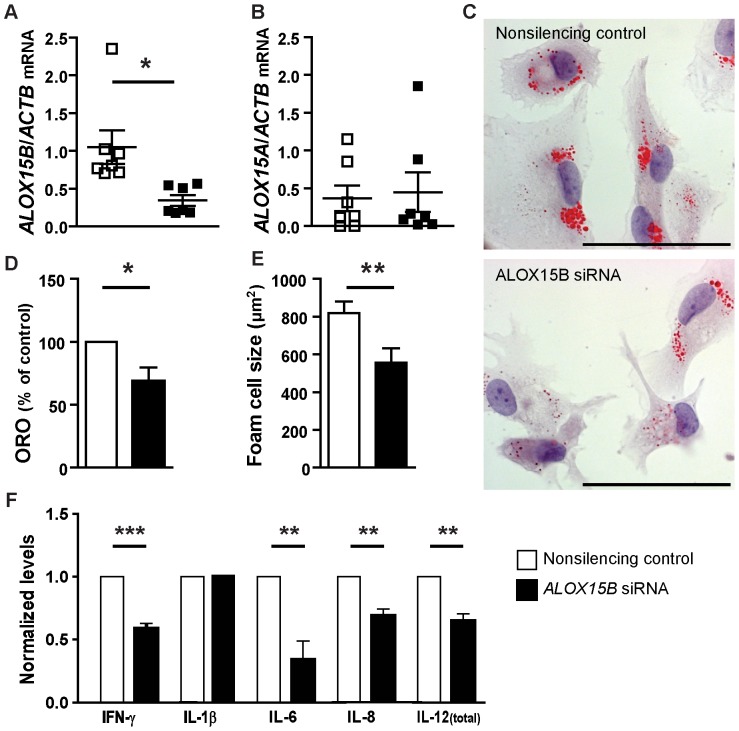
Figure 1. Decreased lipid uptake and immunological signaling in human ALOX15B-silenced macrophages.
Lipid accumulation was analyzed in human primary macrophages transfected with nonsilencing control siRNA or ALOX15B siRNA using Oil Red O staining after incubation with DMOG. A) Quantification of ALOX15B expression normalized to ActB expression measured with Q-PCR. B) Quantification of ALOX15A expression normalized to ActB expression measured with Q-PCR. C) Representative picture showing Oil Red O staining of control and ALOX15B-silenced macrophages (Scale bar = 50 µm). D) Quantification of Oil Red O staining in human primary macrophages (n = 7) normalized to control. E) Size of control and ALOX15B-silenced human primary macrophages (foam cells). F) Quantification of secreted cytokines in media from human primary macrophages (n = 7). Data are presented as mean±SEM normalized to control.
Figure 2
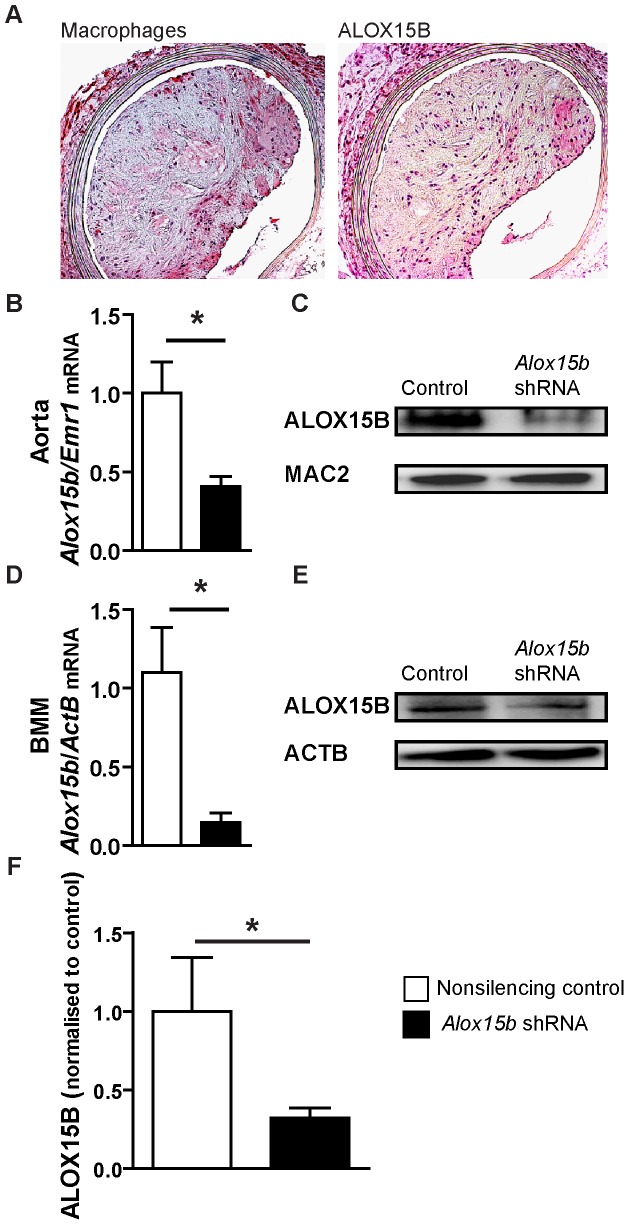
Figure 2. Alox15b knockdown in LDLr−/− mice.
A) Immunohistochemical detection of macrophages and ALOX15B in Ldlr−/− mice. B) Quantification of Alox15b expression, normalized to Emr1 expression (macrophage marker) in aortic tissue using Q-PCR (n = 2 for control and n = 3 for Alox15b shRNA). The sections presented in figure 2A were stained with Mayer's hematoxylin while the quantified sections used for figure 2B were not. C) Western blotting of ALOX15B and MAC-2 (macrophage marker) in aortic tissue. D) Quantification of Alox15b expression in bone marrow macrophages (BMM) isolated and differentiated at the end of the silencing experiment using Q-PCR (n = 2 for control and n = 3 for Alox15b shRNA). E) Western blotting of ALOX15B and ACTB in bone marrow macrophages. F) ALOX15B levels measured by immunohistochemistry in sections from aortic sinus from control and Alox15b knockdown mice (n = 7 per group). Data are presented as mean±SEM.
Figure 3
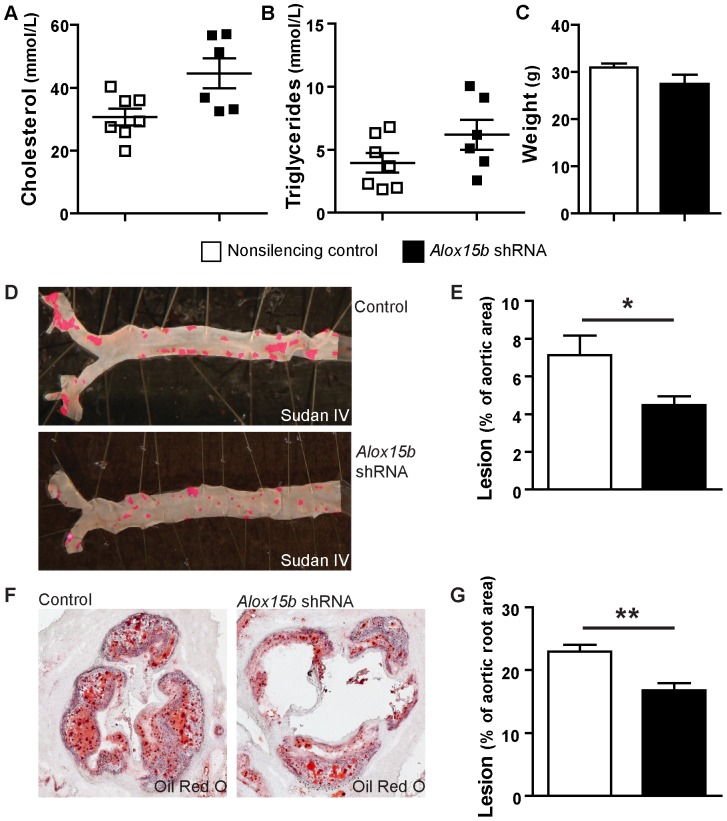
Figure 3. Decreased atherosclerotic lesions in aortas in Alox15b knockdown mice.
A) Plasma cholesterol, B) plasma triglycerides and C) body weight of Alox15b knockdown and control mice. D) Representative photographs showing aorta pinned out by en face technique and stained with Sudan IV. E) Quantification of subendothelial lipid accumulation in the aorta (n = 7 per group). F) Representative histological analysis of the aortic sinus stained with Oil Red O. G) Quantification of subendothelial lipid accumulation in the aortic root (n = 6 per group). Data are presented as mean±SEM.
Figure 4
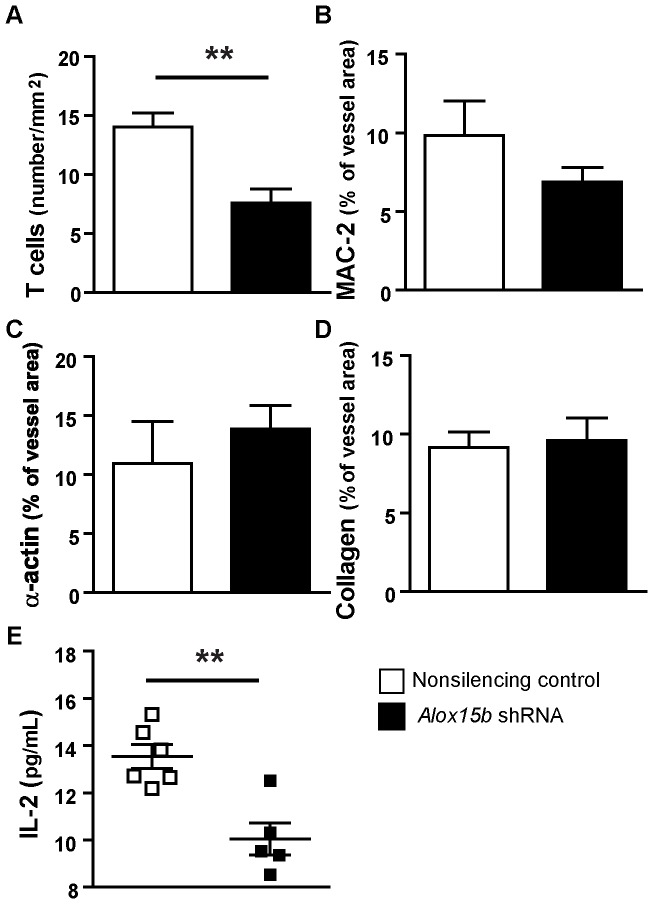
Figure 4. Analysis of plaque composition and plasma levels of IL-2.
Sections from aortic sinuses were stained with antibodies against A) CD4/CD8 (T cells), B) MAC-2 (macrophages), C) α-actin (smooth muscle cells), and D) collagen. Data are presented as mean±SEM. E) Plasma levels of soluble IL-2. (n = 6 per group).

References

    1. Paoletti R, Gotto AM Jr, Hajjar DP (2004) Inflammation in atherosclerosis and implications for therapy. Circulation 109: III20–26. - PubMed
    1. McLaren JE, Michael DR, Ashlin TG, Ramji DP (2011) Cytokines, macrophage lipid metabolism and foam cells: implications for cardiovascular disease therapy. Prog Lipid Res 50: 331–347. - PubMed
    1. Libby P, Okamoto Y, Rocha VZ, Folco E (2010) Inflammation in atherosclerosis: transition from theory to practice. Circ J 74: 213–220. - PubMed
    1. Kuhn H, O'Donnell VB (2006) Inflammation and immune regulation by 12/15-lipoxygenases. Prog Lipid Res 45: 334–356. - PubMed
    1. Hedrick CC, Kim MD, Natarajan RD, Nadler JL (1999) 12-Lipoxygenase products increase monocyte:endothelial interactions. Adv Exp Med Biol 469: 455–460. - PubMed

Publication types