. 2011:4:145-55.
doi: 10.2147/MDER.S7409. Epub 2011 Sep 1.

Development of Respimat(®) Soft Mist™ Inhaler and its clinical utility in respiratory disorders

Affiliations

Development of Respimat(®) Soft Mist™ Inhaler and its clinical utility in respiratory disorders

Richard N Dalby et al. Med Devices (Auckl). 2011.

Abstract

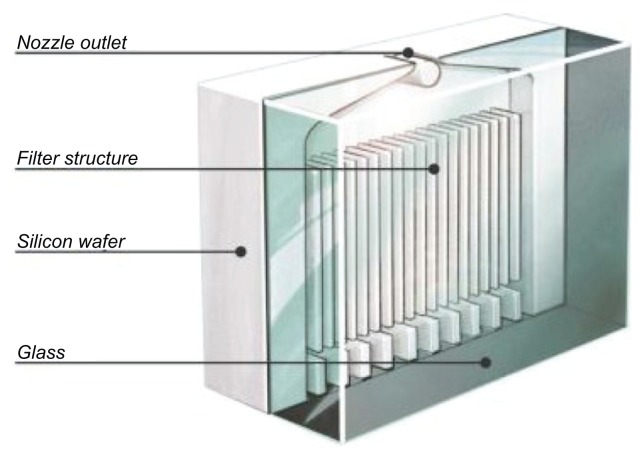
The Respimat(®) Soft Mist™ Inhaler (SMI) (Boehringer Ingelheim International GmbH, Ingelheim, Germany) was developed in response to the need for a pocket-sized device that can generate a single-breath, inhalable aerosol from a drug solution using a patient-independent, reproducible, and environmentally friendly energy supply. This paper describes the design and evolution of this innovative device from a laboratory concept model and the challenges that were overcome during its development and scaleup to mass production. A key technical breakthrough was the uniblock, a component combining filters and nozzles and made of silicon and glass, through which drug solution is forced using mechanical power. This allows two converging jets of solution to collide at a controlled angle, generating a fine aerosol of inhalable droplets. The mechanical energy comes from a spring which is tensioned by twisting the base of the device before use. Additional features of the Respimat(®) SMI include a dose indicator and a lockout mechanism to avoid the problems of tailing-off of dose size seen with pressurized metered dose inhalers. The Respimat(®) SMI aerosol cloud has a unique range of technical properties. The high fine particle fraction allied with the low velocity and long generation time of the aerosol translate into a higher fraction of the emitted dose being deposited in the lungs compared with aerosols from pressurized metered dose inhalers and dry powder inhalers. These advantages are realized in clinical trials in adults and children with obstructive lung diseases, which have shown that the efficacy and safety of a pressurized metered dose inhaler formulation of a combination bronchodilator can be matched by a Respimat(®) SMI formulation containing only one half or one quarter of the dose delivered by a pressurized metered dose inhaler. Patient satisfaction with the Respimat(®) SMI is high, and the long duration of the spray is of potential benefit to patients who have difficulty in coordinating inhalation with drug release.

Keywords: Respimat®; aerosol; deposition; drug delivery; inhaler device.


Figures
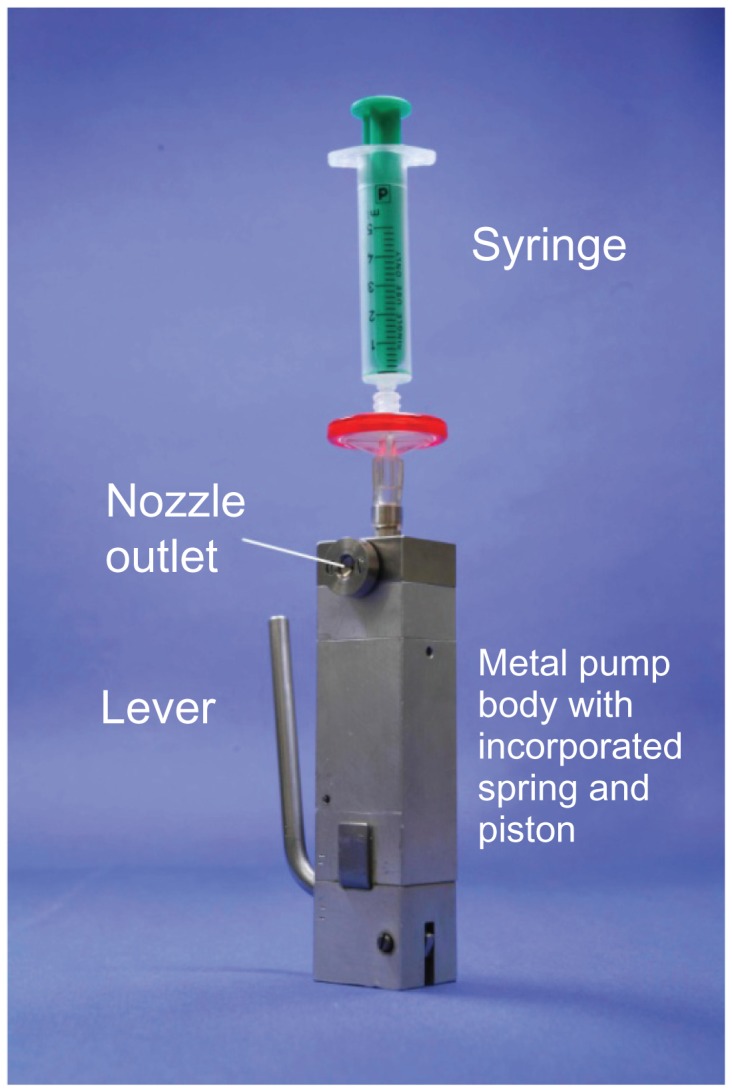
Figure 1
Figure 1
Laboratory model used to demonstrate correct functioning of the concept for Respimat® Soft Mist™ Inhaler. Note: Figure copyright © Boehringer Ingelheim Pharma GmbH Co KG. Reproduced with permission.
Figure 2
Figure 2
Schematic drawing of the uniblock. Note: Reprinted from International Journal of Pharmaceutics, Vol 283, Issue 1–2, R Dalby, M Spallek, T Voshaar, A review of the development of Respimat® Soft Mist™ Inhaler, Pages 1–9, Copyright 2004, with permission from Elsevier.
Figure 3
Figure 3
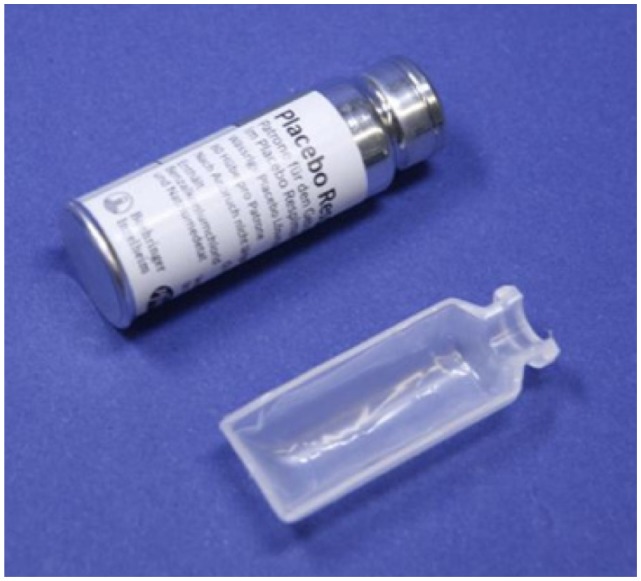
Cartridge of placebo solution and a cross-section of the double-walled bag used to contain the solution within the cartridge.
Figure 4
Figure 4
Prototype IV of the Respimat® Soft Mist™ Inhaler used in clinical trials. Note: Figure copyright © Boehringer Ingelheim Pharma GmbH Co KG. Reproduced with permission.
Figure 5
Figure 5
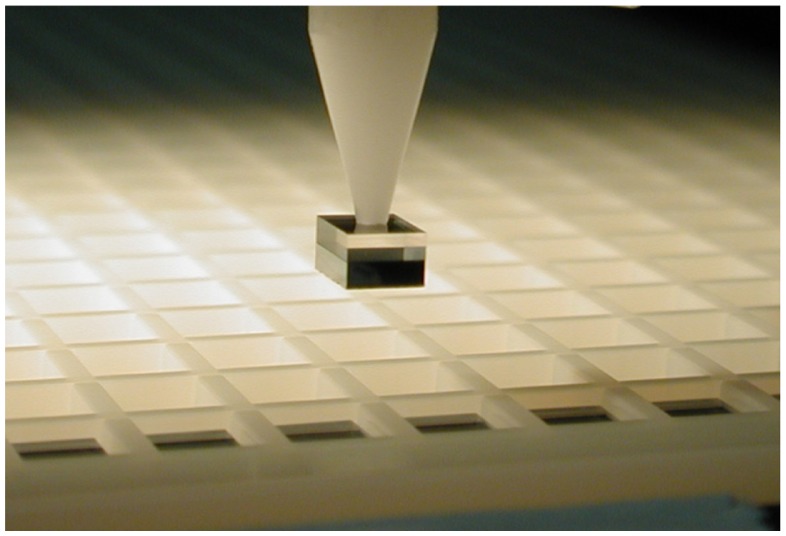
Magnified view of the “pick and place” process used to put the uniblocks into a magazine for transfer to the assembly line.
Figure 6
Figure 6
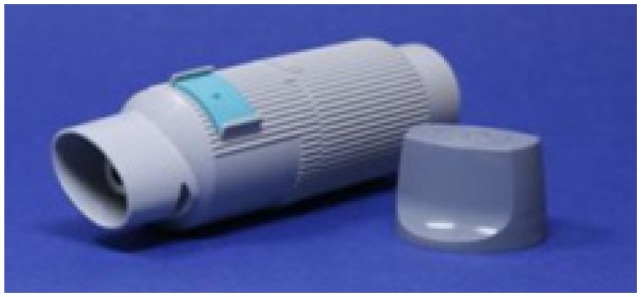
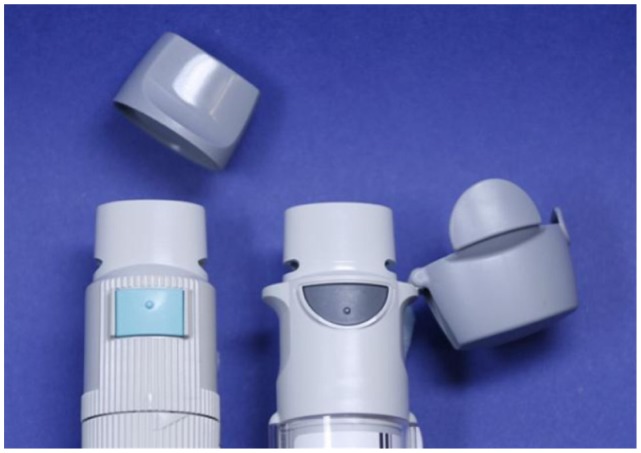
Comparison of the mouthpiece and cap of the Phase II (left) and marketing versions of the Respimat® Soft Mist™ Inhaler (right). Note: Figure copyright © Boehringer Ingelheim Pharma GmbH Co KG. Reproduced with permission.
Figure 7
Figure 7
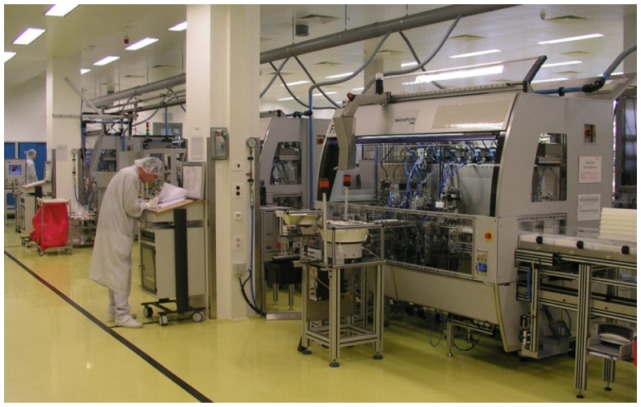
Part of the production line for the automatic assembly of the Respimat® Soft Mist™ Inhaler. Note: Figure copyright © Boehringer Ingelheim Pharma GmbH Co KG. Reproduced with permission.
Figure 8
Figure 8
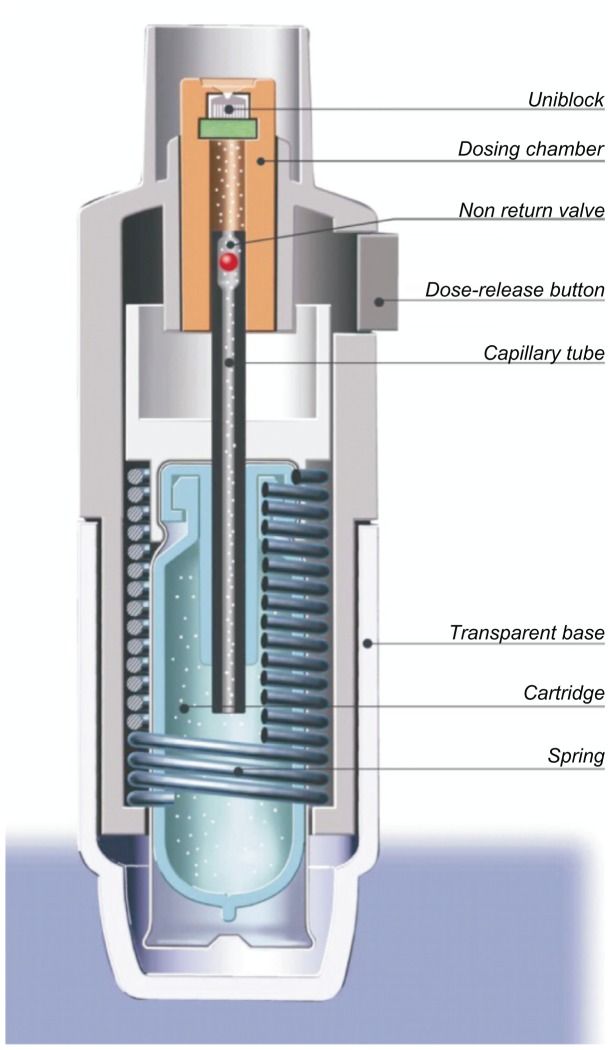
Schematic drawing of the key elements of the Respimat® Soft Mist™ Inhaler. Note: Reprinted from International Journal of Pharmaceutics, Vol 283, Issue 1–2, R Dalby, M Spallek, T Voshaar, A review of the development of Respimat® Soft Mist™ Inhaler, Pages 1–9, Copyright 2004, with permission from Elsevier.
Figure 9
Figure 9
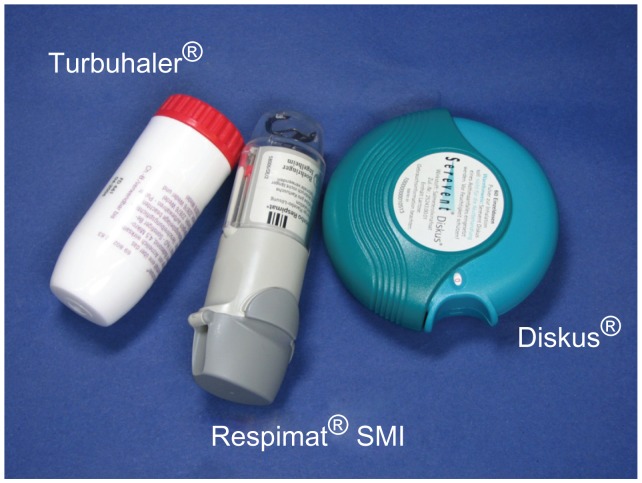
The marketed version of the Respimat® Soft Mist™ Inhaler compared with the Diskus® and Turbuhaler®. Abbreviation: SMI, Soft Mist™ Inhaler. Note: Figure copyright © Boehringer Ingelheim Pharma GmbH Co KG. Reproduced with permission.
Figure 10
Figure 10
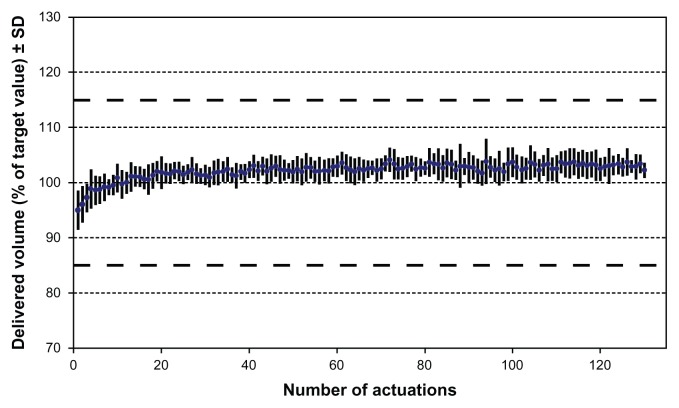
Spray volume uniformity for an aqueous solution over 120 actuations delivered via the Respimat® Soft Mist™ Inhaler. Notes: Data shown are mean of ten devices from three batches; range of target volume/weight according to Food and Drug administration guidance: nasal spray and inhalation solution. Reprinted from International Journal of Pharmaceutics, Vol 283, Issue 1–2, R Dalby, M Spallek, T Voshaar, A review of the development of Respimat® Soft Mist™ Inhaler, Pages 1–9, Copyright 2004, with permission from Elsevier. Abbreviation: SD, standard deviation.
Figure 11
Figure 11
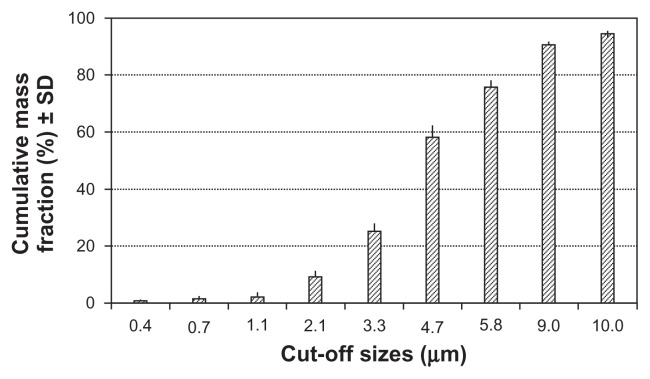
Typical aerodynamic particle size distribution for the aerosol generated by the Respimat® Soft Mist™ Inhaler, using an aqueous drug solution and an Andersen Cascade Impactor (Lab Automate Technologies, Milburn, NJ), at relative humidity of >90%. Data are mean cumulative mass fractions (%) and standard deviation. Note: Reprinted from International Journal of Pharmaceutics, Vol 283, Issue 1–2, R Dalby, M Spallek, T Voshaar, A review of the development of Respimat® Soft Mist™ Inhaler, Pages 1–9, Copyright 2004, with permission from Elsevier.
Figure 12
Figure 12
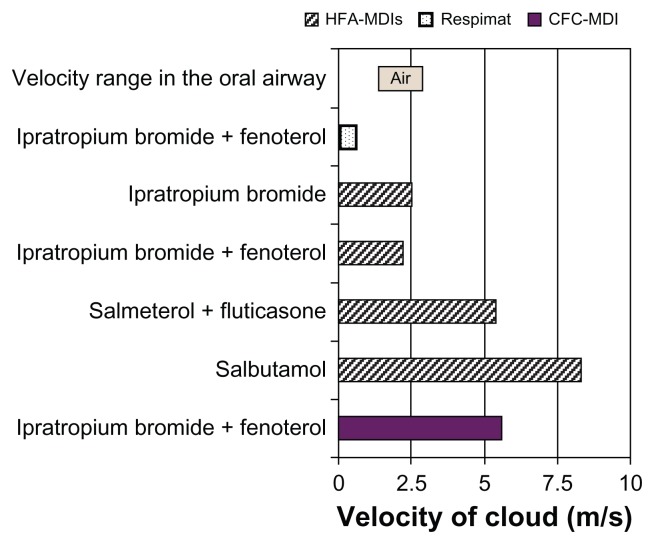
Mean aerosol spray velocities of selected respiratory medications delivered via chlorofluorocarbon-pressurized metered dose inhalers, hydrofluoroalkane-pressurized metered dose inhalers, or the Respimat® Soft Mist™ Inhaler, and velocity range in the oral airway. Abbreviations: CFC, chlorofluorocarbon; HFA, hydrofluoroalkane; MDI, metered dose inhaler.
Figure 13
Figure 13
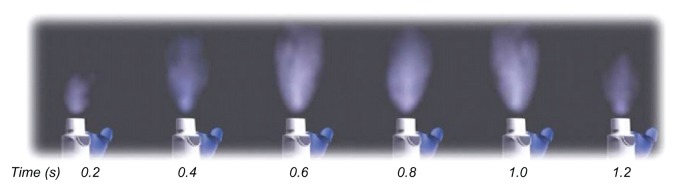
Photographs, taken at intervals of 0.2 sec, showing generation of mist from the Respimat® Soft Mist™ Inhaler. Note: Reprinted from International Journal of Pharmaceutics, Vol 283, Issue 1–2, R Dalby, M Spallek, T Voshaar, A review of the development of Respimat® Soft Mist™ Inhaler, Pages 1–9, Copyright 2004, with permission from Elsevier.
Figure 14
Figure 14
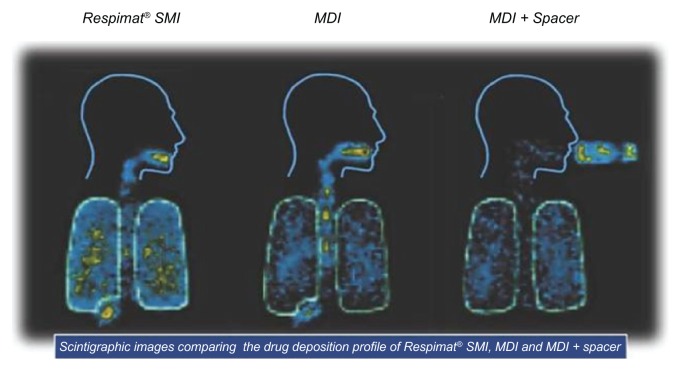
Scintigraphic scans from one individual showing the deposition of radiolabeled (99mTc) aerosol in the lungs immediately after administration of a single dose of 250 μg flunisolide delivered via the Respimat® SMI, pressurized metered dose inhaler, or pressurized metered dose inhaler plus spacer, on each of three study days. Abbreviations: SMI, Soft Mist™ Inhaler; MDI, pressurized metered dose inhaler. Note: Reprinted from International Journal of Pharmaceutics, Vol 283, Issue 1–2, R Dalby, M Spallek, T Voshaar, A review of the development of Respimat® Soft Mist™ Inhaler, Pages 1–9, Copyright 2004, with permission from Elsevier.
Figure 15
Figure 15
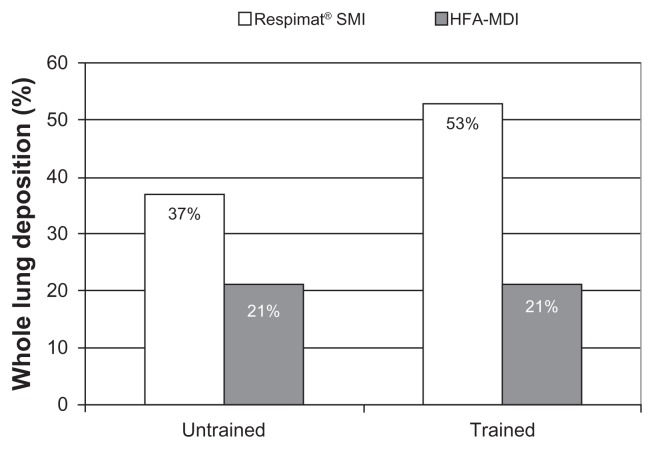
Lung deposition from the Respimat® SMI and hydrofluoroalkane-pressurized metered dose inhaler in 13 patients with chronic obstructive pulmonary disease before and after inhaler training. Data are mean proportion (as %) of the delivered dose deposited in the lung. Abbreviations: HFA, hydrofluoroalkane; SMI, Soft Mist™ Inhaler; MDI, pressurized metered dose inhaler.
Figure 16
Figure 16
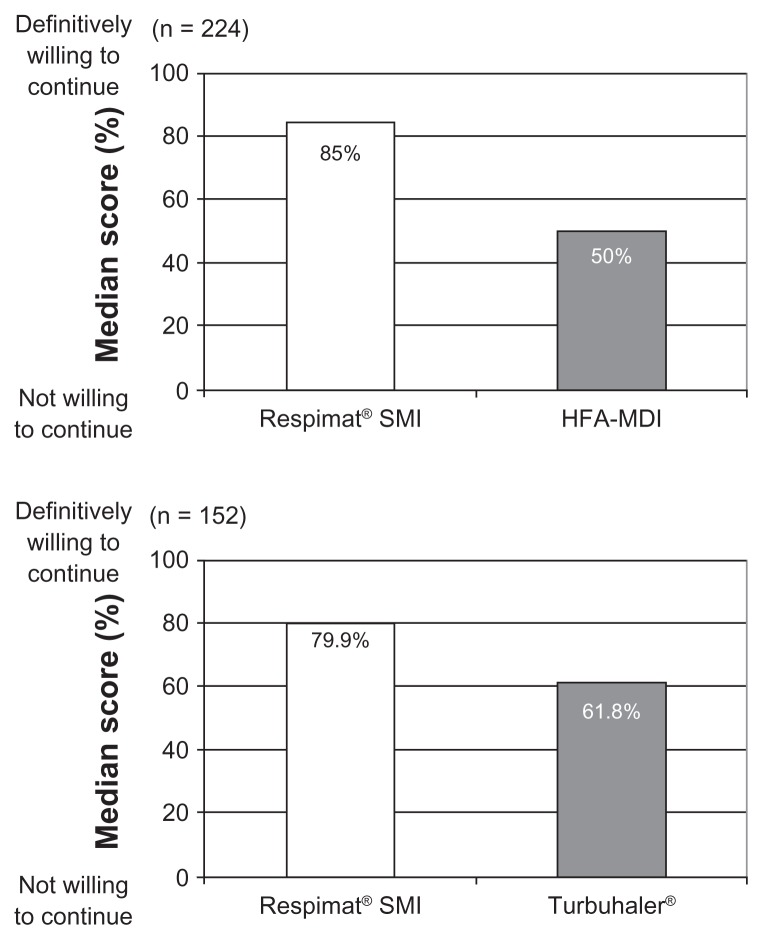
Willingness-to-continue scores in patients with asthma or chronic obstructive pulmonary disease (or both) who inhaled drug from the Respimat® SMI and either the hydrofluoroalkane-pressurized metered dose inhaler or Turbuhaler® in two separate trials., Abbreviations: HFA, hydrofluoroalkane; SMI, Soft Mist™ Inhaler; MDI, pressurized metered dose inhaler.

References

    1. Smith G, Hiller C, Mazumder R, Bone R. Aerodynamic size distribution of cromolyn sodium at ambient and airway humidity. Am Rev Respir Dis. 1980;121:513–517. - PubMed
    1. Köhler D, Fleischer W, Matthys H. New method for easy labeling of beta-2-agonists in the metered dose inhaler with technetium 99 m. Respiration. 1988;53:65–73. - PubMed
    1. Newman SP, Pavia D, Clarke SW. How should a pressurized beta-adrenergic bronchodilator be inhaled? Eur J Respir Dis. 1981;62:3–21. - PubMed
    1. Crompton EK. Problems patients have using pressurized aerosol inhalers. Eur J Respir Dis Suppl. 1982;119:101–104. - PubMed
    1. Pedersen S, Ostergaard PA. Nasal inhalation as a cause of inefficient pulmonal aerosol inhalation technique in children. Allergy. 1983;38:191–194. - PubMed