


A novel nonsense mutation of the GPR143 gene identified in a Chinese pedigree with ocular albinism
- PMID: 22916221
- PMCID: PMC3423421
- DOI: 10.1371/journal.pone.0043177
A novel nonsense mutation of the GPR143 gene identified in a Chinese pedigree with ocular albinism
Abstract
Background: The purpose of this study was to elucidate the molecular basis of ocular albinism type I in a Chinese pedigree.
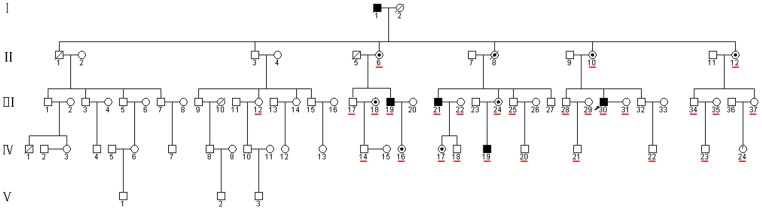
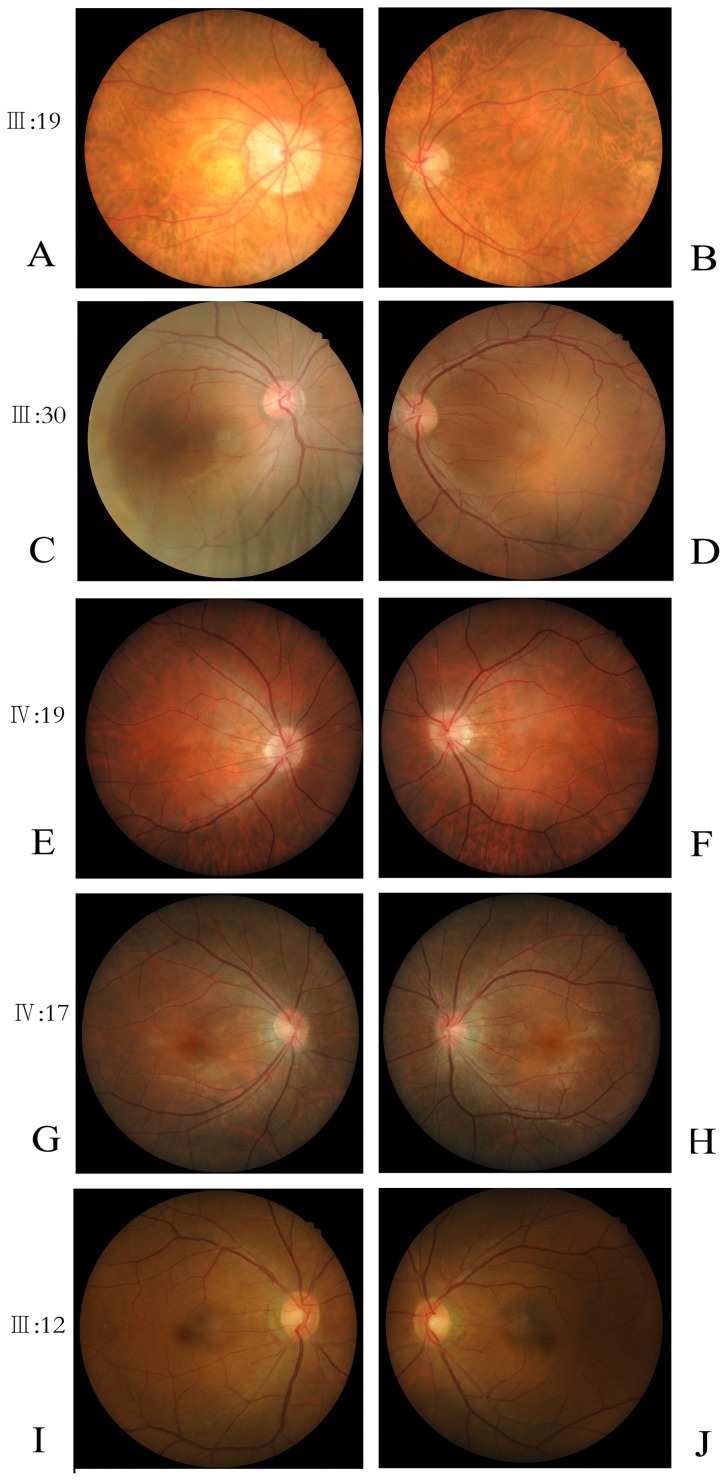
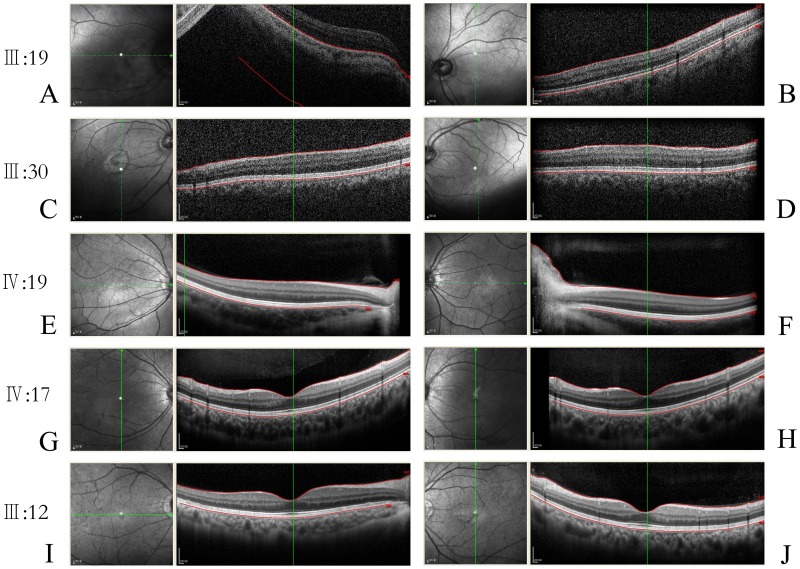
Methodology/principal findings: Complete ophthalmologic examinations were performed on 4 patients, 7 carriers and 17 unaffected individuals in this five-generation family. All coding exons of four-point-one (4.1), ezrin, radixin, moesin (FERM) domain-containing 7 (FRMD7) and G protein-coupled receptor 143 (GPR143) genes were amplified by polymerase chain reaction (PCR), sequenced and compared with a reference database. Ocular albinism and nystagmus were found in all patients of this family. Macular hypoplasia was present in the patients including the proband. A novel nonsense hemizygous mutation c.807T>A in the GPR143 gene was identified in four patients and the heterozygous mutation was found in seven asymptomatic individuals. This mutation is a substitution of tyrosine for adenine which leads to a premature stop codon at position 269 (p.Y269X) of GPR143.
Conclusions/significance: This is the first report that p.Y269X mutation of GPR143 gene is responsible for the pathogenesis of familial ocular albinism. These results expand the mutation spectrum of GPR143, and demonstrate the clinical characteristics of ocular albinism type I in Chinese population.
Conflict of interest statement
Figures
References
-
- Bassi MT, Schiaffino MV, Renieri A, De Nigris F, Galli L, et al. (1995) Cloning of the gene for ocular albinism type 1 from the distal short arm of the X chromosome. Nat Genet 10: 13–19. - PubMed
-
- Creel D, O’Donnell FE Jr, Witkop CJ Jr (1978) Visual system anomalies in human ocular albinos. Science 201: 931–933. - PubMed
Publication types
MeSH terms
Substances
LinkOut - more resources
Full Text Sources
Research Materials
