


Effectiveness and safety of inhaled treprostinil for the treatment of pulmonary arterial hypertension in children
- PMID: 22917554
- PMCID: PMC3508003
- DOI: 10.1016/j.amjcard.2012.07.037
Effectiveness and safety of inhaled treprostinil for the treatment of pulmonary arterial hypertension in children
Abstract
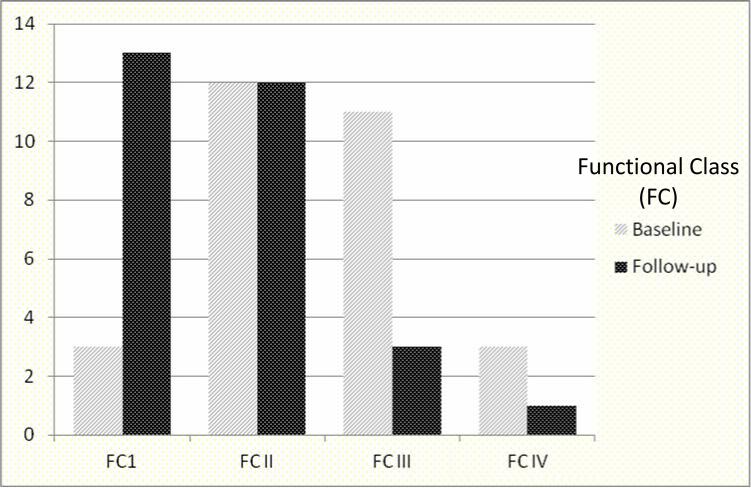
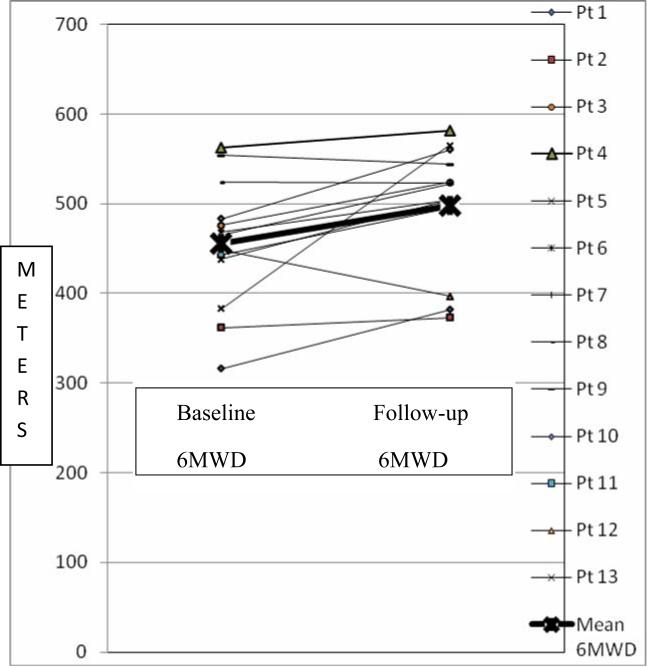
The introduction of prostanoid therapy has revolutionized the treatment of pulmonary arterial hypertension (PAH). However, continuous intravenous prostacyclin infusion poses significant risks and challenges, particularly in children. Inhaled treprostinil has been shown to be safe and efficacious in adults. This study describes the safety and efficacy of inhaled treprostinil in children with PAH. A retrospective analysis of 29 children treated with inhaled treprostinil for ≥6 weeks was performed. Effects of inhaled treprostinil on exercise capacity, functional class, and echocardiographic and hemodynamic data were evaluated. Adverse events were documented. Patients received 3 to 9 breaths (6 μg/breath) of inhaled treprostinil 4 times/day. All were receiving background PAH therapy; 12 had previously received parenteral prostanoid. Inhaled treprostinil was discontinued in 4 patients because of symptoms including cough and bronchospasm (n = 3) and progression of PAH (n = 1). Mild side effects including cough (n = 9) and sore throat (n = 6) did not require discontinuation of therapy. World Health Organization functional class improved in 19 and was unchanged in 10; exercise capacity significantly improved with the 6-minute walk distance, improving on follow-up from 455.7 ± 71.5 to 498 ± 70 m (p = 0.01) and peak oxygen consumption increasing from 25.5 ± 10.2 to 27.4 ± 10 (p = 0.04). In conclusion, inhaled treprostinil was associated with improvement in exercise capacity and World Health Organization functional class when added to background targeted PAH therapy in children and had an acceptable safety profile. Based on these early data, further study of inhaled treprostinil appears warranted in pediatric patients with PAH.
Copyright © 2012 Elsevier Inc. All rights reserved.
Figures
References
-
- Barst RJ, Rubin LJ, McGoon MD, Caldwell EJ, Long WA, Levy PS. Survival in primary pulmonary hypertension with long-term continuous intravenous prostacyclin. Ann Intern Med. 1994;121:409–415. - PubMed
-
- D'Alonzo GE, Barst RJ, Ayres SM, Bergofsky EH, Brundage BH, Detre KM, Fishman AP, Goldring RM, Groves BM, Kernis JT, Levy PS, Pietra GG, Reid LM, Reeves JT, Rich S, Vreim CE, Williams GW, Wu M. Survival in patients with primary pulmonary hypertension. Results from a national prospective registry. Ann Intern Med. 1991;115:343–349. - PubMed
-
- Barst RJ, McGoon MD, Elliott CG, Foreman AJ, Miller DP, Ivy DD. Survival in childhood pulmonary arterial hypertension: insights from the registry to evaluate early and long-term pulmonary arterial hypertension disease management. Circulation. 2012;125:113–122. - PubMed
-
- Delcroix M, Spaas K, Quarck R. Long-term outcome in pulmonary arterial hypertension: a plea for earlier parenteral prostacyclin therapy. Eur Respir Rev. 2009;18:253–259. - PubMed
Publication types
MeSH terms
Substances
Grants and funding
LinkOut - more resources
Full Text Sources
Medical
