


Lactic acid bacteria contribution to gut microbiota complexity: lights and shadows
- PMID: 22919677
- PMCID: PMC3417654
- DOI: 10.3389/fcimb.2012.00086
Lactic acid bacteria contribution to gut microbiota complexity: lights and shadows
Abstract
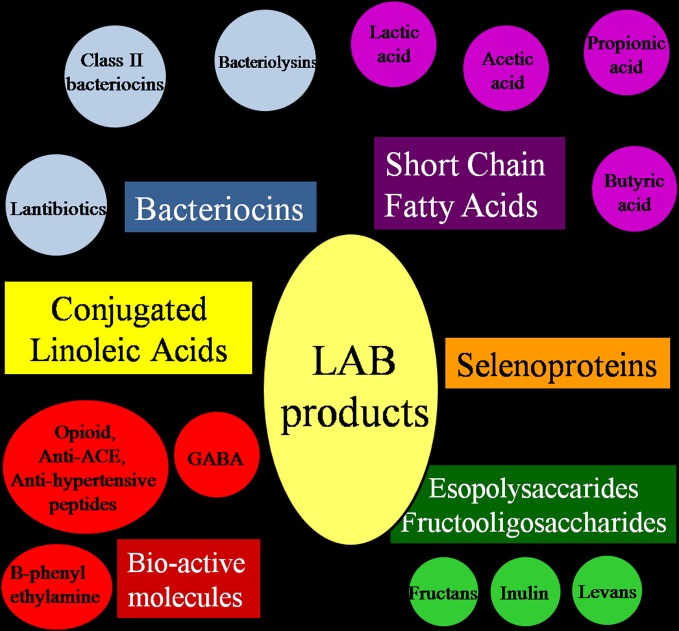
Lactic Acid Bacteria (LAB) are ancient organisms that cannot biosynthesize functional cytochromes, and cannot get ATP from respiration. Besides sugar fermentation, they evolved electrogenic decarboxylations and ATP-forming deiminations. The right balance between sugar fermentation and decarboxylation/deimination ensures buffered environments thus enabling LAB to survive in human gastric trait and colonize gut. A complex molecular cross-talk between LAB and host exists. LAB moonlight proteins are made in response to gut stimuli and promote bacterial adhesion to mucosa and stimulate immune cells. Similarly, when LAB are present, human enterocytes activate specific gene expression of specific genes only. Furthermore, LAB antagonistic relationships with other microorganisms constitute the basis for their anti-infective role. Histamine and tyramine are LAB bioactive catabolites that act on the CNS, causing hypertension and allergies. Nevertheless, some LAB biosynthesize both gamma-amino-butyrate (GABA), that has relaxing effect on gut smooth muscles, and beta-phenylethylamine, that controls satiety and mood. Since LAB have reduced amino acid biosynthetic abilities, they developed a sophisticated proteolytic system, that is also involved in antihypertensive and opiod peptide generation from milk proteins. Short-chain fatty acids are glycolytic and phosphoketolase end-products, regulating epithelial cell proliferation and differentiation. Nevertheless, they constitute a supplementary energy source for the host, causing weight gain. Human metabolism can also be affected by anabolic LAB products such as conjugated linoleic acids (CLA). Some CLA isomers reduce cancer cell viability and ameliorate insulin resistance, while others lower the HDL/LDL ratio and modify eicosanoid production, with detrimental health effects. A further appreciated LAB feature is the ability to fix selenium into seleno-cysteine. Thus, opening interesting perspectives for their utilization as antioxidant nutraceutical vectors.
Keywords: CLA; bacteriocins; bioactive molecules; diet; exopolysaccharides; proteolysis; selenium; short chain fatty acids.
Figures
References
-
- Aleljung P., Shen W., Rozalska B., Hellman U., Ljungh A., Wadström T. (1994). Purification of collagen-binding proteins of Lactobacillus reuteri NCIB 1. Curr. Microbiol. 28, 231–236 - PubMed
Publication types
MeSH terms
LinkOut - more resources
Full Text Sources
Other Literature Sources
Miscellaneous
