Review
. 2012 Jul 1;6(4):786-96.
doi: 10.1177/193229681200600408.

A review of a family of ultra-rapid-acting insulins: formulation development

Affiliations
Review

A review of a family of ultra-rapid-acting insulins: formulation development

Alan Krasner et al. J Diabetes Sci Technol. .

Abstract

This review summarizes the clinical development of a family of ultra-rapid-acting recombinant human insulin formulations. These formulations use ethylenediaminetetraacetic acid (EDTA) to chelate zinc and thereby destabilize insulin hexamers. In addition, insulin monomer surface charges are chemically masked with citrate to prevent reaggregation. The first phase 1 trials were performed using BIOD-090, an acidic 25 unit U/ml insulin formulation, which contained disodium-EDTA (NaEDTA). When compared with regular human insulin (RHI) and/or insulin lispro in multiple phase 1 studies, BIOD-090 consistently showed more rapid absorption and/or onset of action. A standard meal challenge study also demonstrated improved postprandial glucose profiles associated with BIOD-090. However, increased patient exposure in larger phase 3 trials showed that this formulation was associated with an increased incidence of local injection site reactions, most commonly pain. A next generation formulation, BIOD-100, contained the same excipients as a standard insulin concentration of 100 U/ml. BIOD-100 maintained an ultra-rapid action profile and was associated with modest but significantly improved toleration when compared with BIOD-090. In order to further improve toleration, the hypothesis that NaEDTA contributed to discomfort by chelating endogenous calcium was tested by either substituting calcium-EDTA for NaEDTA or by adding calcium chloride to the NaEDTA formulation. These calcium formulations essentially eliminated the excess discomfort associated with BIOD-090 but were associated with less optimal pharmacokinetic profiles in humans. Recent efforts have succeeded in developing ultra-rapid-acting human insulin formulations with acceptable injection site toleration by optimizing concentrations of calcium (BIOD-125) and with the use of magnesium sulfate to mitigate discomfort (BIOD-123). Similar formulation technology has also been shown to accelerate absorption of insulin analogs in animal models.


Figures

Figure 1
Figure 1
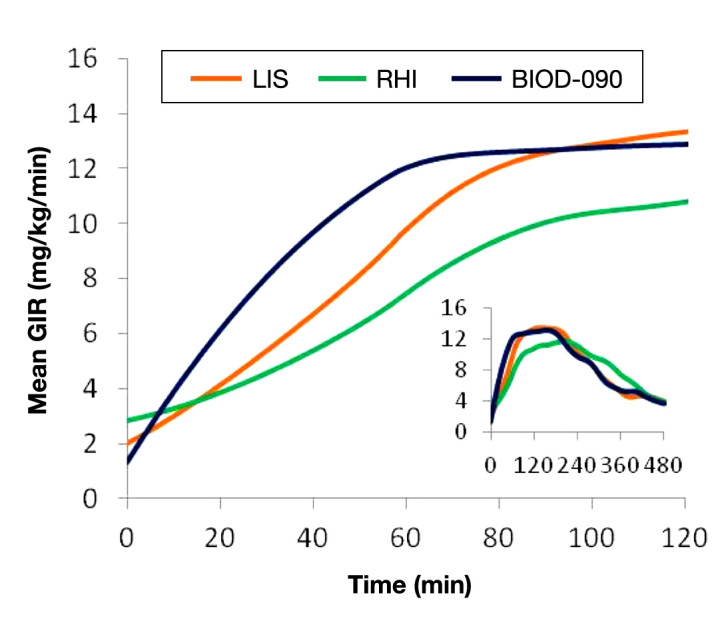
Mean PD curves for 12 U SC doses of LIS, RHI, and BIOD-090 in 10 healthy volunteers. The large figure shows the mean GIRs for the first 120 min after each injection. The inset shows the mean GIR curves for the entire 480-min observation period after each injection.
Figure 2
Figure 2
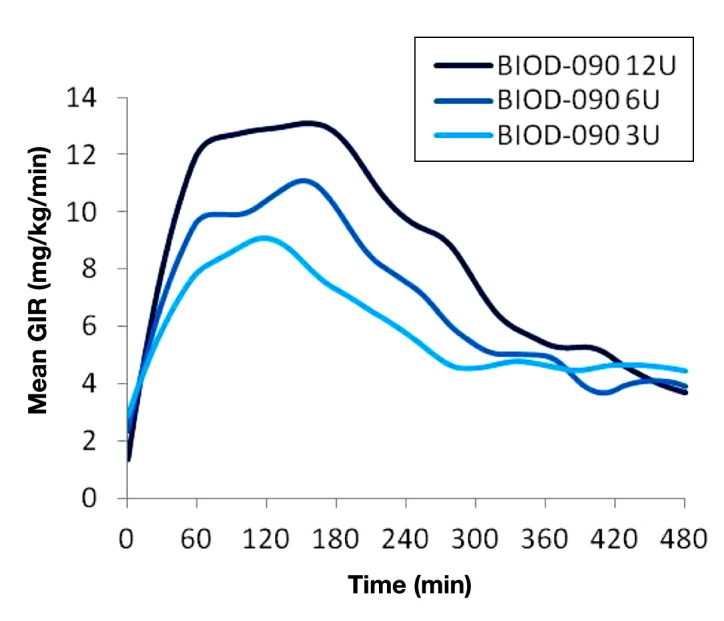
Mean PD responses to 3, 6, and 12 U SC injections of BIOD-090 in 10 healthy volunteers.
Figure 3
Figure 3
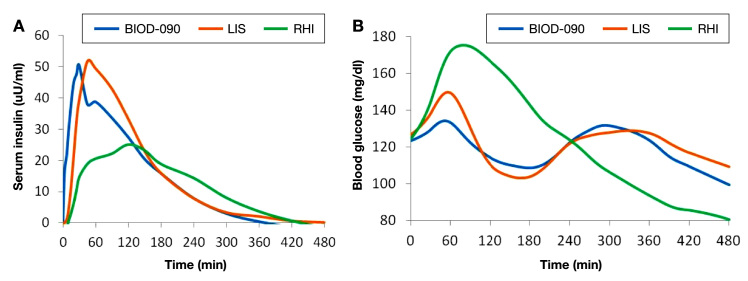
Mean plasma insulin profiles (A) with baseline correction (mean of the last three samples prior to injection), and mean blood glucose profiles (B) measured by the Biostator, obtained after SC injection of RHI, LIS, and BIOD-090 in 18 patients with type 1 diabetes.
Figure 4
Figure 4
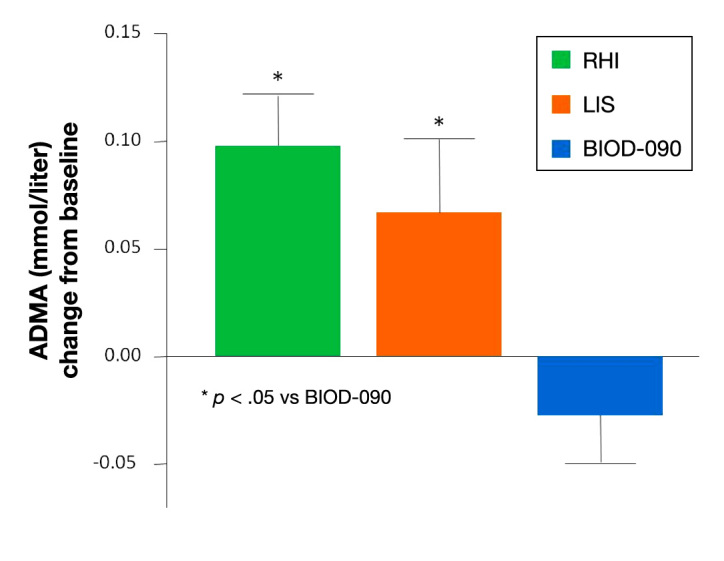
Peak postprandial change in asymmetric dimethylarginine (ADMA) levels measured in 14 patients with type 2 diabetes given each insulin immediately before a standardized meal.
Figure 5
Figure 5
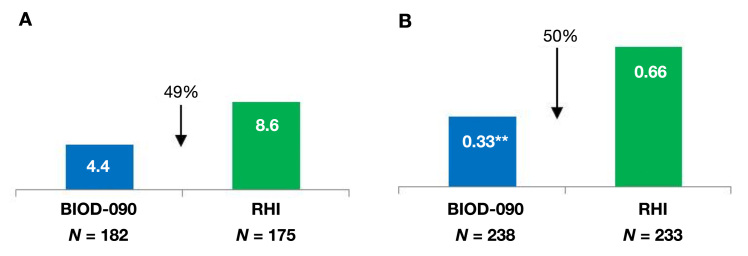
(A) Proportion of patients with at least one severe hypoglycemic event in phase 3 study in patients with type 1 diabetes, p = .1324. Severe hypoglycemia was defined as requiring the assistance of a third party. (B) Median hypoglycemic event rates in phase 3 study in patients with type 2 diabetes. Double asterisks indicate p = .018. Hypoglycemia was defined as home glucose readings <70 mg/dl or symptomatic episodes resolving with treatment.
Figure 6
Figure 6
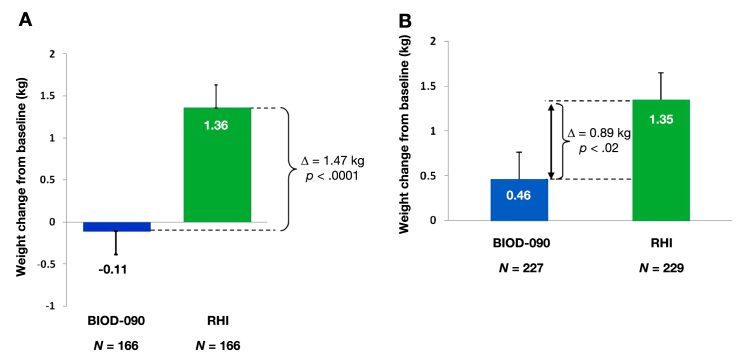
Weight change in phase 3 study of (A) type 1 diabetes and (B) type 2 diabetes.
Figure 7
Figure 7
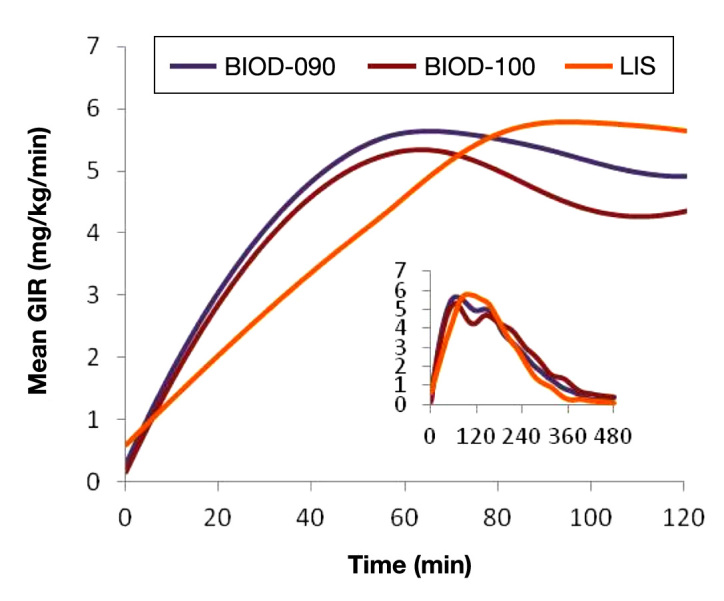
Mean PD curves for 12 U SC doses of BIOD-090, BIOD-100, and LIS in 40 patients with type 1 diabetes. The large figure shows the mean GIRs for the first 120 min after each injection. The inset shows the mean GIR curves for the entire 480-min observation period after each injection.
Figure 8
Figure 8
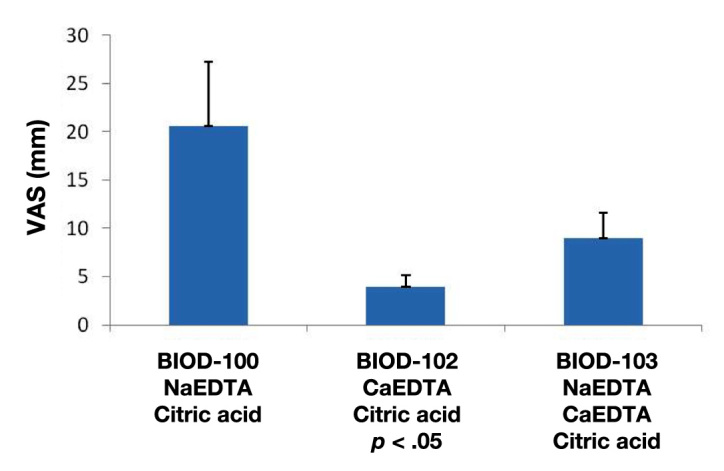
Toleration as measured on a 100 mm VAS from 0 (no discomfort) to 100 (worst possible discomfort) (mm). Mean ± standard error of the mean.
Figure 9
Figure 9
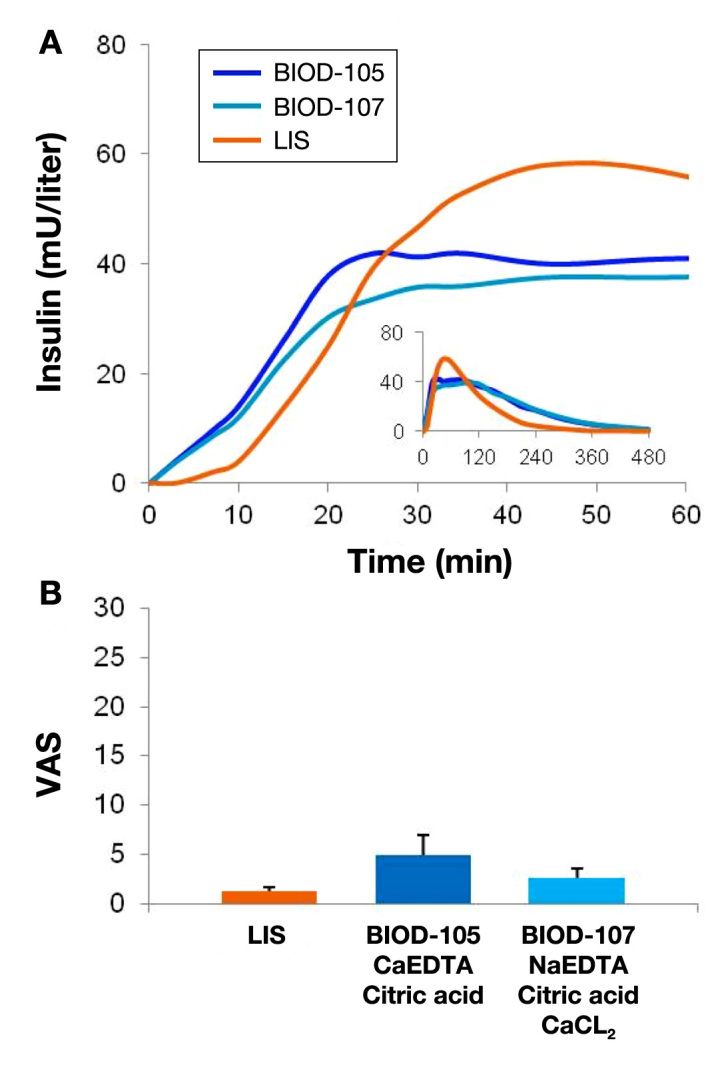
(A) Mean PK curves associated with 0.15 U/kg SC doses of BIOD-105, BIOD-107, and LIS in 18 patients with type 1 diabetes. (B) Toleration as measured on a 100 mm VAS from 0 (no discomfort) to 100 (worst possible discomfort) (mm). Mean ± SEM.
Figure 10
Figure 10
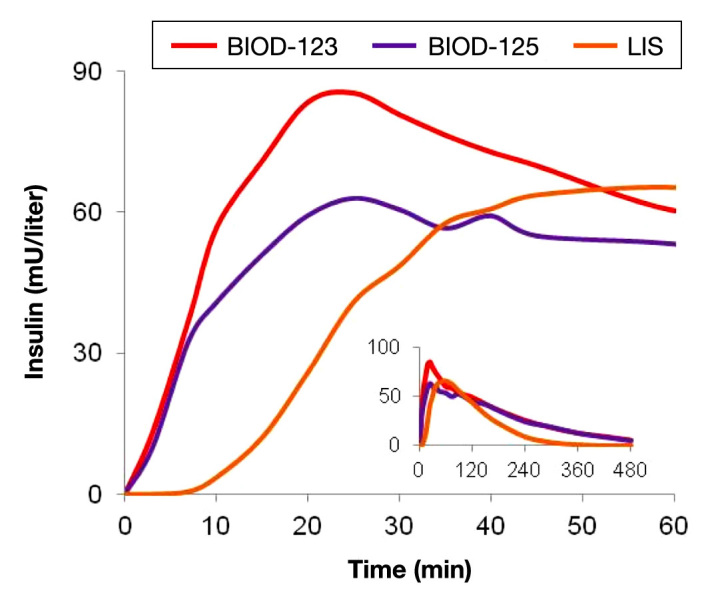
Pharmacokinetic profile of BIOD-123 and BIOD-125 vs LIS following SC administration to 12 patients with type 1 diabetes. Dose 0.20 U/kg.
Figure 11
Figure 11
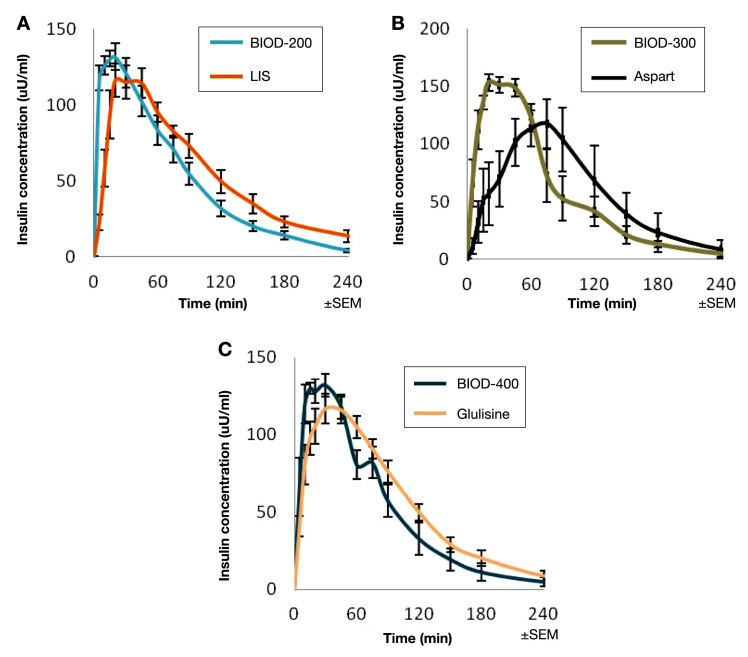
Mean PK profiles of ultra-rapid analog insulin formulations following SC administration to diabetic miniature swine (dose = 0.25 U/kg). (A) BIOD-200 (n = 10) vs lispro (n = 8), (B) BIOD-300 (n = 4) vs aspart (n = 4), and (C) BIOD-400 (n = 5) vs glulisine (n = 11).

References

    1. Brange J, Langkjoer L. Insulin structure and stability. Pharm Biotechnol. 1993;5:315–350. - PubMed
    1. Pohl R, Hauser R, Li M, DeSouza E, Feldstein R, Seibert R, Ozhan K, Kashyap N, Steiner S. Ultra-rapid absorption of recombinant human insulin induced by zinc chelation and surface charge masking. J Diabetes Sci Technol. 2012;6(4):755–763. - PMC - PubMed
    1. Steiner S, Hompesch M, Pohl R, Simms P, Flacke F, Mohr T, Pfützner A, Heinemann L. A novel insulin formulation with a more rapid onset of action. Diabetologia. 2008;51(9):1602–1606. Epub 2008 Jul 19. - PMC - PubMed
    1. Heinemann L, Hompesch M, Flacke F, Simms P, Pohl R, Albus K, Pfützner A, Steiner S. Reduction of postprandial glycemic excursions in patients with type 1 diabetes: a novel human insulin formulation versus a rapid-acting insulin analog and regular human insulin. J Diabetes Sci Technol. 2011;5(3):681–686. - PMC - PubMed
    1. Hompesch M, McManus L, Pohl R, Simms P, Pfützner A, Bülow E, Flacke F, Heinemann L, Steiner SS. Intra-individual variability of the metabolic effect of a novel rapid-acting insulin (VIAject) in comparison to regular human insulin. J Diabetes Sci Technol. 2008;2(4):568–571. - PMC - PubMed

MeSH terms