


Tea consumption and risk of bladder cancer: a meta-analysis
- PMID: 22920932
- PMCID: PMC3499443
- DOI: 10.1186/1477-7819-10-172
Tea consumption and risk of bladder cancer: a meta-analysis
Abstract
Background: Tea consumption has been reported to be associated with an decreased risk of several types of cancers. However, the results based on epidemiological studies on the association of tea consumption with bladder cancer were inconsistent. This meta-analysis was undertaken to evaluate the relationship between tea consumption and bladder cancer risk.
Methods: Eligible studies were retrieved via both computer searches and review of references. The summary relative risk (RR) with 95% confidence interval (CI) was calculated.
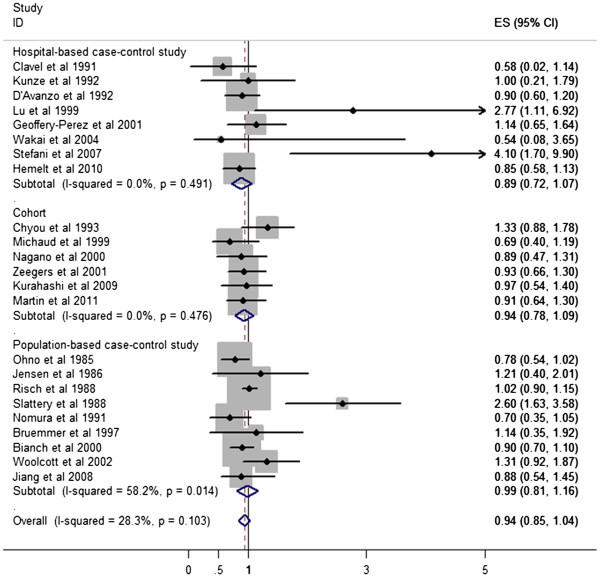
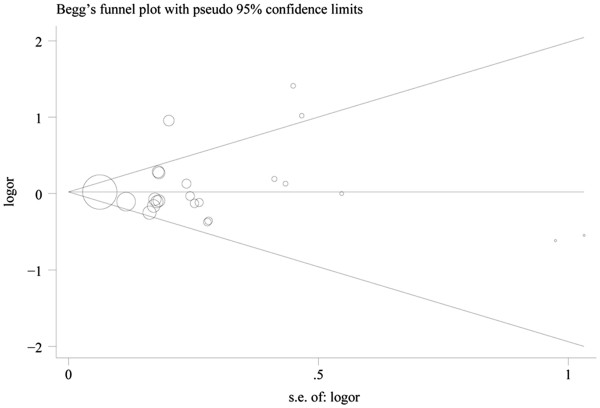
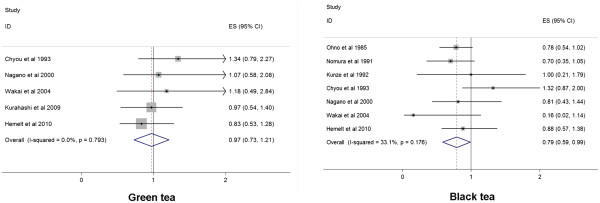
Results: Twenty three studies met the inclusion criteria of the meta-analysis. No association with bladder cancer was observed in either overall tea consumption group (OR =0.94, 95% CI 0.85-1.04) or subgroups stratified by sex, study design, geographical region or tea types.
Conclusions: Our findings did not support that tea consumption was related to the decreased risk of bladder cancer.
Figures
References
Publication types
MeSH terms
Substances
LinkOut - more resources
Full Text Sources
Medical
Miscellaneous
