


Predicting adolescent asthma research participation decisions from a structural equations model of protocol factors
- PMID: 22921135
- PMCID: PMC3628807
- DOI: 10.1016/j.jadohealth.2011.12.015
Predicting adolescent asthma research participation decisions from a structural equations model of protocol factors
Abstract
Purpose: To examine similarities and differences in the process that parents and adolescents use to make decisions concerning participation in an asthma clinical trial. We hypothesized that a single conceptual model, tested through structural equations modeling, could explain adolescent assent and parent consent for adolescent research participation.
Methods: One hundred nine adolescents enrolled with at least one parent and received an asthma evaluation from a pediatric asthma specialist and then evaluated a hypothetical asthma research protocol. Family members independently evaluated the protocol and made research participation decisions.
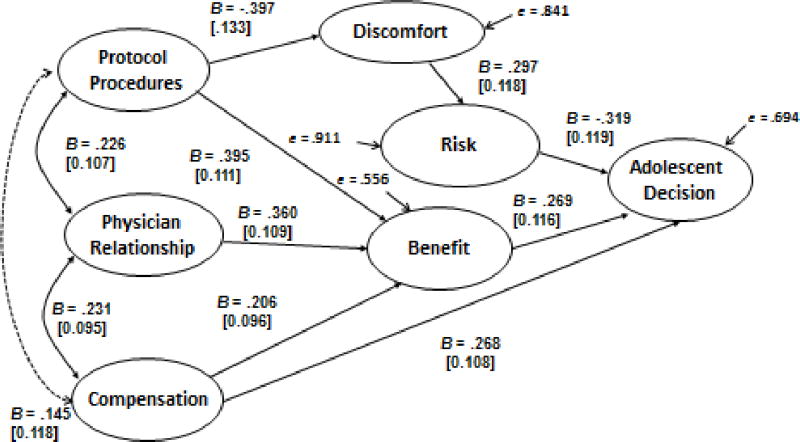
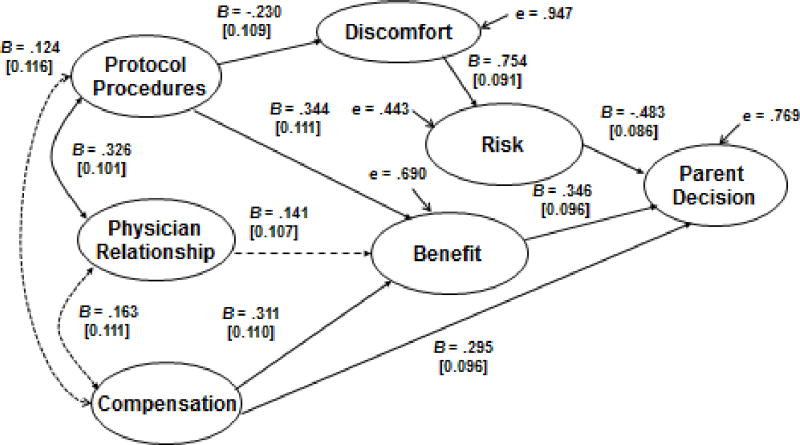
Results: Perceived risk, benefit, and compensation were direct predictors of participation decisions for parents and adolescents. Adolescents perceived direct study benefit from the relationship with the physician, however parents did not. Parent decisions were most strongly associated with perceived risk, and parents associated discomfort with risk more strongly than did adolescents. Protocol procedures contributed to perceptions of benefit and discomfort for parents and adolescents.
Conclusions: Parent and adolescent research participation decisions are influenced by protocol variables in similar ways, although there are differences that account for disagreements within families. Findings may help investigators develop protocols that appeal to parents and adolescents and highlight issues of particular importance to address during the process of informed consent.
Copyright © 2012 Society for Adolescent Health and Medicine. Published by Elsevier Inc. All rights reserved.
Conflict of interest statement
The authors have no conflicts of interest that could impact the conduct or presentation of this study.
Figures
References
-
- Miller VA, Drotar D, Kodish E. Children’s competence for assent and consent: a review of empirical findings. Ethics Behav. 2004;14(3):255–95. - PubMed
-
- Rothmier JD, Lasley MV, Shapiro GG. Factors influencing parental consent in pediatric clinical research. Pediatrics. 2003 May;111(5 Pt 1):1037–41. - PubMed
-
- Caldwell PH, Murphy SB, Butow PN, Craig JC. Clinical trials in children. Lancet. 2004 Aug 28;364(9436):803–11. - PubMed
-
- Reynolds WW, Nelson RM. Risk perception and decision processes underlying informed consent to research participation. Soc Sci Med. 2007 Nov;65(10):2105–15. - PubMed
