


Type I interferon induces necroptosis in macrophages during infection with Salmonella enterica serovar Typhimurium
- PMID: 22922364
- PMCID: PMC4005791
- DOI: 10.1038/ni.2397
Type I interferon induces necroptosis in macrophages during infection with Salmonella enterica serovar Typhimurium
Abstract
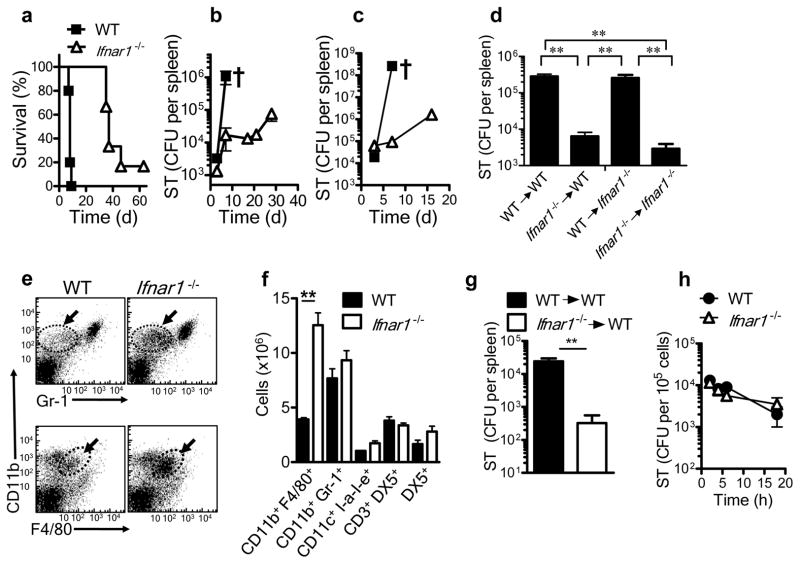
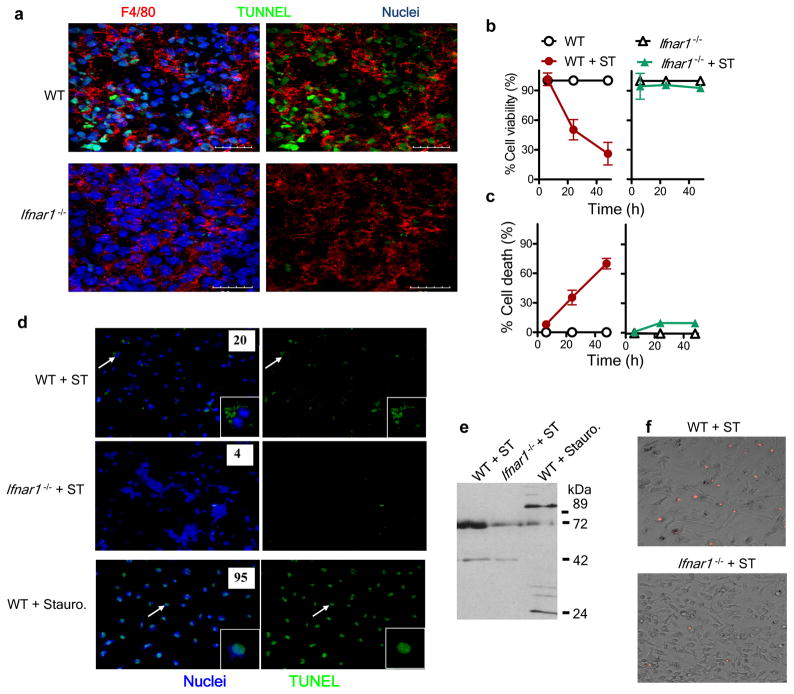
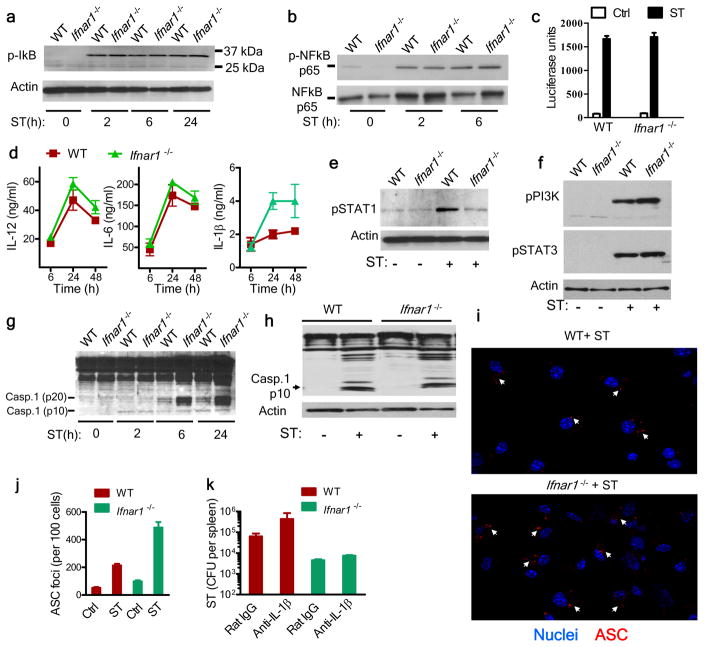
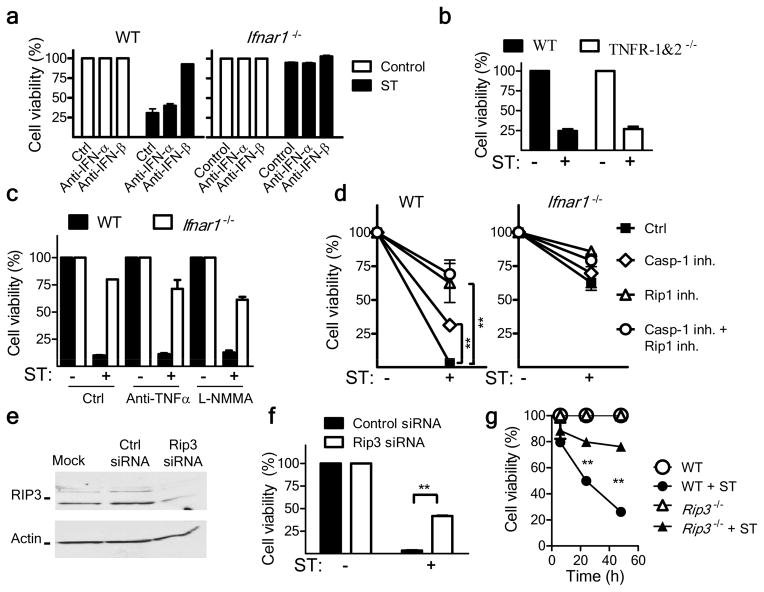
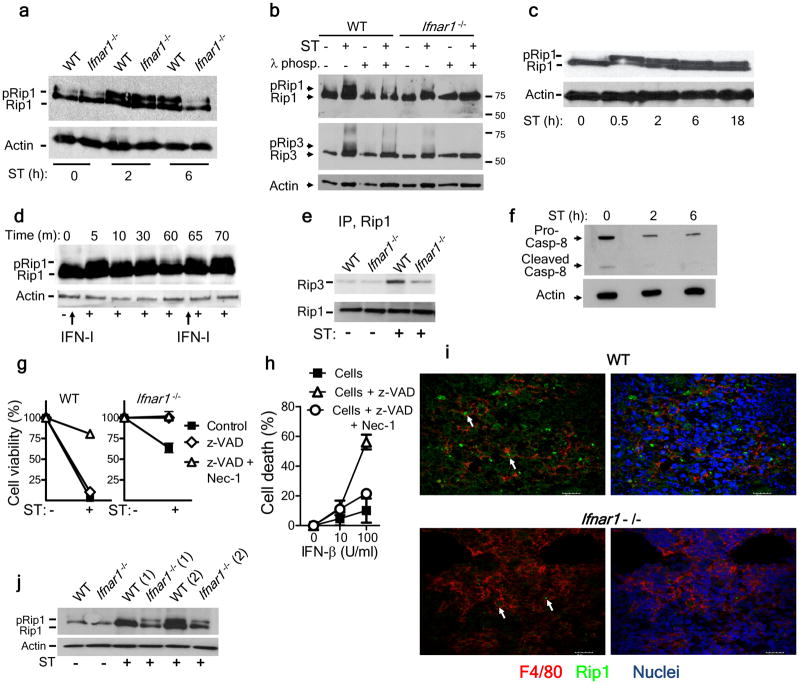
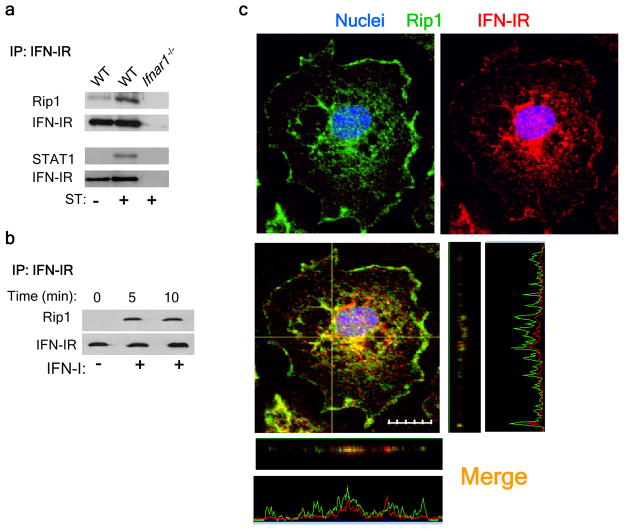
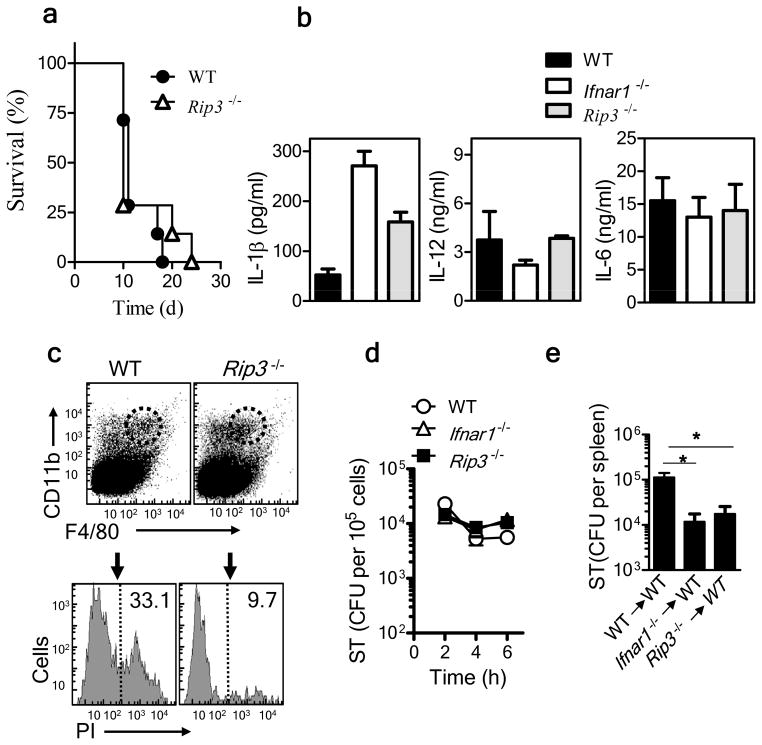
Salmonella enterica serovar Typhimurium (S. Typhimurium) is a virulent pathogen that induces rapid host death. Here we observed that host survival after infection with S. Typhimurium was enhanced in the absence of type I interferon signaling, with improved survival of mice deficient in the receptor for type I interferons (Ifnar1(-/-) mice) that was attributed to macrophages. Although there was no impairment in cytokine expression or inflammasome activation in Ifnar1(-/-) macrophages, they were highly resistant to S. Typhimurium-induced cell death. Specific inhibition of the kinase RIP1 or knockdown of the gene encoding the kinase RIP3 prevented the death of wild-type macrophages, which indicated that necroptosis was a mechanism of cell death. Finally, RIP3-deficient macrophages, which cannot undergo necroptosis, had similarly less death and enhanced control of S. Typhimurium in vivo. Thus, we propose that S. Typhimurium induces the production of type I interferon, which drives necroptosis of macrophages and allows them to evade the immune response.
Conflict of interest statement
The authors declare no competing financial interests.
Figures
References
-
- Jones BD, Falkow S. Salmonellosis: host immune responses and bacterial virulence determinants. Annu Rev Immunol. 1996;14:533–561. - PubMed
Publication types
MeSH terms
Substances
Grants and funding
LinkOut - more resources
Full Text Sources
Other Literature Sources
Molecular Biology Databases
Miscellaneous
