


Glutamate transporter EAAT2: a new target for the treatment of neurodegenerative diseases
- PMID: 22924507
- PMCID: PMC3580837
- DOI: 10.4155/fmc.12.122
Glutamate transporter EAAT2: a new target for the treatment of neurodegenerative diseases
Abstract
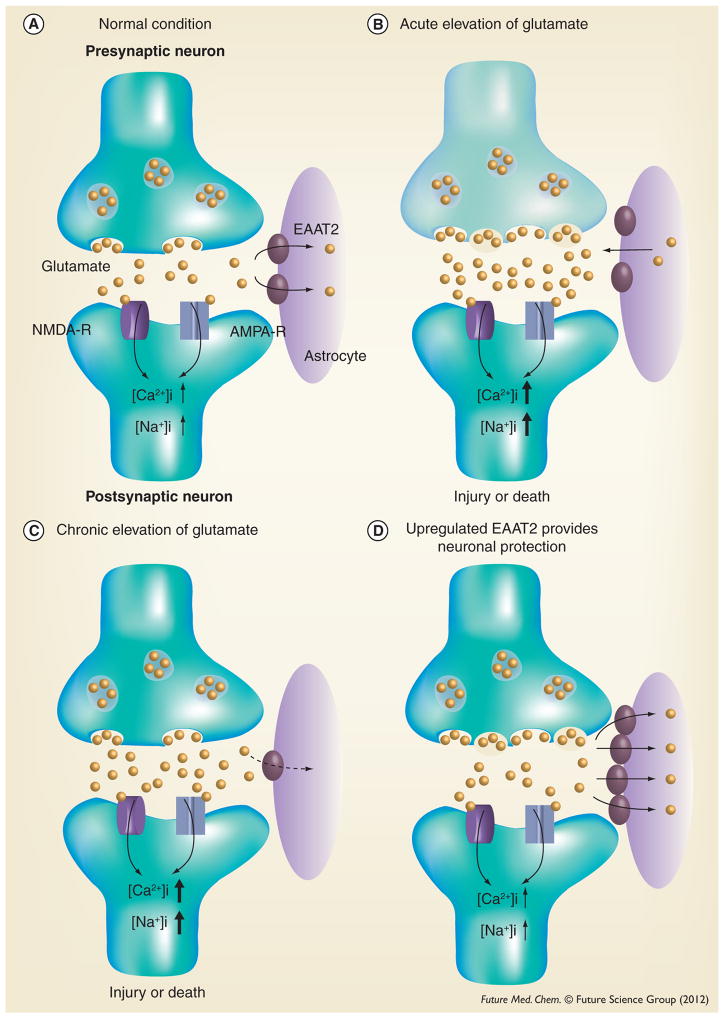
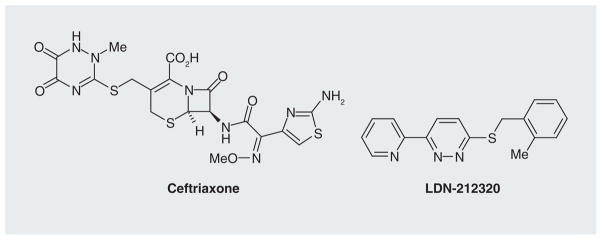
Glutamate is the primary excitatory amino acid neurotransmitter in the CNS. The concentration of glutamate in the synaptic cleft is tightly controlled by interplay between glutamate release and glutamate clearance. Abnormal glutamate release and/or dysfunction of glutamate clearance can cause overstimulation of glutamate receptors and result in neuronal injury known as excitotoxicity. The glial glutamate transporter EAAT2 plays a major role in glutamate clearance. Dysfunction or reduced expression of EAAT2 has been documented in many neurodegenerative diseases. In addition, many studies in animal models of disease indicate that increased EAAT2 expression provides neuronal protection. Here, we summarize these studies and suggest that EAAT2 is a potential target for the prevention of excitotoxicity. EAAT2 can be upregulated by transcriptional or translational activation. We discuss current progress in the search for EAAT2 activators, which is a promising direction for the treatment of neurodegenerative diseases.
Figures
References
-
- Danbolt NC. Glutamate uptake. Prog Neurobiol. 2001;65(1):1–105. - PubMed
-
- Takeuchi H, Jin S, Wang J, et al. Tumor necrosis factor-alpha induces neurotoxicity via glutamate release from hemichannels of activated microglia in an autocrine manner. J Biol Chem. 2006;281(30):21362–21368. - PubMed
-
- Yi JH, Hazell AS. Excitotoxic mechanisms and the role of astrocytic glutamate transporters in traumatic brain injury. Neurochem Int. 2006;48(5):394–403. - PubMed
Publication types
MeSH terms
Substances
Grants and funding
LinkOut - more resources
Full Text Sources
Other Literature Sources
Medical
