


Uncoupling stimulus specificity and glomerular position in the mouse olfactory system
- PMID: 22926192
- PMCID: PMC3494770
- DOI: 10.1016/j.mcn.2012.08.006
Uncoupling stimulus specificity and glomerular position in the mouse olfactory system
Abstract
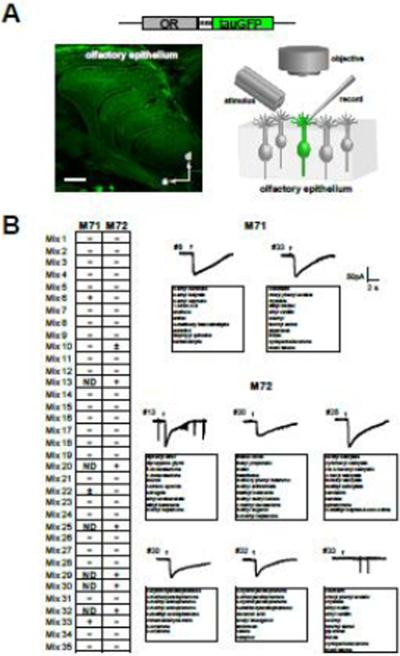
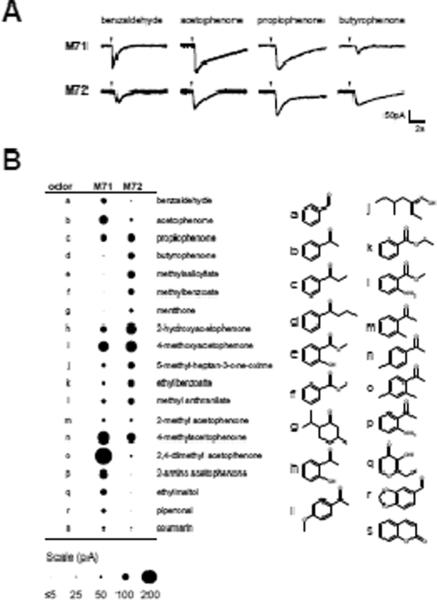
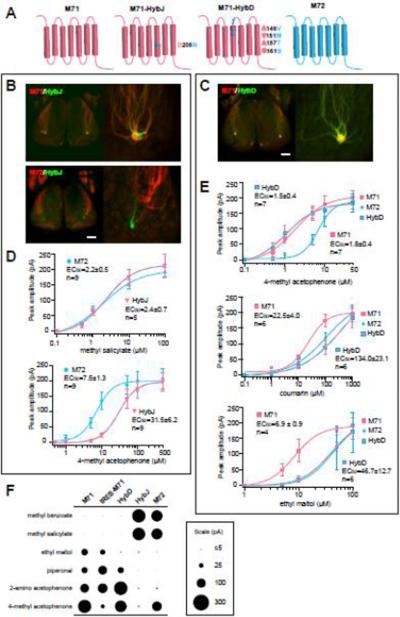
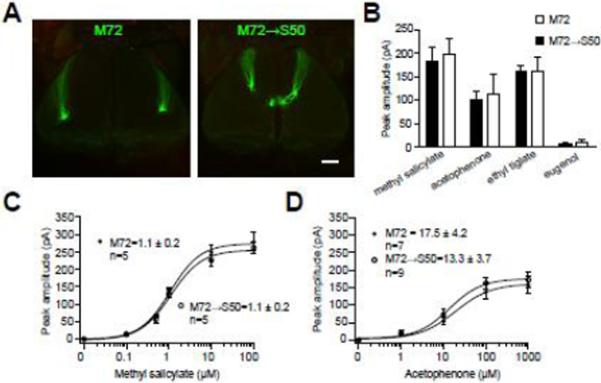
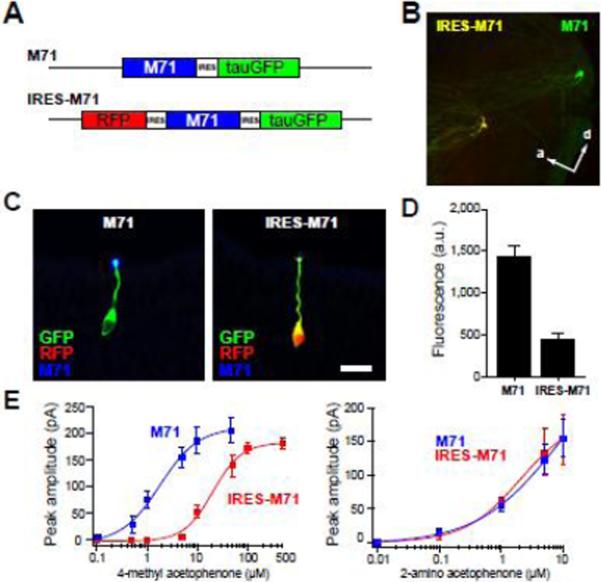
Sensory information is often mapped systematically in the brain with neighboring neurons responding to similar stimulus features. The olfactory system represents chemical information as spatial and temporal activity patterns across glomeruli in the olfactory bulb. However, the degree to which chemical features are mapped systematically in the glomerular array has remained controversial. Here, we test the hypothesis that the dual roles of odorant receptors, in axon guidance and odor detection, can serve as a mechanism to map olfactory inputs with respect to their function. We compared the relationship between response specificity and glomerular position in genetically-defined olfactory sensory neurons expressing variant odorant receptors. We find that sensory neurons with the same odor response profile can be mapped to different regions of the bulb, and that neurons with different response profiles can be mapped to the same glomeruli. Our data demonstrate that the two functions of odorant receptors can be uncoupled, indicating that the mechanisms that map olfactory sensory inputs to glomeruli do so without regard to stimulus specificity.
Copyright © 2012 Elsevier Inc. All rights reserved.
Figures
References
-
- Abaffy T, Malhotra A, Luetje CW. The molecular basis for ligand specificity in a mouse olfactory receptor: a network of functionally important residues. J Biol Chem. 2007;282:1216–1224. - PubMed
-
- Bozza T, McGann JP, Mombaerts P, Wachowiak M. In vivo imaging of neuronal activity by targeted expression of a genetically encoded probe in the mouse. Neuron. 2004;42:9–21. - PubMed
Publication types
MeSH terms
Substances
Grants and funding
LinkOut - more resources
Full Text Sources
Molecular Biology Databases
