


Effects of naltrexone on smoking cessation outcomes and weight gain in nicotine-dependent men and women
- PMID: 22926596
- PMCID: PMC4640209
- DOI: 10.1097/JCP.0b013e3182676956
Effects of naltrexone on smoking cessation outcomes and weight gain in nicotine-dependent men and women
Abstract
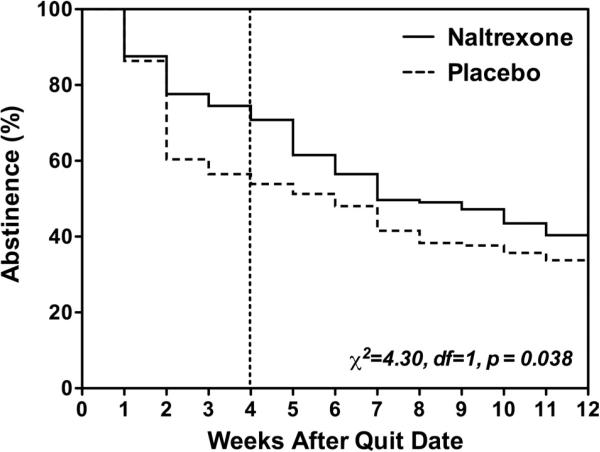
This study examined whether the opioid receptor antagonist naltrexone is efficacious in smoking cessation and whether sex moderates the response. We assessed smoking quit rates and weight gain in a double-blind randomized trial comparing oral naltrexone (n = 162) with placebo (n = 154) in nicotine-dependent participants who wanted to quit smoking. The medication was gradually titrated up to 50 mg during the week before the quit date and then maintained at this dose for 12 weeks. For the first 4 weeks after the quit date, all participants received a nicotine patch to mitigate tobacco withdrawal and attended weekly individual cognitive-behavioral smoking cessation counseling sessions. After this time, participants continued with naltrexone or placebo through 12 weeks. Follow-up assessments were conducted at 26 and 52 weeks. During treatment, naltrexone (vs placebo) increased quit rates, attenuated smoking urge, and reduced weight gain. At follow-up, after medication discontinuation, the effect of naltrexone on improving quit rates was no longer evident. Men and women experienced different benefits from naltrexone; men showed greater reductions in smoking, whereas women showed greater reductions in weight gain. In sum, naltrexone showed acute efficacy in treating nicotine dependence, but after the medication was discontinued, the effect on quit rate was not maintained. Further study of naltrexone in smoking cessation treatment and reduction of cessation-related weight gain, as well as preclinical investigation of mechanisms underlying sex differences, is warranted.
Figures
References
-
- Cigarette smoking among adults and trends in smoking cessation—United States, 2008. MMWR Morb Mortal Wkly Rep. 2009;58(44):1227–1232. - PubMed
-
- Annual smoking-attributable mortality, years of potential life lost, and economic costs—United States, 1995–1999. MMWR Morb Mortal Wkly Rep. 2002;51(14):300–303. - PubMed
-
- Fiore MC, Jaén CR, Baker TB, et al. Treating Tobacco Use and Dependence: 2008 Update. Clinical Practice Guideline. US Department of Health and Human Services, Public Health Service; Rockville, MD: 2008.
-
- King A, de Wit H, Riley RC, et al. Efficacy of naltrexone in smoking cessation: a preliminary study and an examination of sex differences. Nicotine Tob Res. 2006;8(5):671–682. - PubMed
Publication types
MeSH terms
Substances
Grants and funding
LinkOut - more resources
Full Text Sources
Other Literature Sources
Medical
