


Epidemiology of invasive pneumococcal disease in older people in Spain (2007-2009): implications for future vaccination strategies
- PMID: 22928005
- PMCID: PMC3425535
- DOI: 10.1371/journal.pone.0043619
Epidemiology of invasive pneumococcal disease in older people in Spain (2007-2009): implications for future vaccination strategies
Abstract
Background: Recently, the 13-valent pneumococcal conjugate vaccine (PCV13) has been recommended for adults. We analyzed the epidemiology of invasive pneumococcal disease (IPD) in older adults in Spain before PCV13 introduction.
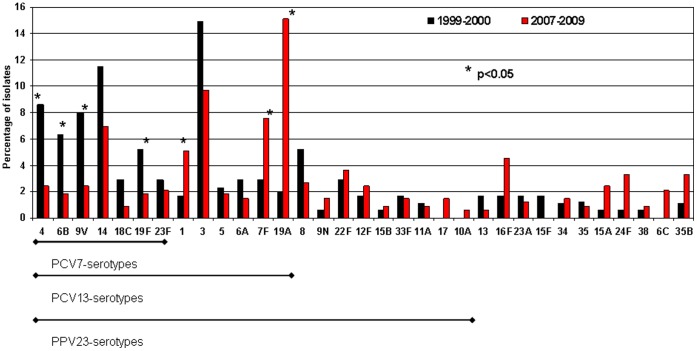
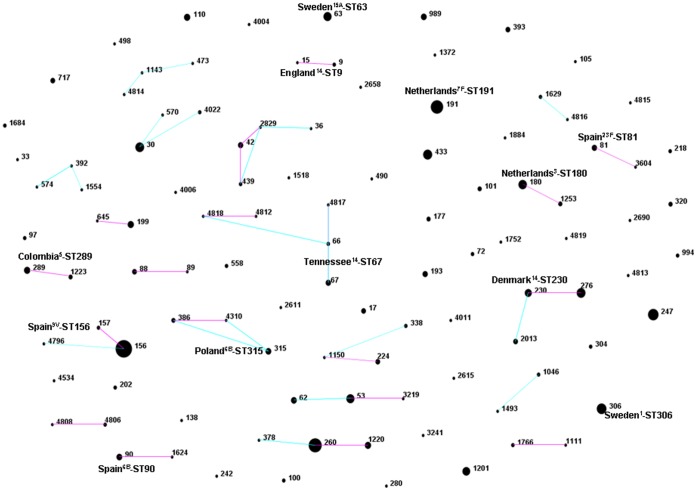
Methodology/principal findings: IPD episodes, defined as clinical findings together with an invasive pneumococcal isolate, were prospectively collected from patients aged over 65 years in three hospitals in Spain from 2007 to 2009. A total of 335 IPD episodes were collected. Pneumonia was the main clinical syndrome, while chronic obstructive pulmonary disease, diabetes mellitus and cancer were the main underlying diseases. Pneumococcal isolates were serotyped and the molecular typing was performed by PFGE/MLST. PCV13 serotypes accounted for 59.3% of isolates, the most prevalent being serotypes 19A (15.1%), 3 (9.6%), 7F (7.5%), 14 (6.9%) and 1 (5.4%). The most frequent non-PCV13 serotypes were serotypes 16F (4.5%), 22F (3.6%), 24F (3.3%) and 6C (2.1%). The most common genotypes were CC230 (8.5%, serotypes 19A and 24F), CC156 (8.2%, serotypes 9V and 14), ST191 (7.9%, serotype 7F), CC260 (6.6%, serotype 3), ST306 (5.2%, serotype 1), CC30 (4.6%, serotype 16F) and ST433 (3.6%, serotype 22F). Comparing the 335 IPD isolates to 174 invasive pneumococci collected at the same hospitals in 1999-2000, PCV7 serotypes decreased (45.4% vs 18.4%,p<0.001), non-PCV7 serotypes included in PCV13 increased (26.4% vs 41.0%,p = 0.001) and two non-PCV13 serotypes increased (serotype 6C 0% vs 2.1%, p = 0.05; serotype 24F 0.6% vs 3.3%, p = 0.04,).
Conclusion: In our older adult population two serotypes (19A and 3) included in PCV13 accounted for about a quarter of IPD episodes in people ≥65 years. Non-PCV13 emerging serotypes should be carefully monitored in future surveillance studies.
Conflict of interest statement
Figures
References
-
- Musher DM (1992) Infections caused by Streptococcus pneumoniae: clinical spectrum, pathogenesis, immunity, and treatment. Clin Infect Dis 14: 801–807. - PubMed
-
- Centers for Disease Control and Prevention (CDC); Advisory Committee on Immunization Practices (2010) Updated recommendations for prevention of invasive pneumococcal disease among adults using the 23-valent pneumococcal polysaccharide vaccine (PPSV23). MMWR Morb Mortal Wkly Rep 59: 1102–6. - PubMed
-
- Liñares J, Ardanuy C, Pallares R, Fenoll A (2010) Changes in antimicrobial resistance, serotypes and genotypes in Streptococcus pneumoniae over a 30-year period. Clin Microbiol Infect 16: 402–10. - PubMed
Publication types
MeSH terms
Grants and funding
LinkOut - more resources
Full Text Sources
Other Literature Sources
Medical
Molecular Biology Databases
