


The role of the TGF-β family in wound healing, burns and scarring: a review
- PMID: 22928164
- PMCID: PMC3415964
The role of the TGF-β family in wound healing, burns and scarring: a review
Abstract
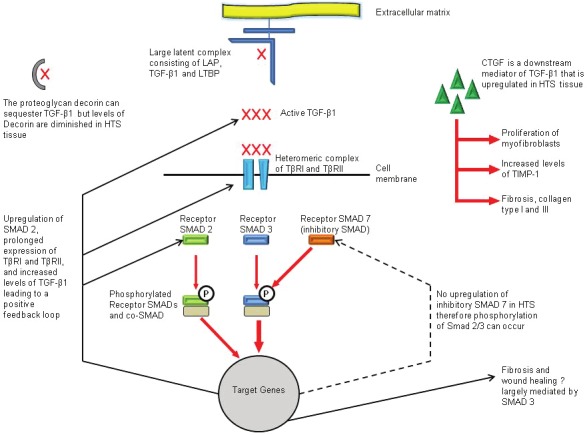
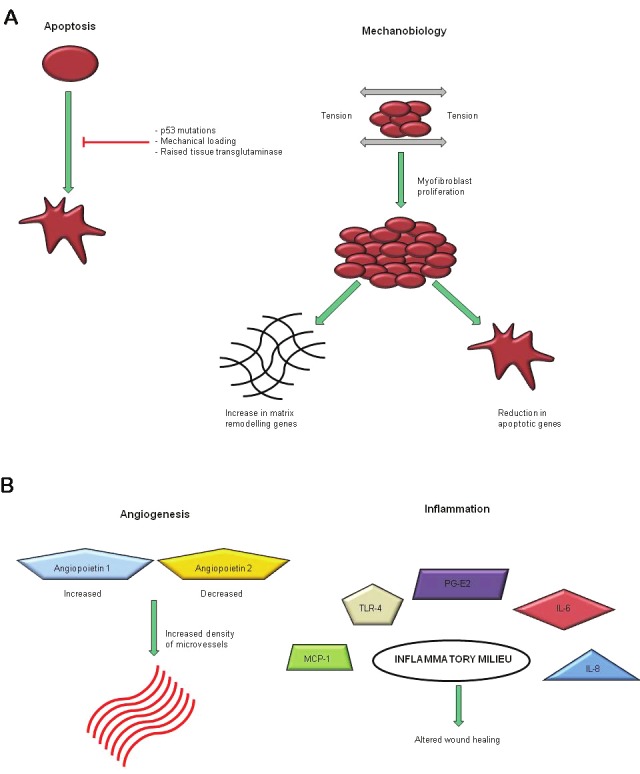
It is estimated worldwide that over 6 million people per annum experience a burn injury. Despite advances in management and improved survival rates, the incidence of hypertrophic scarring remains high. These scars are particularly common after burns and are often raised, red, hard and may cause abnormal sensations. Such pathological scarring can lead to severe functional impairment, psychological morbidity, and costly long term healthcare. Wound healing is an inherent process which restores the integrity of the skin after injury and although scarring is a frequent by-product, the scarless wound healing observed in early human gestational fetuses suggests that it is not an essential component of the response. This has lead to a large body of research attempting to understand the mechanisms behind scarring and in turn prevent it. One of the main focuses of recent research has been the role played by the growth factor TGF-β in the process of both wound healing and scar formation. The three isoforms (TGF-β1, TGF-β2 and TGF-β3) appear to have overlapping functions and predominantly mediate their effects through the intracellular SMAD pathway. Initial research suggested that TGF-β1 was responsible for the fibrotic scarring response whereas the scarless wound healing seen in fetal wounds was due to increased levels of TGF-β3. However, the reality appears to be far more complex and it is unlikely that simply altering the ratio of TGF-β isoforms will lead to scarless wound healing. Other aspects of the TGF-β system that appear promising include the downstream mediator CTGF, the proteoglycan decorin and the binding protein p311. Other putative mechanisms which may underlie the pathogenesis of hypertrophic scars include excessive inflammation, excessive angiogenesis, altered levels of matrix metalloproteinases, growth factors, and delayed apoptosis of fibrotic myofibroblasts either due to p53 genetic alterations or tensile forces across the wound. If an effective treatment for hypertrophic scars following burns injury is to be developed then further work must be carried out to understand the basic mechanisms of pathological scarring.
Keywords: Burn scarring; TGF-β; hypertrophic scarring; pathological scarring; regeneration; wound healing.
Figures
References
-
- ReSurge International. http://www.org/about/gfx/fs09_burns%20factsheet.pdf (last accessed June 9th 2011)
-
- American Burn Association Fact Sheet. 2011 Available at. http://www.ameriburn.org/resources_factsheet.php. accessed 4th may 2011.
-
- Sheridan RL. Burn Care: Results of Technical and Organizational Progress. JAMA. 2003;290:719–722. - PubMed
-
- Taal L, Faber AW. Posttraumatic stress and maladjustment among adult bun survivors 1 to 2 years post burn. Part III The interview data. Burns. 1998;24:399–405. - PubMed
-
- Robert R, Meyer W, Bishop S, Rosenberg L, Murphy L, Blakeney P. Disfiguring burn scars and adolescent self esteem. Burns. 1999;25:581–585. - PubMed
LinkOut - more resources
Full Text Sources
Other Literature Sources
Research Materials
Miscellaneous