


Trends in reproductive health in Israel: implications for environmental health policy
- PMID: 22929018
- PMCID: PMC3443022
- DOI: 10.1186/2045-4015-1-34
Trends in reproductive health in Israel: implications for environmental health policy
Abstract
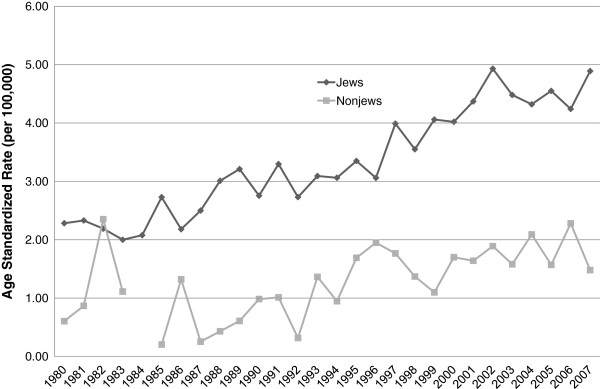
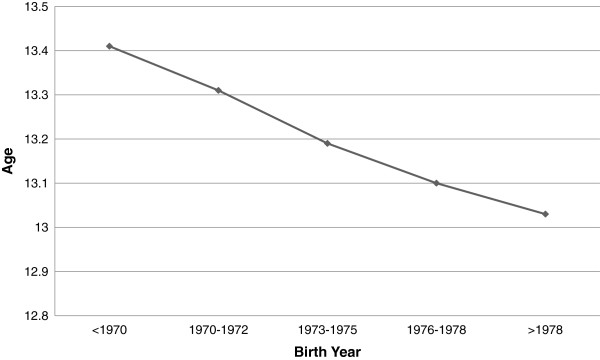
Nearly two decades ago, researchers first reported that endocrine disrupting chemicals in the environment were affecting reproductive health in the general population. The purpose of this article is to examine the evidence of adverse reproductive health trends in Israel and to explore implications for environmental health policy in Israel. We reviewed studies and data in Israel regarding trends in reproductive health indices, specifically: breast and testis cancer, hypospadias, sperm quality, male factor infertility, and age at menarche. The data provide some evidence of adverse reproductive trends in the Israeli population: an increase in testicular cancer from 1990 to 2007, a decrease in age at menarche from 1986 to 2000, an increase in the prevalence of male factor infertility, and some evidence of decreasing sperm counts. However, we note that much of the evidence is limited.The policy implications of reported adverse reproductive health trends possibly related to environmental exposure have been radically different in Europe and the United States. In Europe, such reports led the Parliament of the European Community to adopt a resolution on endocrine disruptors, which emphasizes the application of the Precautionary Principle. U.S. Environmental Protection Agency policy is focused on screening chemicals for endocrine disrupting properties and does not specifically refer to the Precautionary Principle. To date, there has been no formal governmental policy or strategy in Israel regarding endocrine disrupting chemicals. Environmental health policy on endocrine disruptors requires integrating evidence on human reproductive health trends, evidence on adverse reproductive outcomes in wildlife and experimental systems, and data from biomonitoring studies. Despite gaps in evidence and current data, we support a precautionary approach to regulating potential endocrine disrupting chemicals and reducing public exposures, especially in sensitive groups such as children and pregnant women.
Figures
References
-
- de Mouzon J, Lancaster P, Nygren KG, Sullivan E, Zegers-Hochschild F, Mansour R, Ishihara O, Adamson D. International Committee for Monitoring Assisted Reproductive Technology. World Collaborative Report on Assisted Reproductive Technology, 2002. Hum Reprod. 2009;24:2310–2320. - PubMed
-
- Bar-Chana M. Israel National Cancer Registry, Cancer Incidence Tables. 2010. http://www.health.gov.il/download/sartan/trends/Testis.pdf.
-
- Beri A, Matzkin H, Liphshitz I, Barchana M. Epidemiological characteristics and trends of testicular cancer in Israel 1992–2002. Harefuah. 2007;146(7):515–519. 575 [Hebrew] - PubMed
LinkOut - more resources
Full Text Sources
