


Genetic variation in histidine rich proteins among Indian Plasmodium falciparum population: possible cause of variable sensitivity of malaria rapid diagnostic tests
- PMID: 22929537
- PMCID: PMC3475030
- DOI: 10.1186/1475-2875-11-298
Genetic variation in histidine rich proteins among Indian Plasmodium falciparum population: possible cause of variable sensitivity of malaria rapid diagnostic tests
Abstract
Background: Rapid diagnostic tests (RDTs) have revolutionized the diagnosis of malaria. Among the various factors affecting RDTs sensitivity is genetic variation of the antigen used. The genetic variation in PfHRP2 and PfHRP3 proteins was studied among the Indian Plasmodium falciparum isolates.
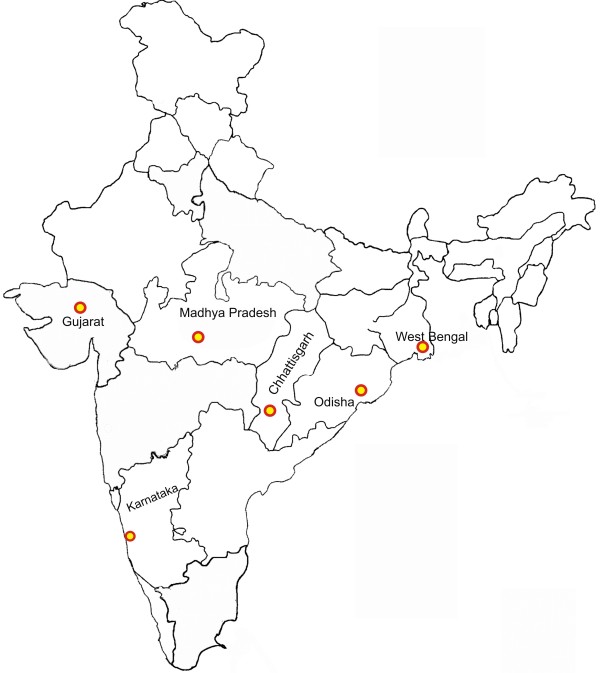
Methods: One hundred and forty isolates of P. falciparum were collected from six geographical regions of India. Target genes encoding PfHRP2 and PfHRP3 antigens were sequenced to study genetic polymorphism. Minimum detection limit giving a positive rapid diagnostic test was also determined.
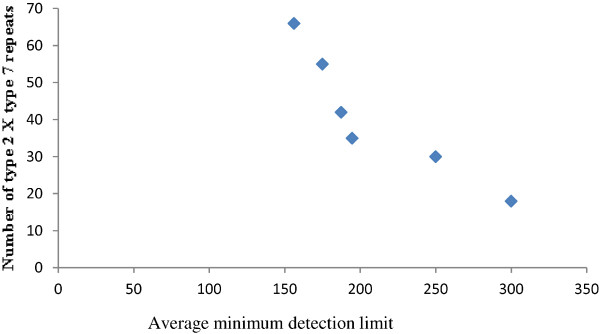
Results: Extensive variations were observed in amino acid repeat types of PfHRP2 and PfHRP3. PfHRP2 exhibited more polymorphism than PfHRP3. Significant relation was observed between type 2 and type 7 repeats and RDT detection rate as higher number of these repeats showed better sensitivity with RDTs.
Conclusion: The results provide insights into the genetic diversity of Pfhrp2 and Pfhrp3 genes among Indian P. falciparum population and its relation to RDT sensitivity.
Figures
References
-
- National Vector Borne Diseases Control Programme. India; www.nvbdcp.org accessed on 7th May 2012.
-
- WHO RDT testing round 3. http://www.who.int/tdr/publications/documents/rdt3.pdf.
-
- Xiao J, Li M, Bi H, Wang P, Li Y. Cloning and sequence analysis of histidine-rich protein-II gene fragment of Plasmodium falciparum Yunnan strain (Chinese)] Zhongguo Ji Sheng Chong Xue Yu Ji Sheng. Chong Bing Za Zhi. 1999;17:143–145. - PubMed
Publication types
MeSH terms
Substances
Associated data
- Actions
- Actions
- Actions
- Actions
- Actions
- Actions
LinkOut - more resources
Full Text Sources
Medical
