


Nectin like-5 overexpression correlates with the malignant phenotype in cutaneous melanoma
- PMID: 22929570
- PMCID: PMC3478464
- DOI: 10.18632/oncotarget.594
Nectin like-5 overexpression correlates with the malignant phenotype in cutaneous melanoma
Abstract
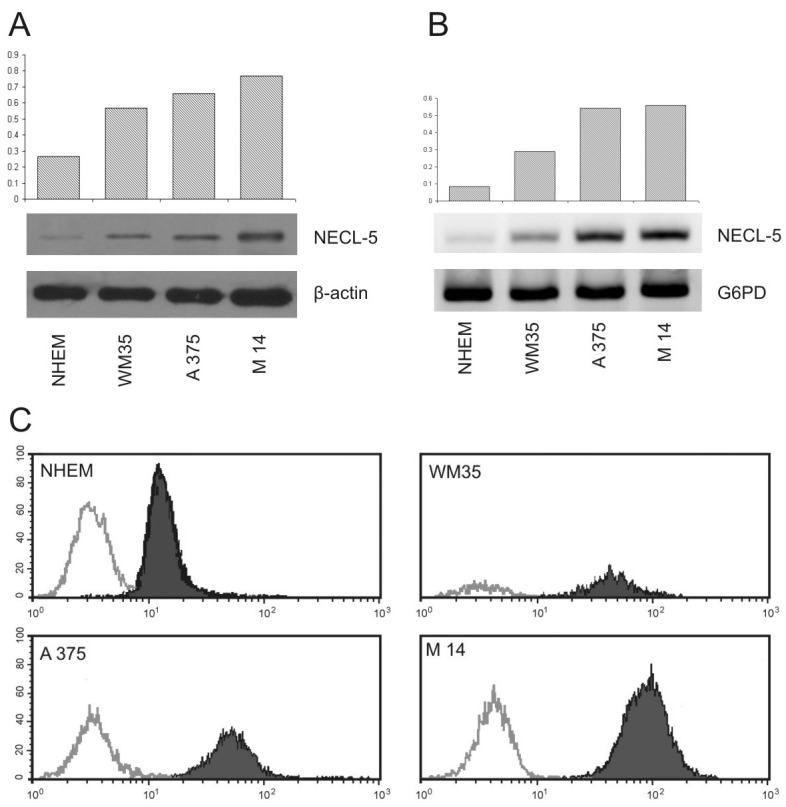
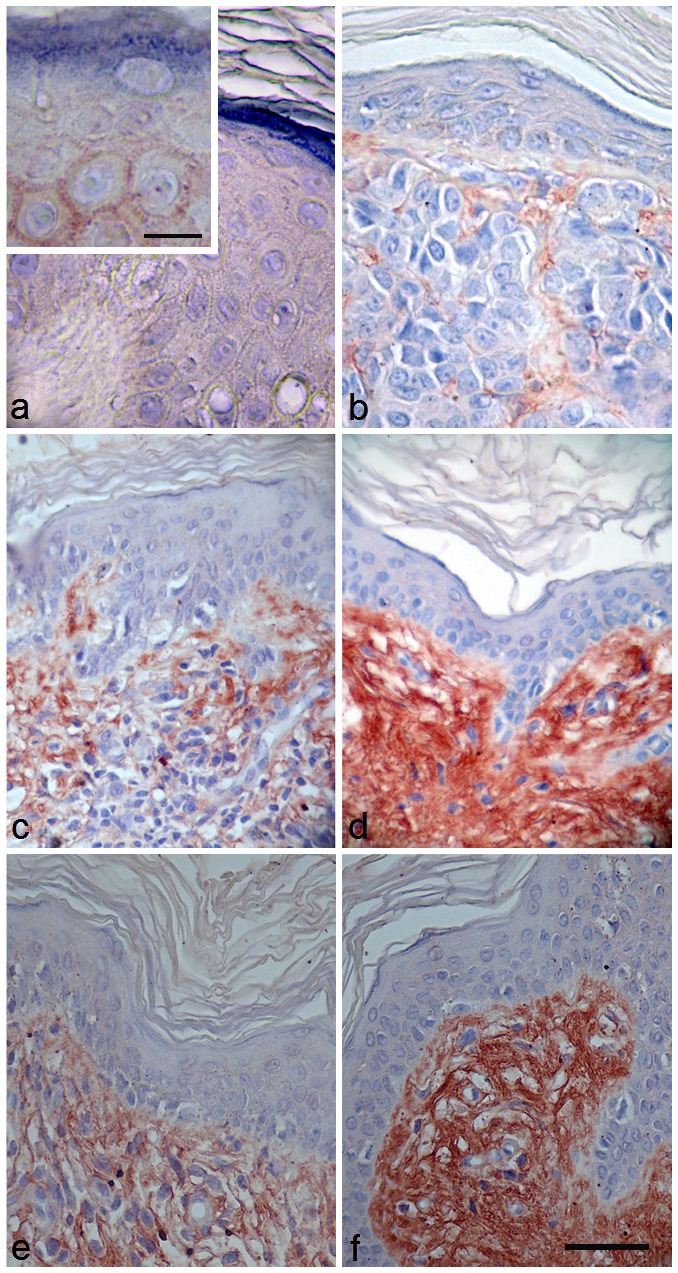
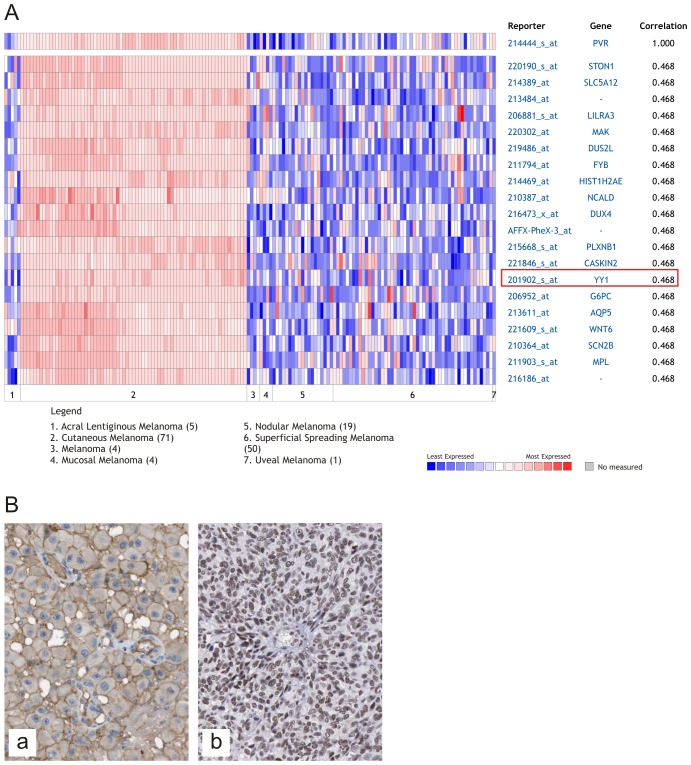
NECL-5 is involved in regulating cell-cell junctions, in cooperation with cadherins, integrins and platelet-derived growth factor receptor, that are essential for intercellular communication. Its role in malignant transformation was previously described. It has been reported that transformation of melanocytes is associated with altered expression of adhesion molecules suggesting the potential involment of NECL-5 in melanoma development and prognosis. To shed light on this issue, the expression and the role of NECL-5 in melanoma tissues was investigated by bioinformatic and molecular approaches. NECL-5 was up-regulated both at the mRNA and the protein levels in WM35, M14 and A375 cell lines compared with normal melanocytes. A subsequent analysis in primary and metastatic melanoma specimens confirmed "in vitro" findings. NECL-5 overexpression was observed in 53 of 59 (89.8%) and 12 of 12 (100%), primary melanoma and melanoma metastasis, respectively; while, low expression of NECL-5 was detected in 12 of 20 (60%) benign nevi. A significant correlation of NECL-5 overexpression was observed with most of known negative melanoma prognostic factors, including lymph-node involvement (P = 0.009) and thickness (P = 0.004). Intriguingly, by analyzing the large series of melanoma samples in the Xu dataset, we identified the transcription factor YY1 among genes positively correlated with NECL-5 (r = 0.5). The concordant computational and experimental data of the present study indicate that the extent of NECL-5 expression correlates with melanoma progression.
Conflict of interest statement
The authors declare no conflict of interest.
Figures
References
-
- Chapman PB, Hauschild A, Robert C, Haanen JB, Ascierto P, Larkin J, Dummer R, Garbe C, Testori A, Maio M, Hogg D, Lorigan P, Lebbe C, Jouary T, Schadendorf D, Ribas A, O'Day SJ, Sosman JA, Kirkwood JM, Eggermont AM, Dreno B, Nolop K, Li J, Nelson B, Hou J, Lee RJ, Flaherty KT, McArthur GA, BRIM-3 Study Group Improved survival with vemurafenib in melanoma with BRAF V600E mutation. N Engl J Med. 2011;364:2507–16. - PMC - PubMed
-
- Sosman JA, Kim KB, Schuchter L, Gonzalez R, Pavlick AC, Weber JS, McArthur GA, Hutson TE, Moschos SJ, Flaherty KT, Hersey P, Kefford R, Lawrence D, Puzanov I, Lewis KD, Amaravadi RK, Chmielowski B, Lawrence HJ, Shyr Y, Ye F, Li J, Nolop KB, Lee RJ, Joe AK, Ribas A. Survival in BRAF V600-mutant advanced melanoma treated with vemurafenib. N Engl J Med. 2012;366:707–14. - PMC - PubMed
-
- Demierre MF, Sabel MS, Margolin KA, Daud AI, Sondak VK. State of the science 60th anniversary review: 60 years of advances in cutaneous melanoma epidemiology, diagnosis, and treatment, as reported in the journal Cancer. Cancer. 2008;113:1728–1743. - PubMed
Publication types
MeSH terms
Substances
LinkOut - more resources
Full Text Sources
Other Literature Sources
Medical
Research Materials
