


Event-related functional magnetic resonance imaging of a low dose of dexmedetomidine that impairs long-term memory
- PMID: 22929730
- PMCID: PMC3482301
- DOI: 10.1097/ALN.0b013e31826be467
Event-related functional magnetic resonance imaging of a low dose of dexmedetomidine that impairs long-term memory
Abstract
Background: Work suggests the amnesia from dexmedetomidine (an α2-adrenergic agonist) is caused by a failure of information to be encoded into long-term memory and that dexmedetomidine might differentially affect memory for emotionally arousing material. We investigated these issues in humans using event-related neuroimaging to reveal alterations in brain activity and subsequent memory effects associated with drug exposure.
Methods: Forty-eight healthy volunteers received a computer-controlled infusion of either placebo or low-dose dexmedetomidine (target = 0.15 ng/ml plasma) during neuroimaging while they viewed and rated 80 emotionally arousing (e.g., graphic war wound) and 80 nonarousing neutral (e.g., cup) pictures for emotional arousal content. Long-term picture memory was tested 4 days later without neuroimaging. Imaging data were analyzed for drug effects, emotional processing differences, and memory-related changes with statistical parametric mapping-8.
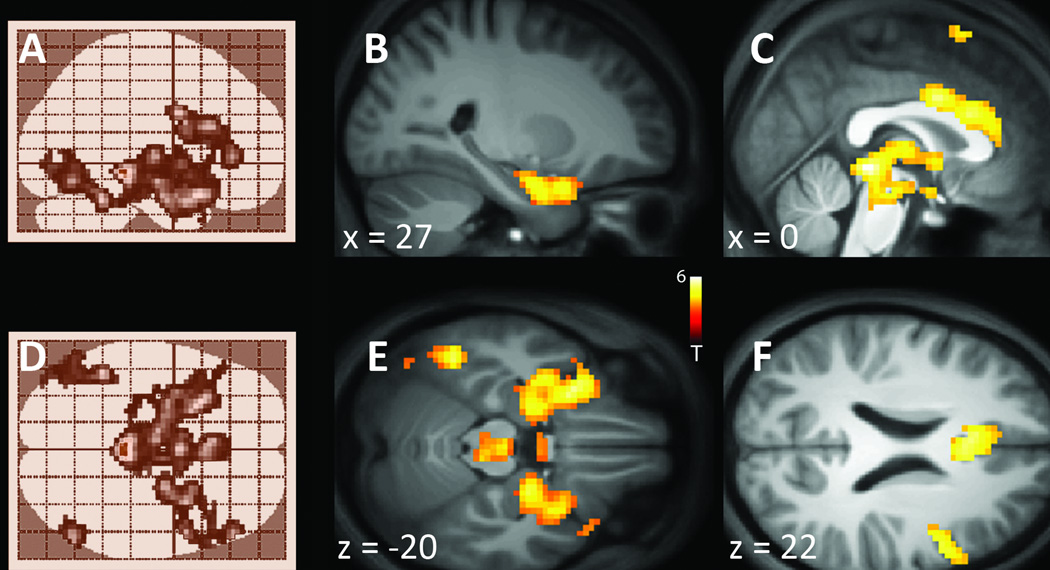
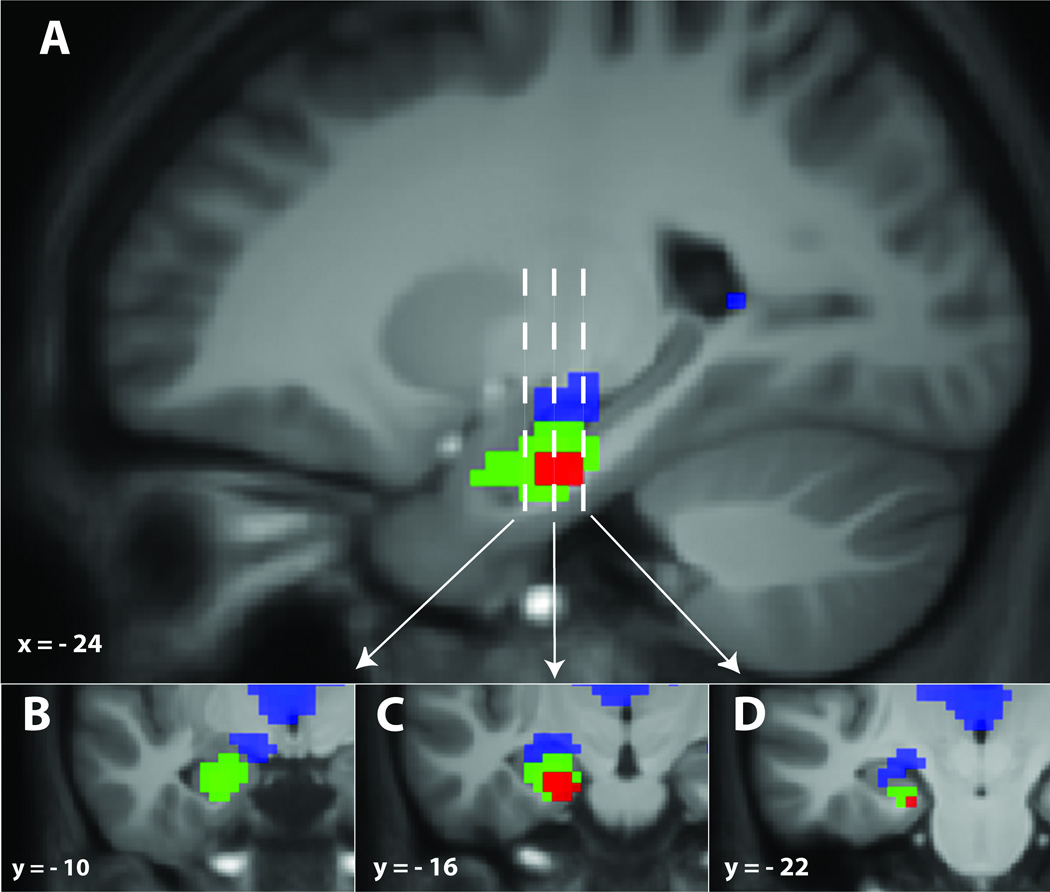
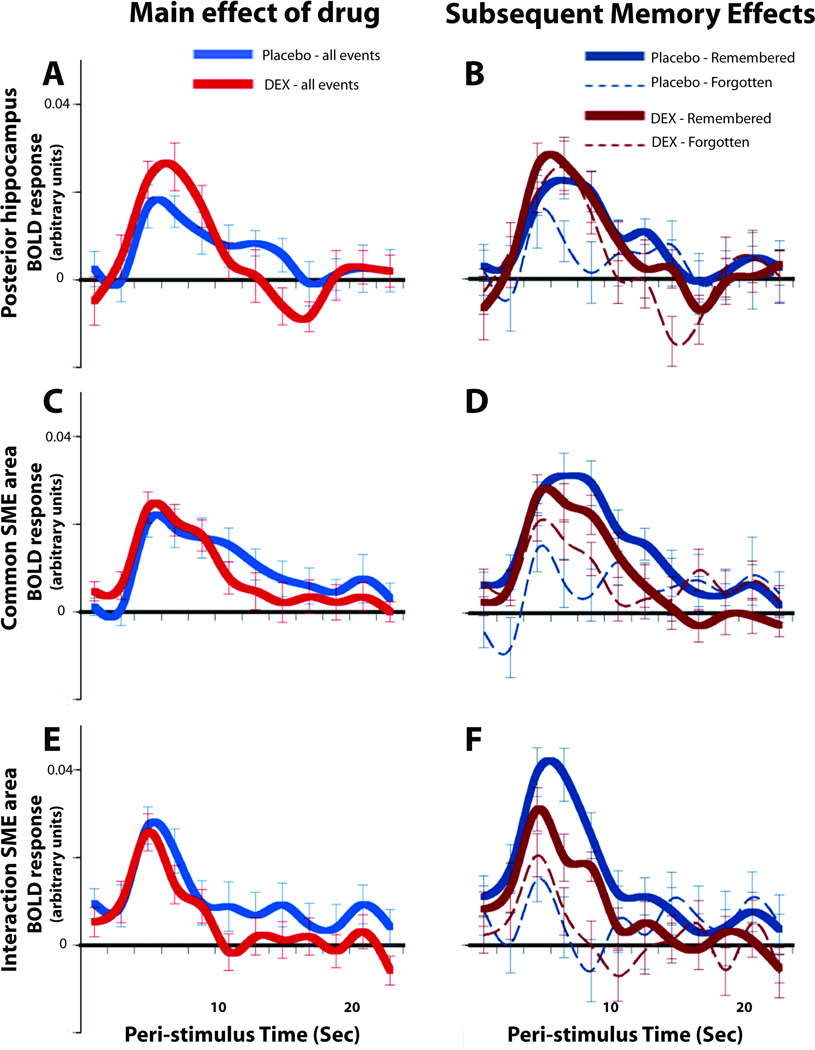
Results: Dexmedetomidine impaired overall (mean ± SEM) picture memory (placebo: 0.58 ± 0.03 vs. dexmedetomidine: 0.45 ± 0.03, P = 0.001), but did not differentially modulate memory as a function of item arousal. Arousing pictures were better remembered for both groups. Dexmedetomidine had regionally heterogeneous effects on brain activity, primarily decreasing it in the cortex and increasing it in thalamic and posterior hippocampal regions. Nevertheless, a single subsequent memory effect for item memory common to both groups was identified only in the left hippocampus/amygdala. Much of this effect was found to be larger for the placebo than dexmedetomidine group.
Conclusion: Dexmedetomidine impaired long-term picture memory, but did not disproportionately block memory for emotionally arousing items. The memory impairment on dexmedetomidine corresponds with a weakened hippocampal subsequent memory effect.
Figures


Comment in
-
The problem with amnesia.Anesthesiology. 2012 Nov;117(5):940-1. doi: 10.1097/ALN.0b013e31826be6d6. Anesthesiology. 2012. PMID: 22929728 No abstract available.
References
-
- Eger EI, 2nd, Koblin DD, Harris RA, Kendig JJ, Pohorille A, Halsey MJ, Trudell JR. Hypothesis: Inhaled anesthetics produce immobility and amnesia by different mechanisms at different sites. Anesth Analg. 1997;84:915–918. - PubMed
-
- Alkire MT, Gorski LA. Relative amnesic potency of five inhalational anesthetics follows the Meyer-Overton rule. Anesthesiology. 2004;101:417–429. - PubMed
-
- Bekker AY, Kaufman B, Samir H, Doyle W. The use of dexmedetomidine infusion for awake craniotomy. Anesth Analg. 2001;92:1251–1253. - PubMed
-
- Grant SA, Breslin DS, MacLeod DB, Gleason D, Martin G. Dexmedetomidine infusion for sedation during fiberoptic intubation: A report of three cases. J Clin Anesth. 2004;16:124–126. - PubMed
Publication types
MeSH terms
Substances
Grants and funding
LinkOut - more resources
Full Text Sources
Other Literature Sources
Medical
