


The glomerular filtration barrier: components and crosstalk
- PMID: 22934182
- PMCID: PMC3426247
- DOI: 10.1155/2012/749010
The glomerular filtration barrier: components and crosstalk
Abstract
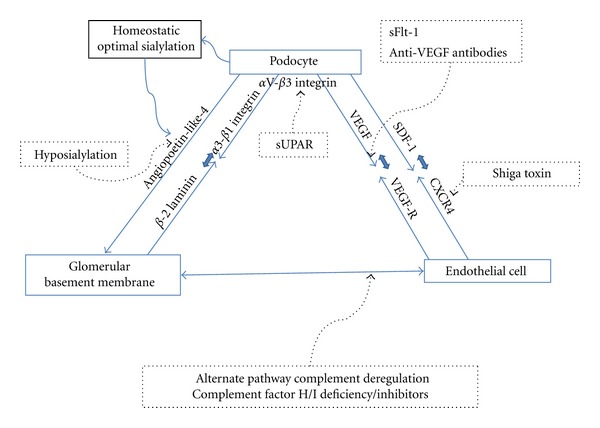
The glomerular filtration barrier is a highly specialized blood filtration interface that displays a high conductance to small and midsized solutes in plasma but retains relative impermeability to macromolecules. Its integrity is maintained by physicochemical and signalling interplay among its three core constituents-the glomerular endothelial cell, the basement membrane and visceral epithelial cell (podocyte). Understanding the pathomechanisms of inherited and acquired human diseases as well as experimental injury models of this barrier have helped to unravel this interdependence. Key among the consequences of interference with the integrity of the glomerular filtration barrier is the appearance of significant amounts of proteins in the urine. Proteinuria correlates with kidney disease progression and cardiovascular mortality. With specific reference to proteinuria in human and animal disease phenotypes, the following review explores the roles of the endothelial cell, glomerular basement membrane, and the podocyte and attempts to highlight examples of essential crosstalk within this barrier.
Figures
References
-
- Peterson JC, Adler S, Burkart JM, et al. Blood pressure control, proteinuria, and the progression of renal disease: the modification of diet in renal disease study. Annals of Internal Medicine . 1995;123(10):754–762. - PubMed
-
- Chronic Kidney Disease Prognosis C, Matsushita K, van der Velde M, et al. Association of estimated glomerular filtration rate and albuminuria with all-cause and cardiovascular mortality in general population cohorts: a collaborative meta-analysis. The Lancet . 2010;375(9731):2073–2081. - PMC - PubMed
-
- Carroll MF, Temte JL. Proteinuria in adults: a diagnostic approach. American Family Physician . 2000;62(6):1333–1340. - PubMed
-
- Russo LM, Sandoval RM, McKee M, et al. The normal kidney filters nephrotic levels of albumin retrieved by proximal tubule cells: retrieval is disrupted in nephrotic states. Kidney International . 2007;71(6):504–513. - PubMed
LinkOut - more resources
Full Text Sources
